
Fort Kochi
ഐക്യം സ്പേസ്
- ഇവിടെ 305 പ്രവർത്തനങ്ങൾ
- 6 കമ്മ്യൂണിറ്റി ക്ലബ്ബുകൾ
- ഇവിടെ 4,291 പങ്കാളിത്തങ്ങൾ
Fort Kochi
ഐക്യത്തിന്റെ സ്വന്തം മുറി — എല്ലാ ഉച്ചകഴിഞ്ഞും തുറന്നിരിക്കും, കമ്മ്യൂണിറ്റി ക്ലബ്ബുകൾ ഇവിടെയാണ് നടക്കുന്നത്.
ഇവിടെ നടന്നത്
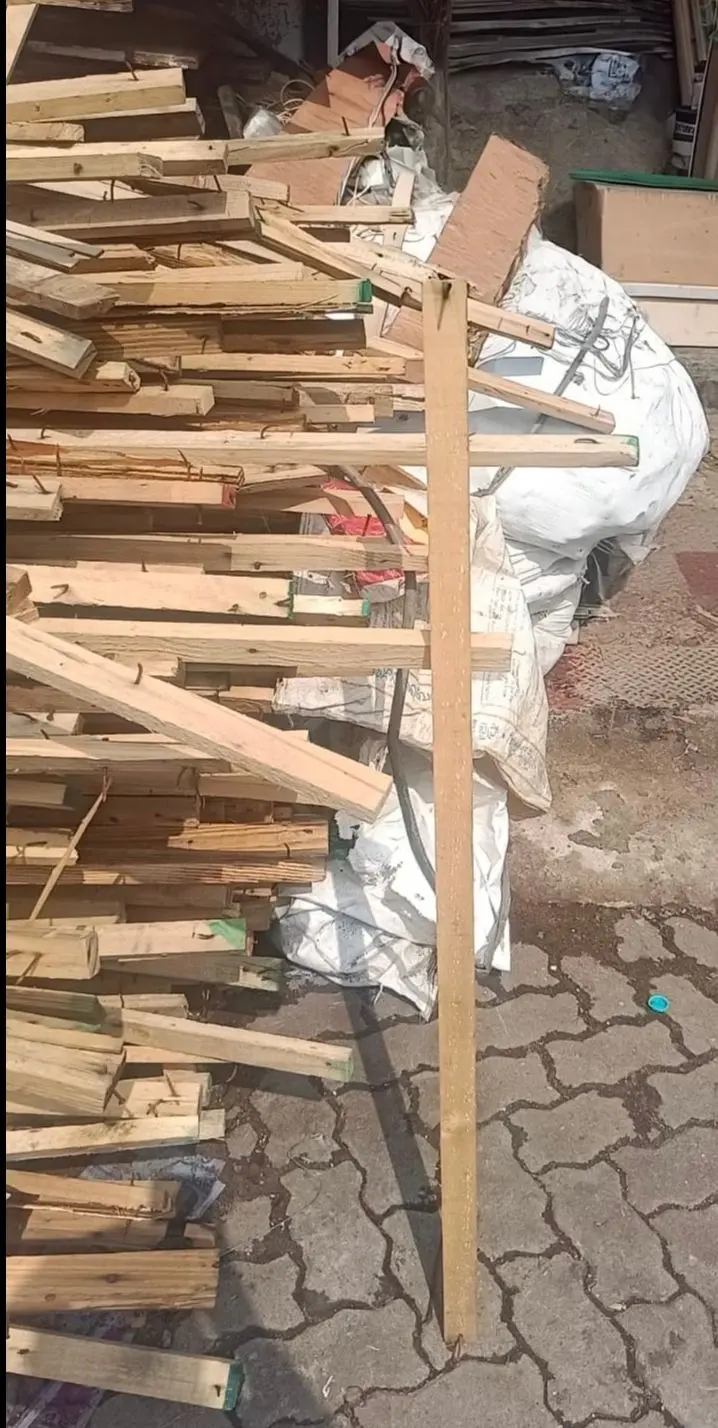
Reclaimed wood reaches the carpenter for our first frame batch
We delivered the reclaimed wood to our carpenter, Mr. Jacob, as we prepare for the first production batch of Preamble frames. The recyclable acrylic sheets have been ordered, but cutting them to the required sizes will take two more days. They are expected to arrive together with the recyclable foam backing sheets, after which production can begin.
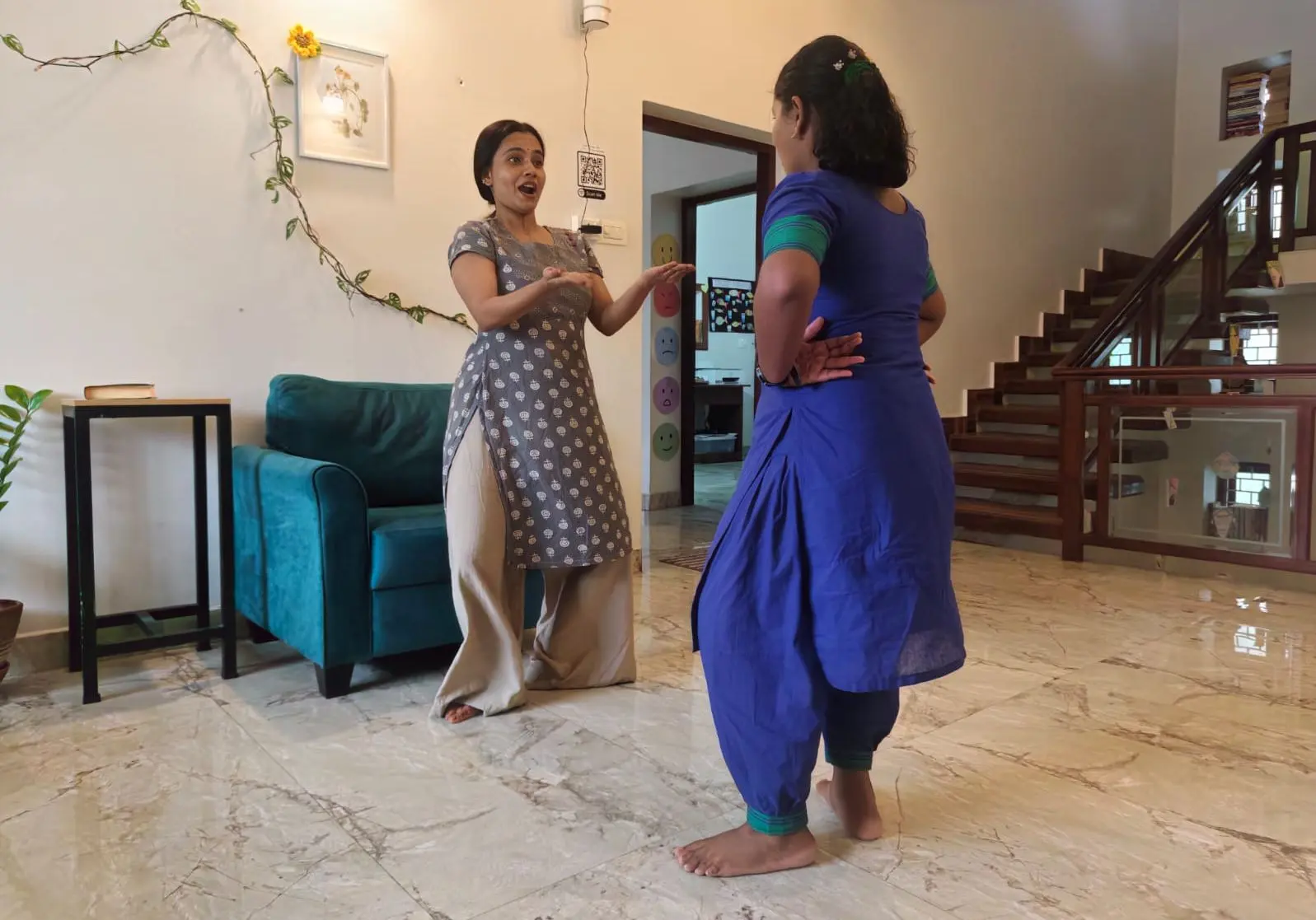
Creating Hand Gestures to Make Dance Learning Accessible
Only one student attended today’s class for children with hearing difficulties, as the others were unwell. I gave her individual attention and revised Nattadavu 1, 2 and 3 from the previous class. Today, I began creating my own hand gestures for dance terms and positions such as aramandi (half-sitting), samam (standing) and muzhu mandi (full-sitting). These gestures were not already part of our teaching method; I developed and introduced them to make dance instructions more accessible for my these students. Instead of relying on spoken reminders, I showed the student each gesture and explained the position it represented. She understood the gestures and responded by moving into the corresponding positions. For the last 15 minutes, she joined the other children’s batch to practise the Adavus. I stood near her and gave visual cues as she tried to follow along and dance with the group.
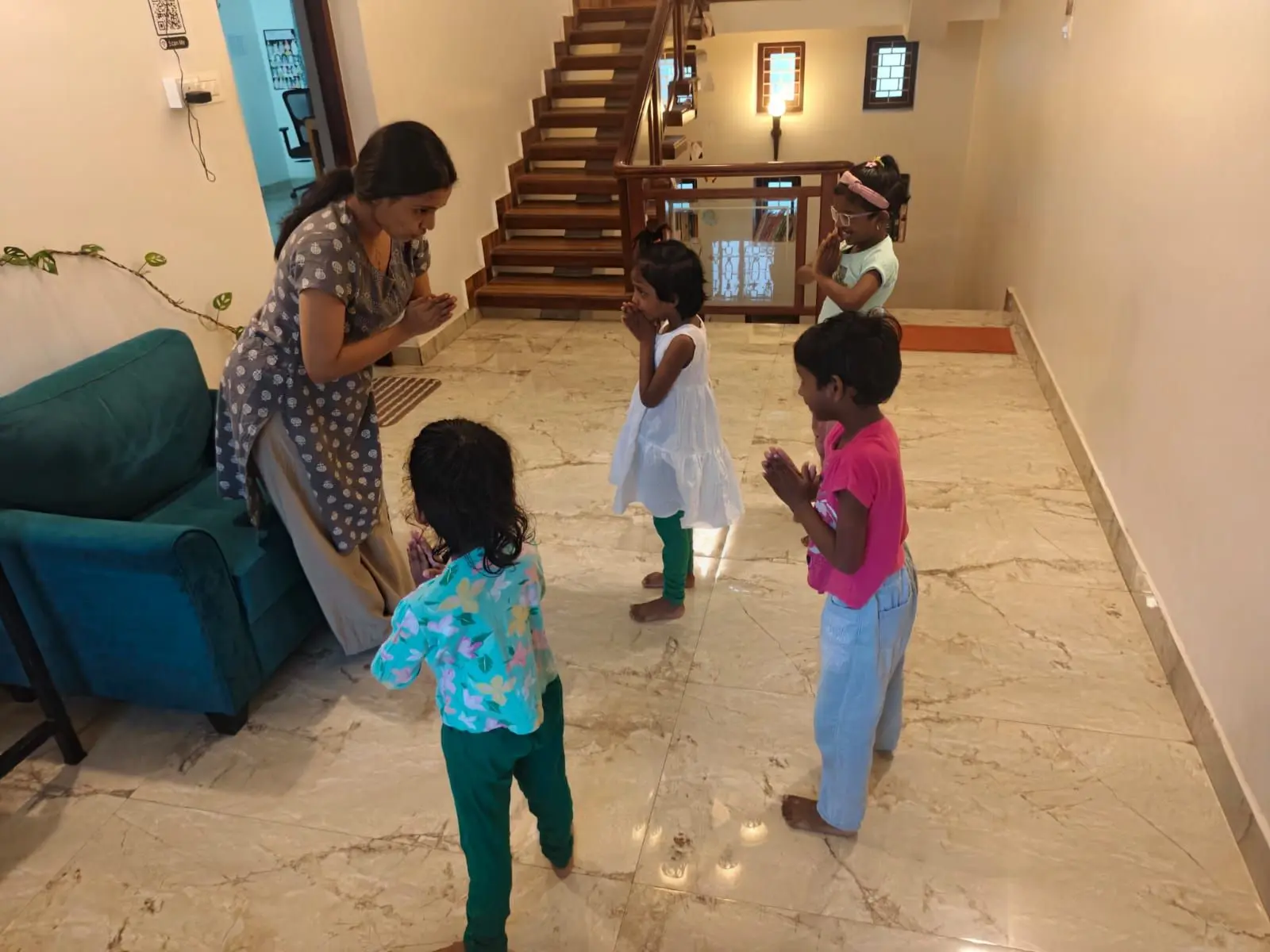
Welcoming a New Batch of Young Learners from Ashwasa Bhavan, Fort Kochi
Today, we began a new batch for four children from Ashwasa Bhavan, Fort Kochi. Their sister brought them to class. At four years old, the children were full of excitement and curiosity about the space and their teacher. It took patience and energy to help them settle, as they were eager to talk and explore. We introduced namaskaram as their first dance practice. With stories and encouragement, the children joined in. Since their attention spans are still developing, we kept the session varied: learning one step at a time, talking together, and exploring hand gestures that represented a bird, a flower and a river. In the final minutes, the children used paints and paper to draw.
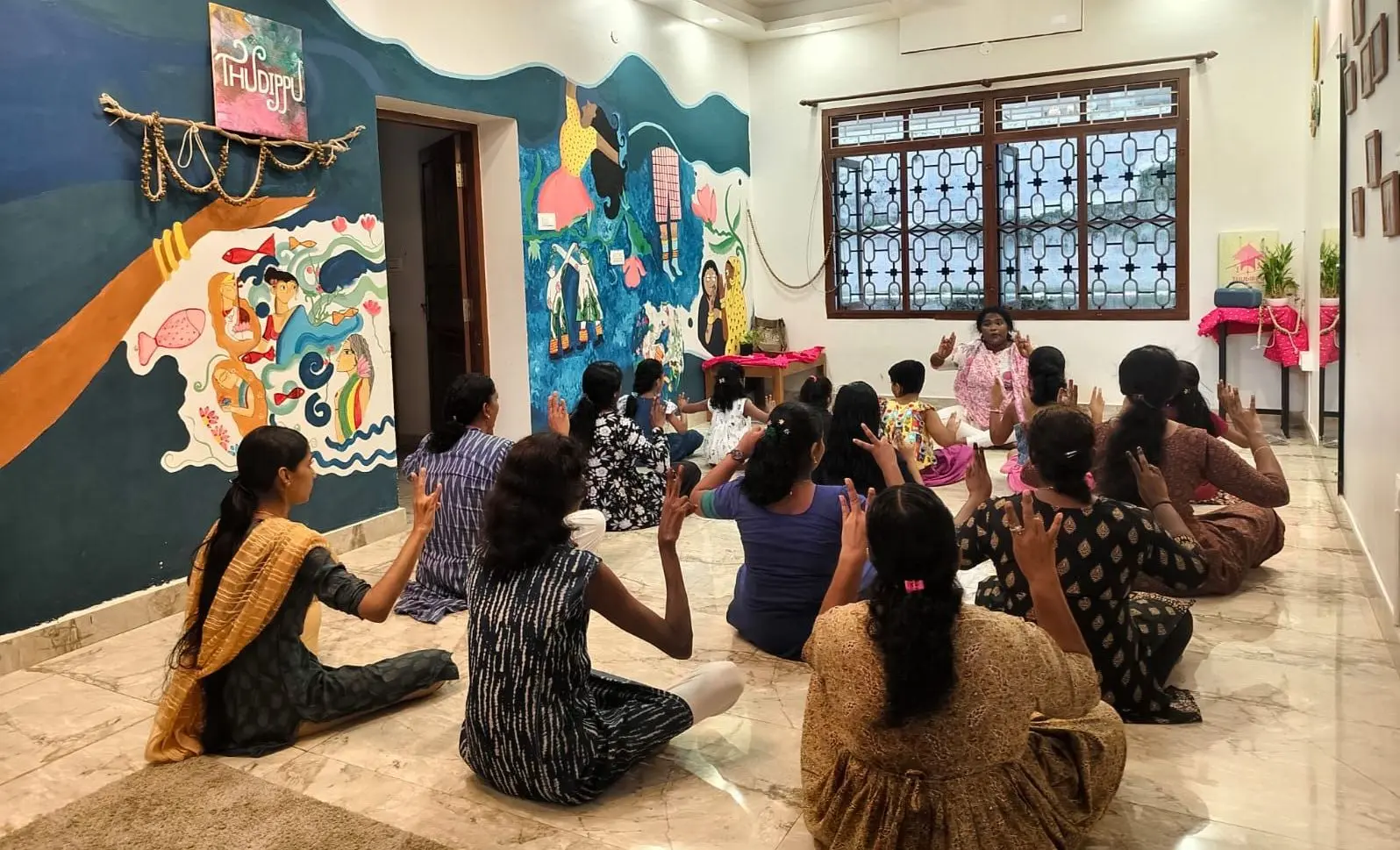
Learning Together Across Generations
Today, the children’s batch and the women’s batch came together for class. Some of the children’s mothers are part of the women’s batch, making it a special opportunity for families to share the dance space. Teaching students across such a wide age range was a new challenge for the teachers, so we guided the group through activities everyone could take part in. Together, the students practised Mudras and Thalam. Learning side by side gave children and adults a chance to share the experience, observe one another and connect through dance.
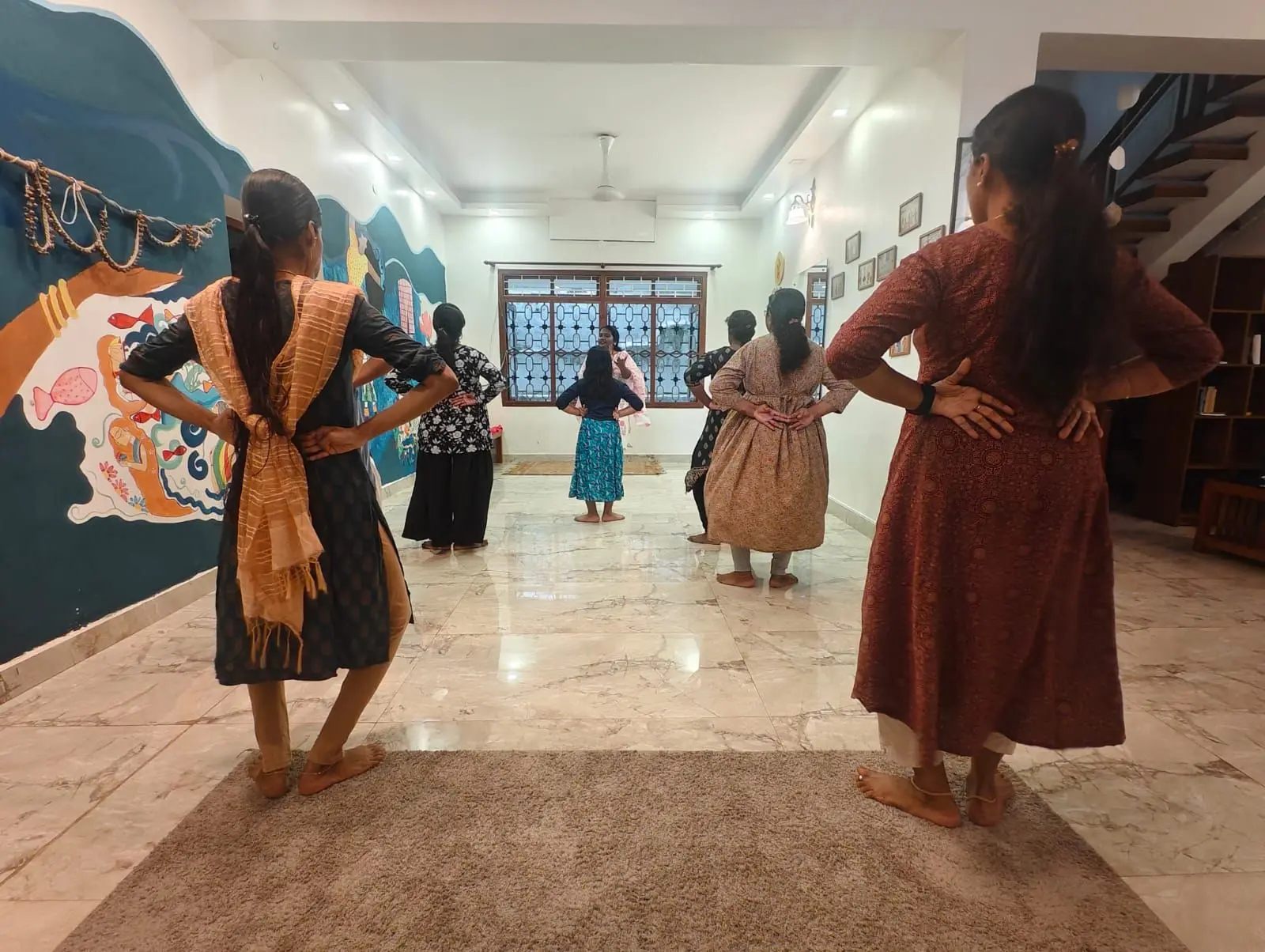
Building Stamina Through Continuous Nattadavu Practice
Stamina is an important part of dance, and it develops gradually through regular practice from the early stages of learning. In today’s class, our women’s batch (aged 30+) focused on building stamina by practising all the Nattadavus continuously, without stopping, across all three speeds. The students felt tired, but they kept going and completed the practice without giving up. Their determination reflected their dedication to learning dance. Continuous practice helps dancers build the stamina needed to sustain movement and rhythm.
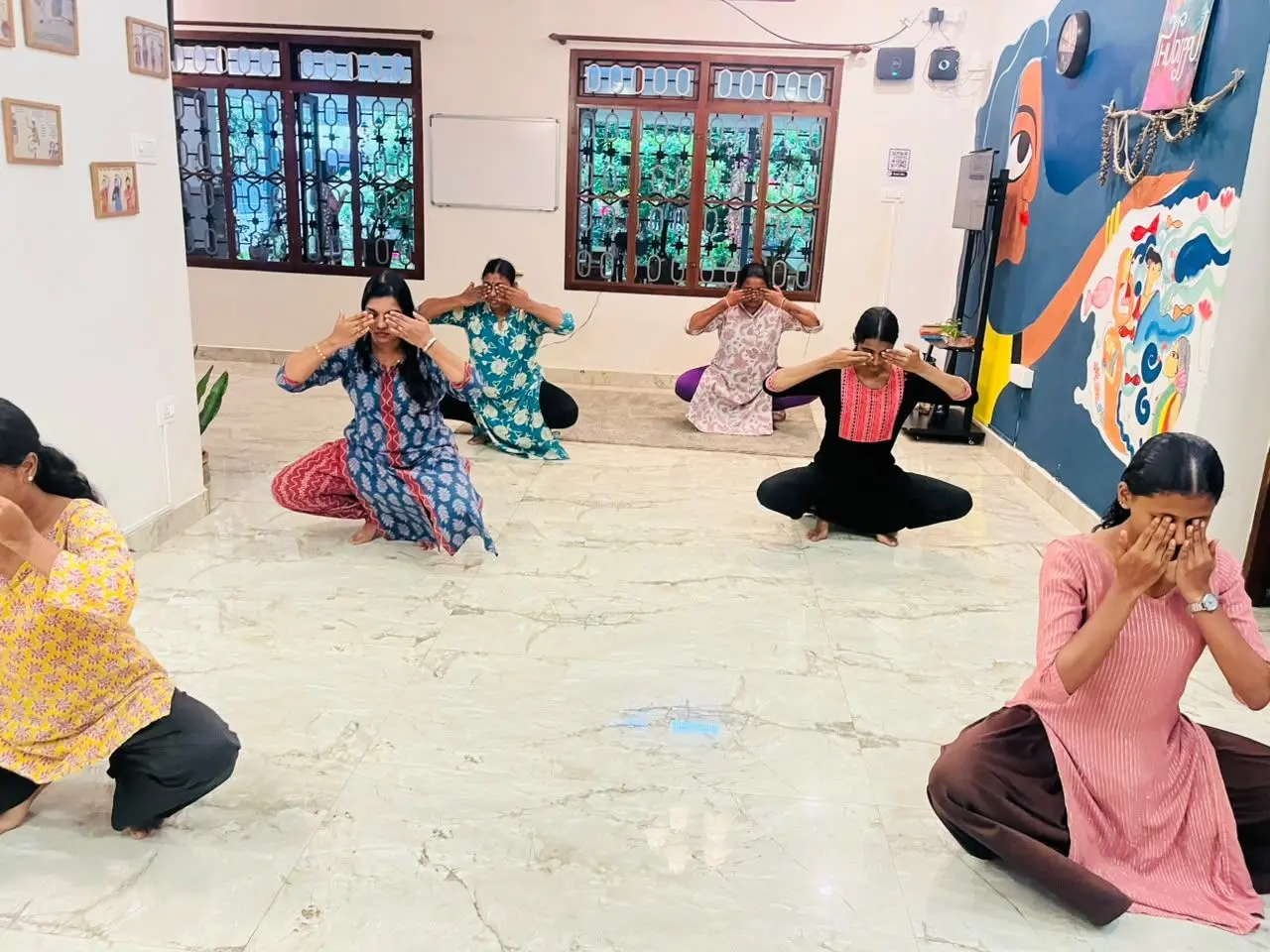
Beginning Performance Preparation for the Seniors’ Batch
We began teaching a dance item to the seniors’ batch in preparation for their performances in February. Preparing students for a performance takes time, practice and continued learning, so we are starting early. Regular rehearsal will help the students become familiar with the item and work towards performing it with confidence and accuracy.
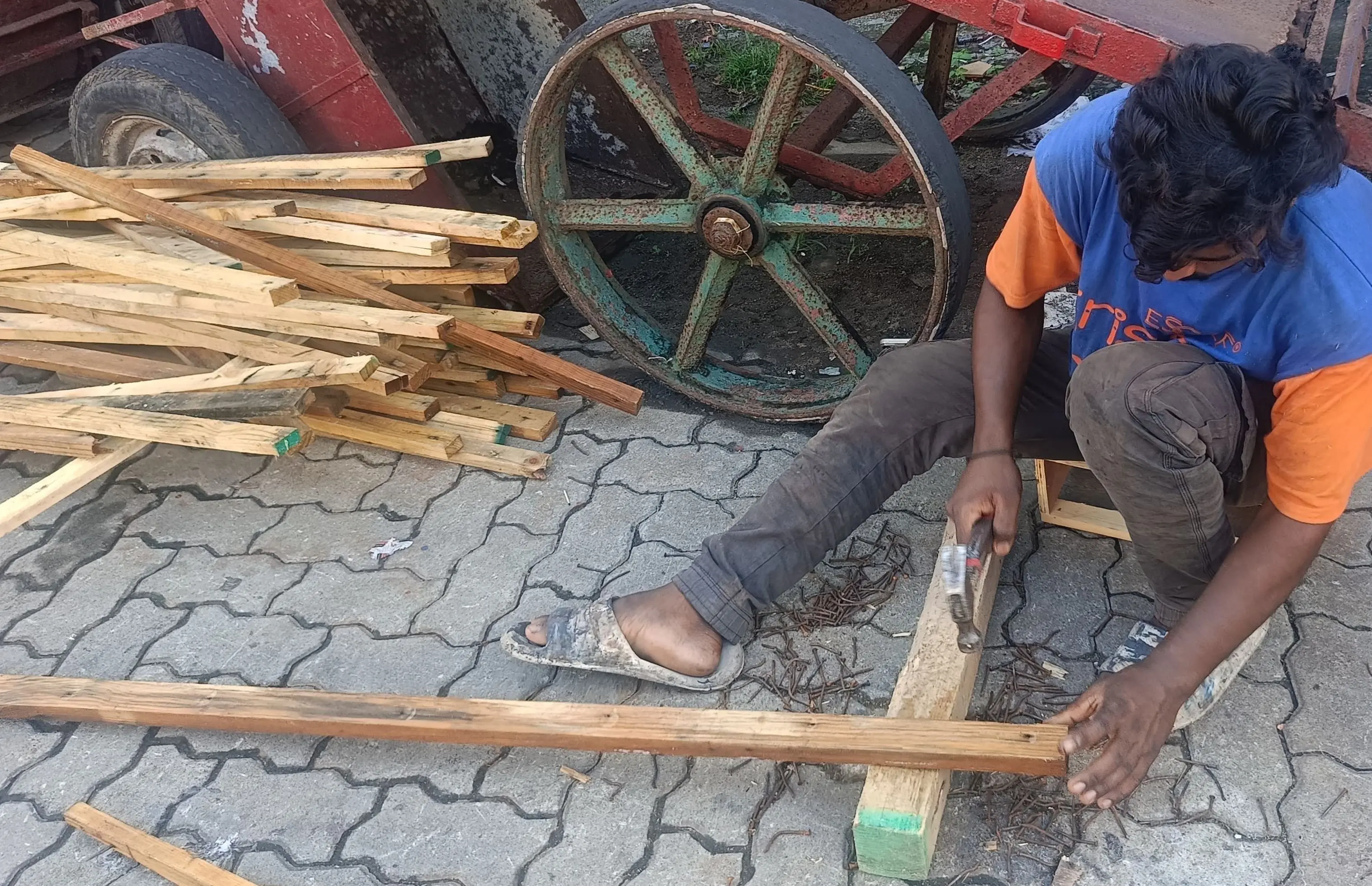
Giving reclaimed wood a new story
We removed nails from the reclaimed wood, preparing it for a new journey as frames for the Preamble to the Indian Constitution. This was a practical step towards giving the wood a new purpose. The wood will next go to our carpenter, Mr. Jacob, along with recyclable acrylic sheets and recyclable foam backing sheets for frame production.
A Quiet Saturday of Drawing and Making
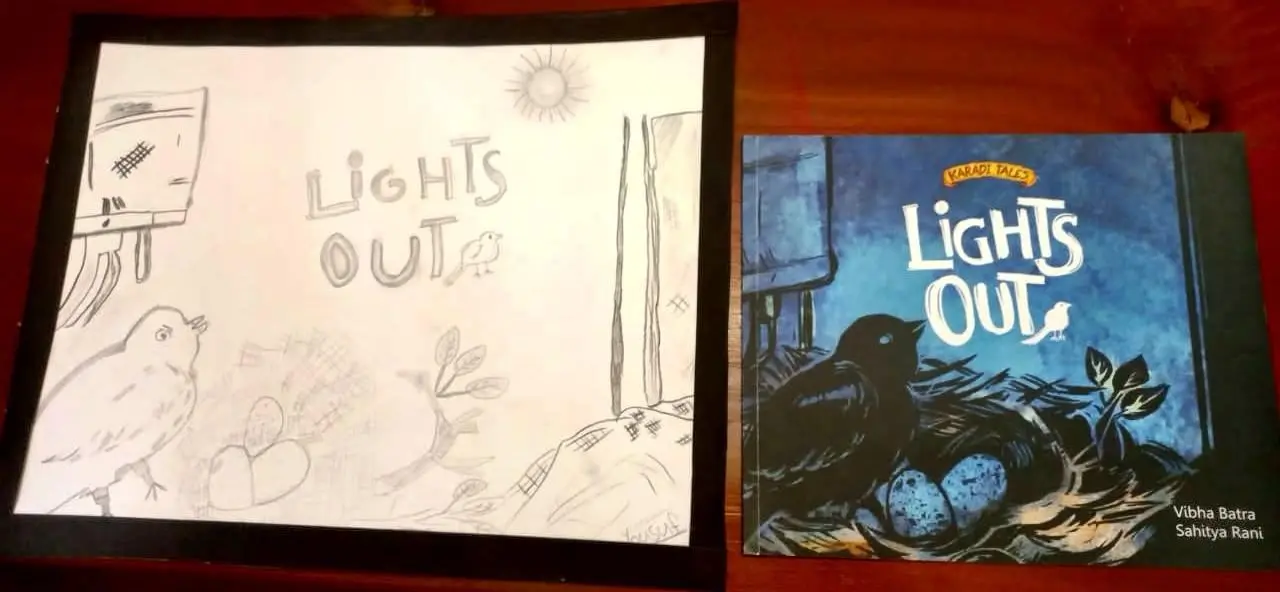
We had prepared a full afternoon. The children would begin with a word activity, choose books and read together in pairs, and then work in teams to invent something that could solve a problem they had noticed at home or around Kochi. But this Saturday, just one child arrived. We waited until 2:30 pm in case others were on their way. When no one else came, we asked whether he was happy to stay and what he would like to do. He chose drawing. As he had missed the previous session, the word activity was unfamiliar to him. Instead, he tried the Circles Challenge, turning the empty circles into faces, planets, balls and other pictures. Afterwards, he picked up Lights Out written by Vibha Batra and illustrated by Sahitya Rani, and asked whether he could draw his own version of the cover. We gave him chart paper and colours and let him work. When he finished, we cut strips from black paper and added them around his drawing to make a frame. He was curious about what else we could make, so we tried cutting and folding paper into a small cube. While his hands were busy, we talked. He told us about drawing at school and the prizes he had won. It was not the session we had planned, but it became a quiet afternoon of drawing, making and getting to know one child a little better.
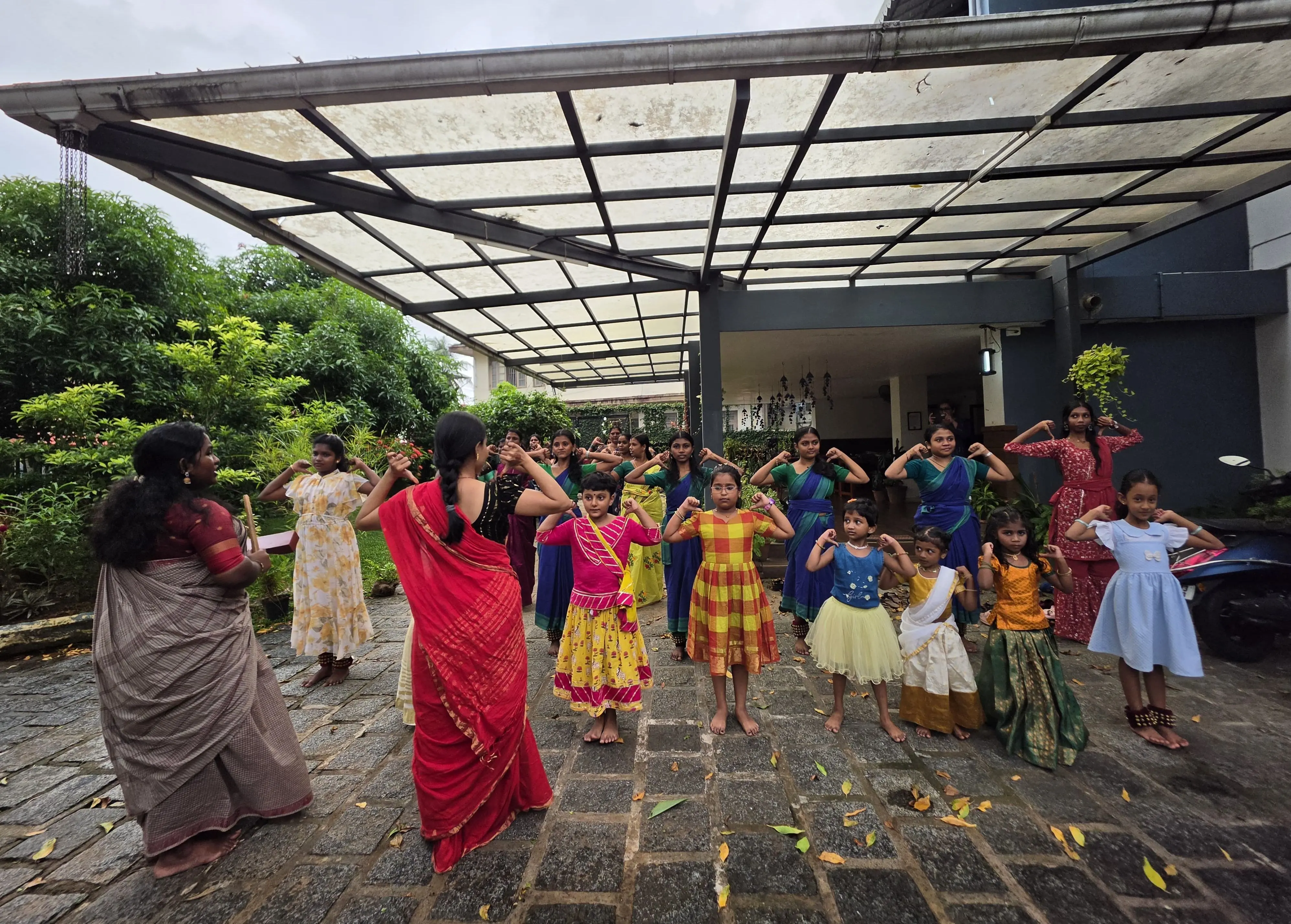
Dance Together Day: Celebrating a New Milestone
Today, students from across our batches came together for Dance Together Day. Students of different ages and levels met, danced and celebrated as one community. Students aged 40 and above danced alongside children as young as three years old, making it special to see generations sharing the same dance space. All four teachers were present, and many students came dressed for the occasion. Some students were unable to attend, but those who came brought plenty of joy and energy to the day. We also celebrated a special milestone for students who were ready to progress to the next level: wearing the chilanka (dance bells) for the first time. Teachers tied the bells for the students, and they danced wearing them. This step reflects the students’ growing confidence and their ability to maintain the talam (rhythm) without losing the beat. The day felt like a joyful meetup as students from different batches and age groups shared the dance space. Events like this encourage students to keep learning, give them a chance to connect with one another, and create a happy place to come together through dance