
Fort Kochi
aikyam space
- 323 activities here
- 6 community clubs
- 4,376 participations here
Fort Kochi
aikyam's own room — open every afternoon, where the community clubs run.
What happened here
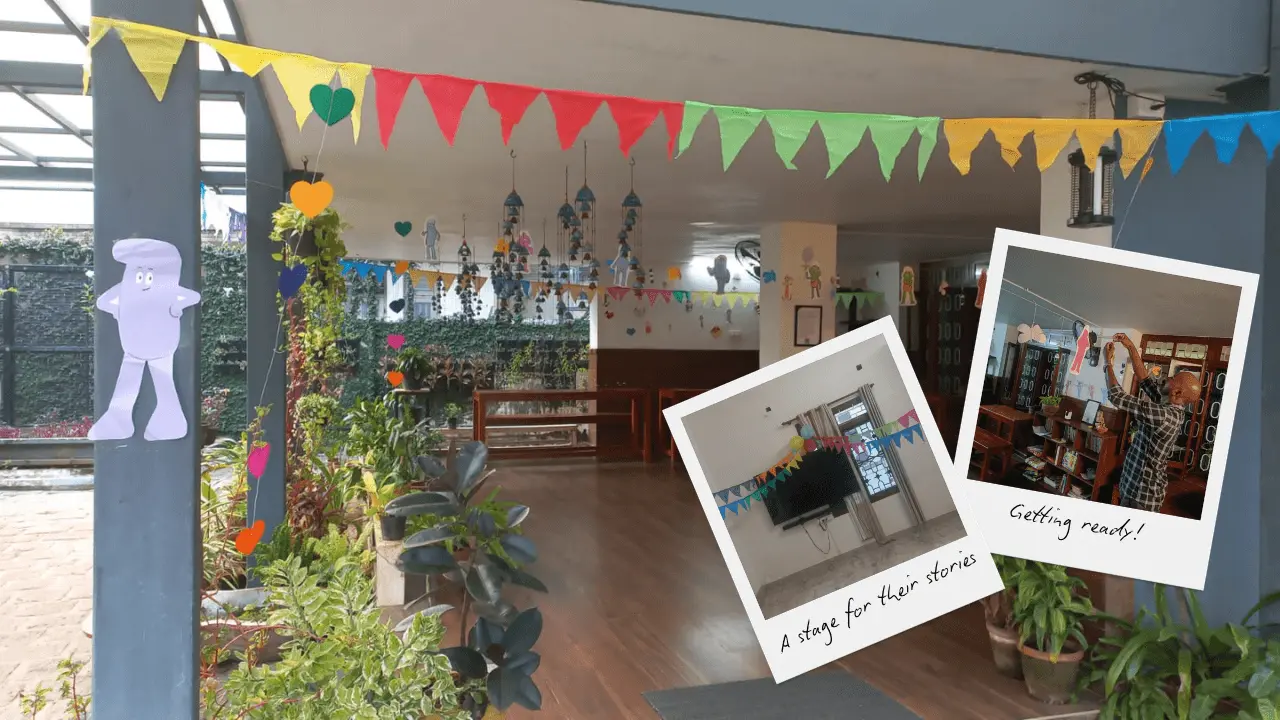
Reconnecting with Curiosity Club children and families
Attendance at Curiosity Club has been uneven. We wanted to find children we had lost touch with. We also wanted to reconnect with their families and understand what makes attending difficult. Over a week, we brought existing records into one master register. This helped us identify children who had not returned recently. We corrected names and removed duplicates. We also added every family to WhatsApp. Children's Day gave us a welcoming reason to reach out. We individually invited all families through messages and voice notes. We kept the invitation separate from questions about absence. We will follow up next week to understand what might help children return. We have planned games and art. We also planned crafts and clay modelling. We will offer face painting and opportunities to perform. We want children to enjoy themselves and choose how to take part. We also want them to feel welcome to come back. Today, we decorated aikyam, ready to welcome everyone tomorrow.
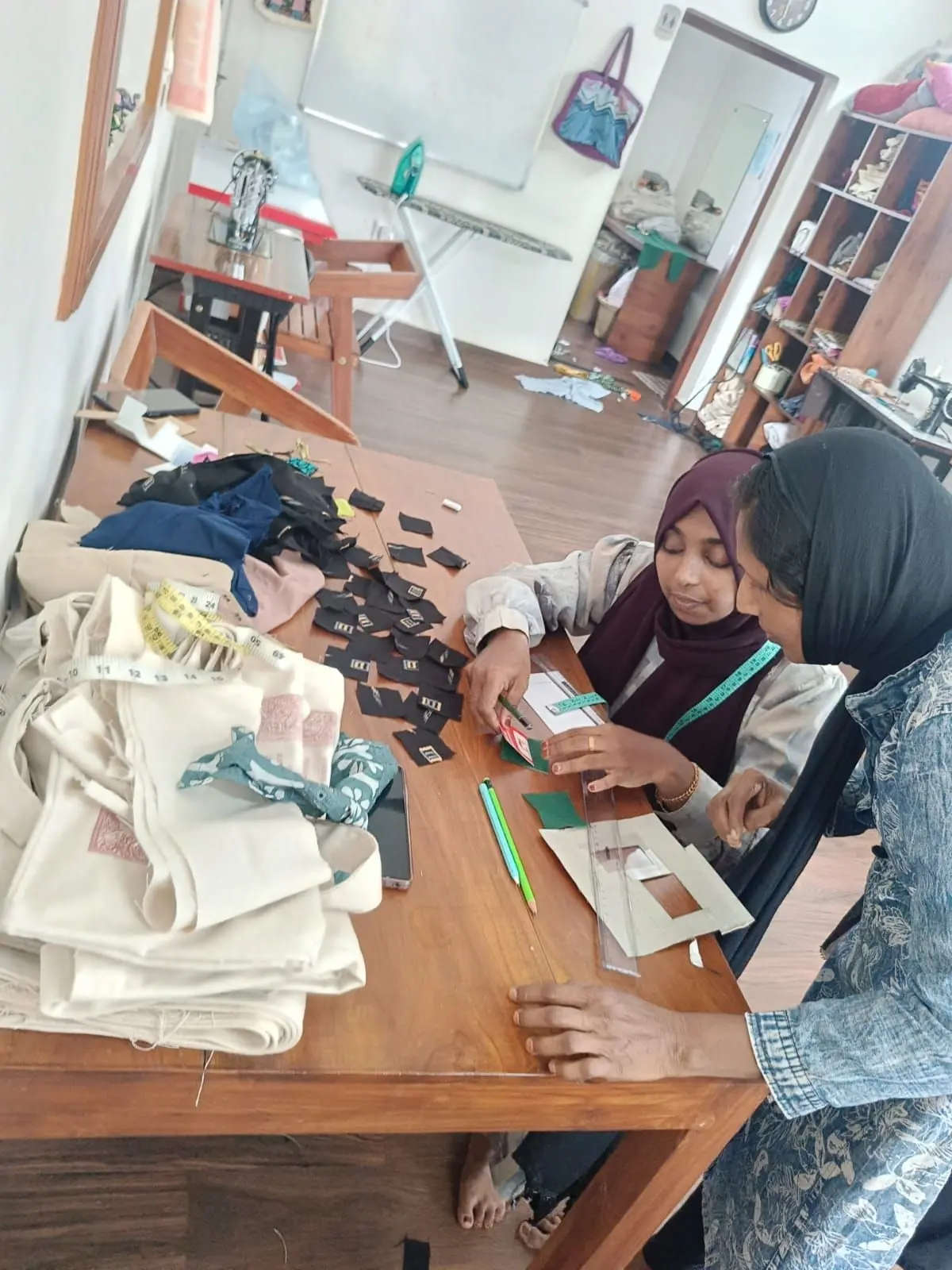
Scaling fabric preparation, precision cutting, and Kantha embroidery
Production progress We had a busy and productive day. We continued our production sprint for our store launch. The launch needs an initial inventory of 400 to 500 different Kantha designs. As a team, we completed the full pre-treatment and sizing process. This included washing, drying, and ironing the cotton fabrics. Then we cut them into precise 6 × 6 inch squares. With teamwork, we finished about 350 cut squares in two days. We also photographed the pattern designs for cataloging. We kept steady progress on our Kantha embroidery panels. Challenges and solutions Scaling up our cutting volume created technical challenges. Managing bulk fabric was difficult. Keeping dimensional precision was hard. Even after thorough pressing, large stacks of fabric wrinkled again during handling. This required secondary ironing before final assembly. Folding and cutting too many layers at once caused inner layers to shift or bunch up. This led to uneven dimensions. To fix these errors, we used rigid cutting templates. We limited cutting stacks to one to three layers at a time. This ensured uniform 6 × 6 inch squares across the batch. We continued our daily Kantha stitching work.
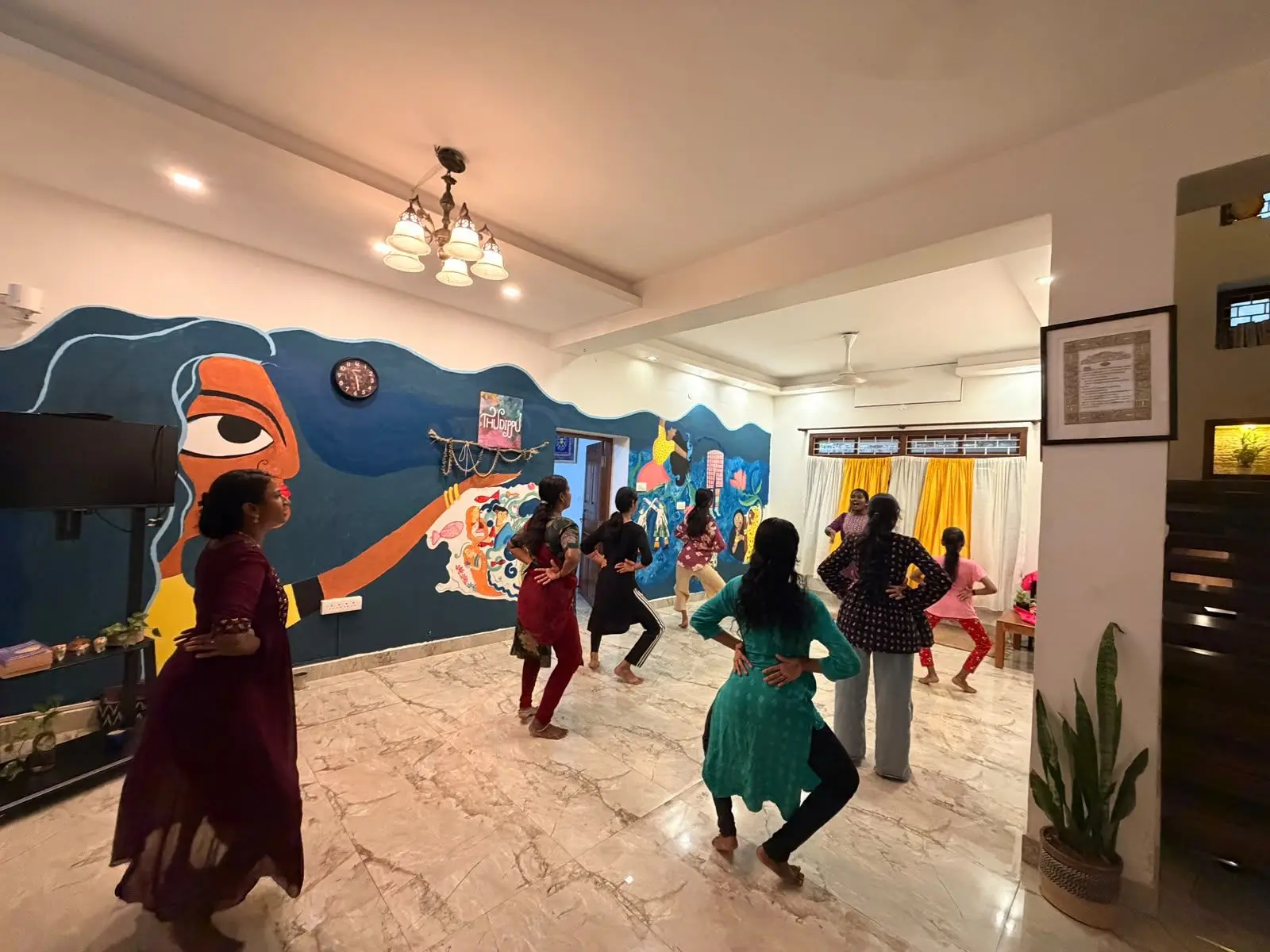
Revising Adavus and reviewing their techniques
On Saturday, most students were absent because they were preparing for exams. We used the session to revise the Adavus we learned earlier rather than introduce new ones. We also reviewed their detailed notes and discussed the techniques involved.
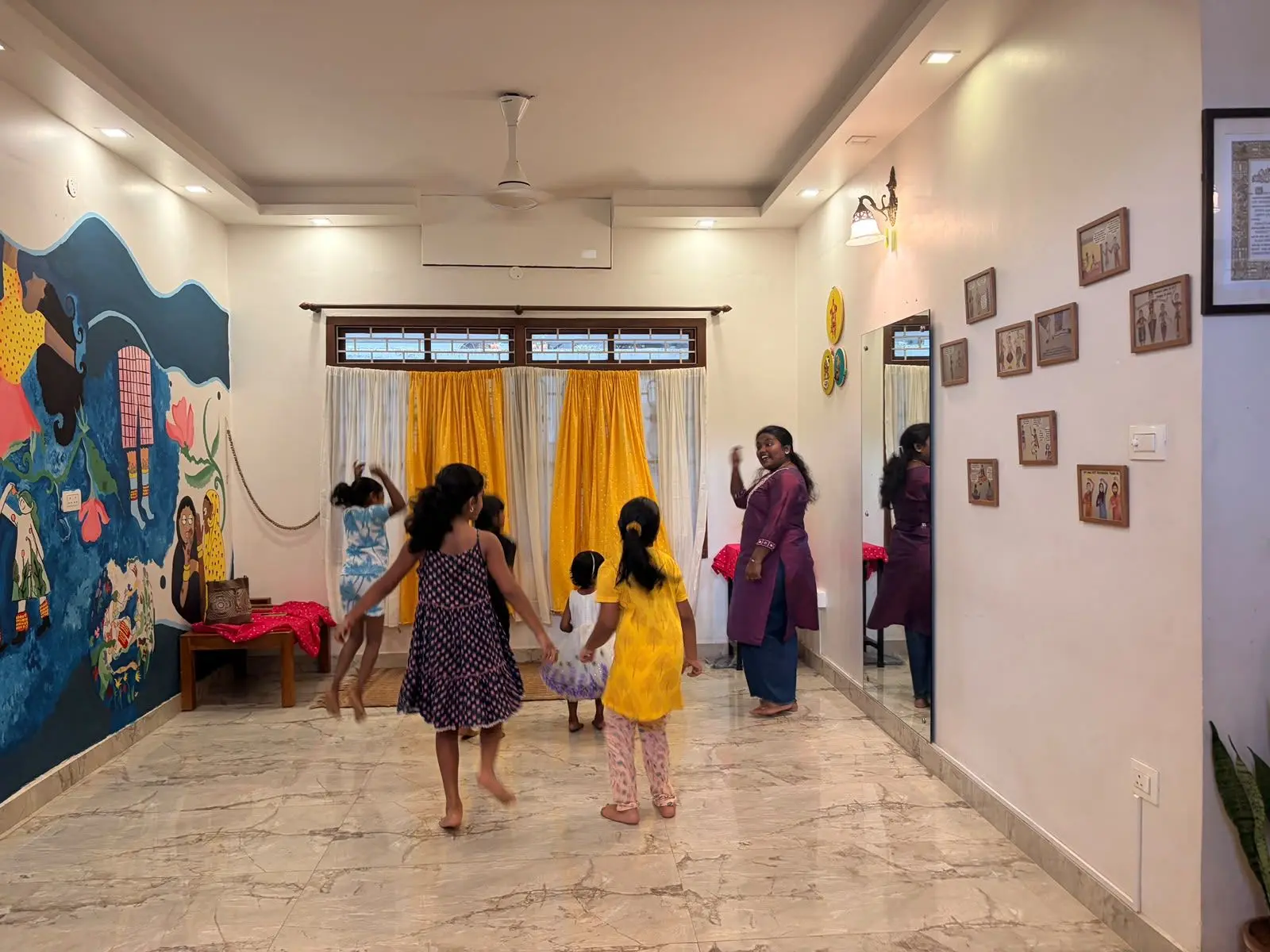
Channeling energy through movement and new Adavu practice
The children arrived with lots of energy. We began with varied movement activities instead of repeating the same Adavus. We explored different kinds of jumps and steps to channel their energy and help them settle. After these activities, we learned a new Adavu.
Planning visual ways for students to learn Talam
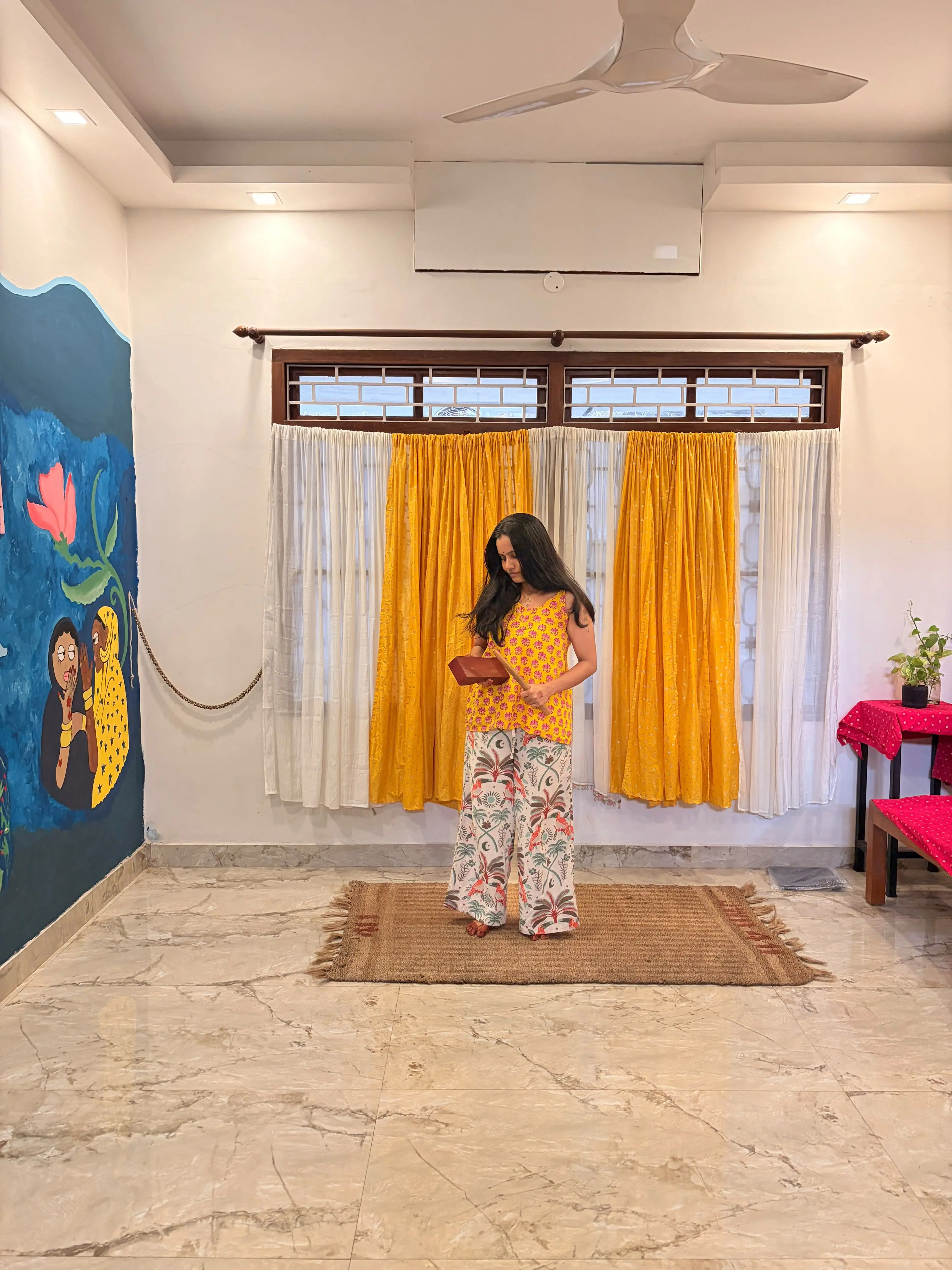
Today's class for students with hearing difficulties did not take place because no students attended. One parent informed us in advance. After waiting, our team contacted the other families and learned that one student was unwell and another was out of town. I felt disappointed because I had prepared for the class, and not all families told us about their absence beforehand. Our team spoke with the parents about the importance of letting us know when a student cannot attend. We can then plan and use the class time effectively. I used the time to think about ways to make Talam more accessible to the students. I began planning a visual activity using the tattukazhi, the wooden stick and block used to mark rhythm. In the next class, I hope to demonstrate the beats so students can observe them and then try marking basic Talams themselves.
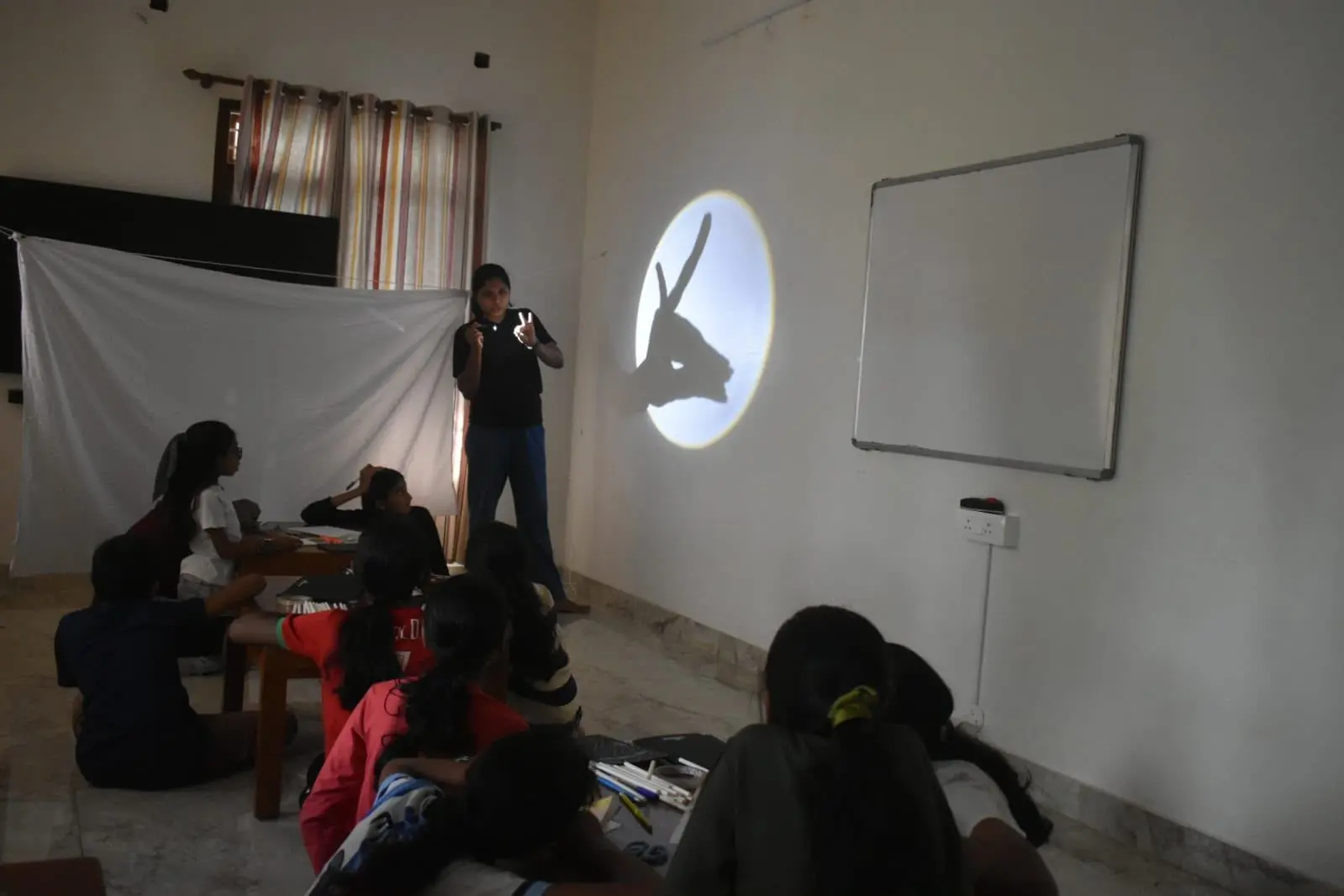
Shadow puppetry returned at the children's request, giving those who missed the earlier session a chance to try it. After free play, we brought reading and puppet-making together. We formed three groups and gave each a short storybook to turn into a shadow show. Children read together, wrote simple scene plans and cut out characters and shapes from paper and card saved from previous activities. We explained how shadows form when an object blocks light and how moving puppets between the light and screen changes their shadow's size. Each group performed its story. One group cut out letters for a "Thank you" ending and worked out how to arrange them so the audience could read the message. We treated the shows as a first trial, with room to practise and improve. We closed by asking what children enjoyed about recent sessions and what they wanted to explore next.
From Lalan Road to London: our weekly check-in
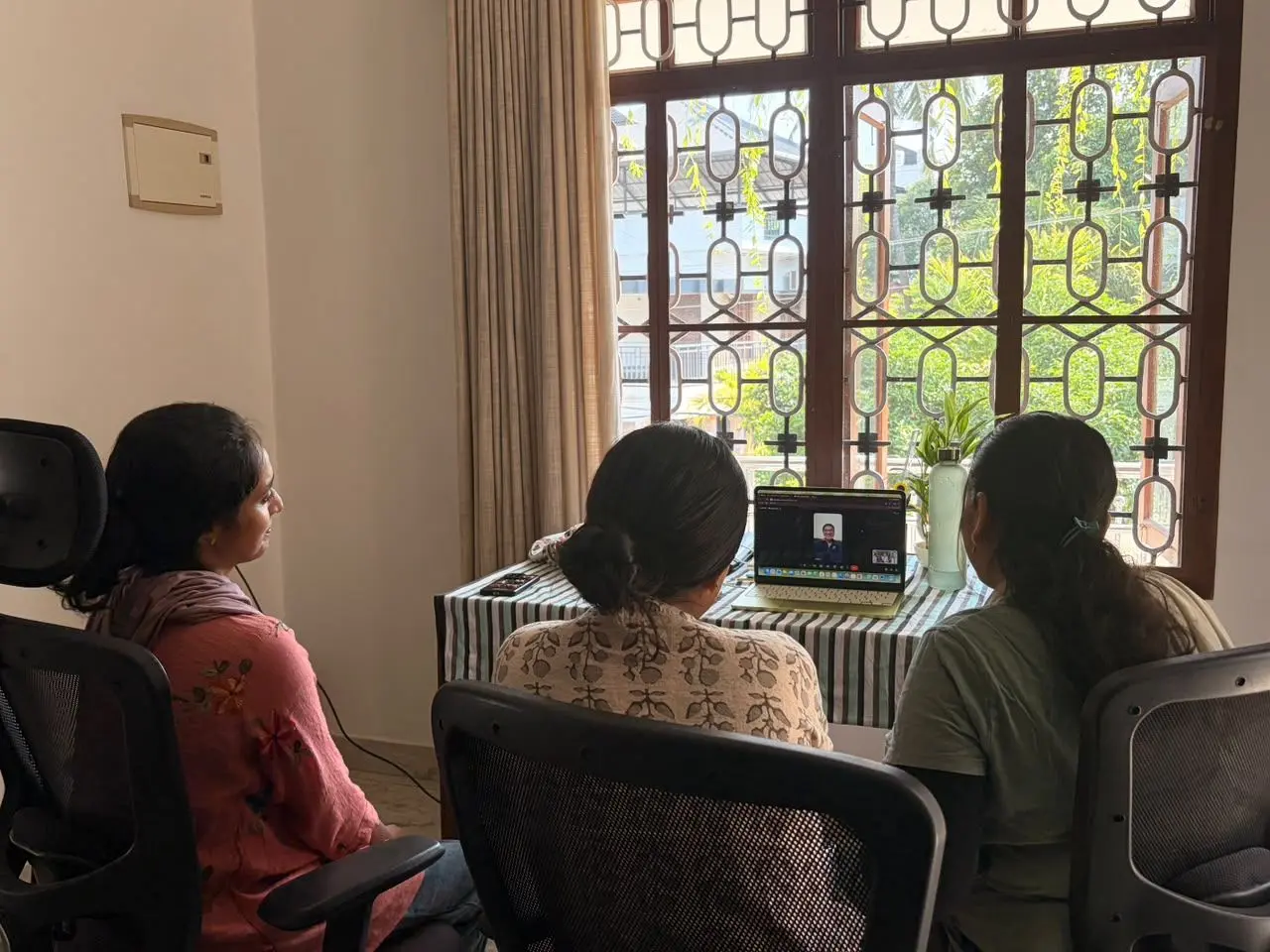
They are miles apart, and still make time to catch up. Shabana from the Stitching Club, Anjali from Thudippu Dance Foundation and Nasrin, a new aikyam fellow, gathered at aikyam. Aarthi from Olimalar Foundation joined online from London. They shared updates on recent activities. Their goal for the month is to find one free, open and safe community space. There they could offer dance, stitching or reading activities. The aim is to bring these activities closer to children and families who might otherwise find them hard to reach.
Finding better strap adjusters for our bags
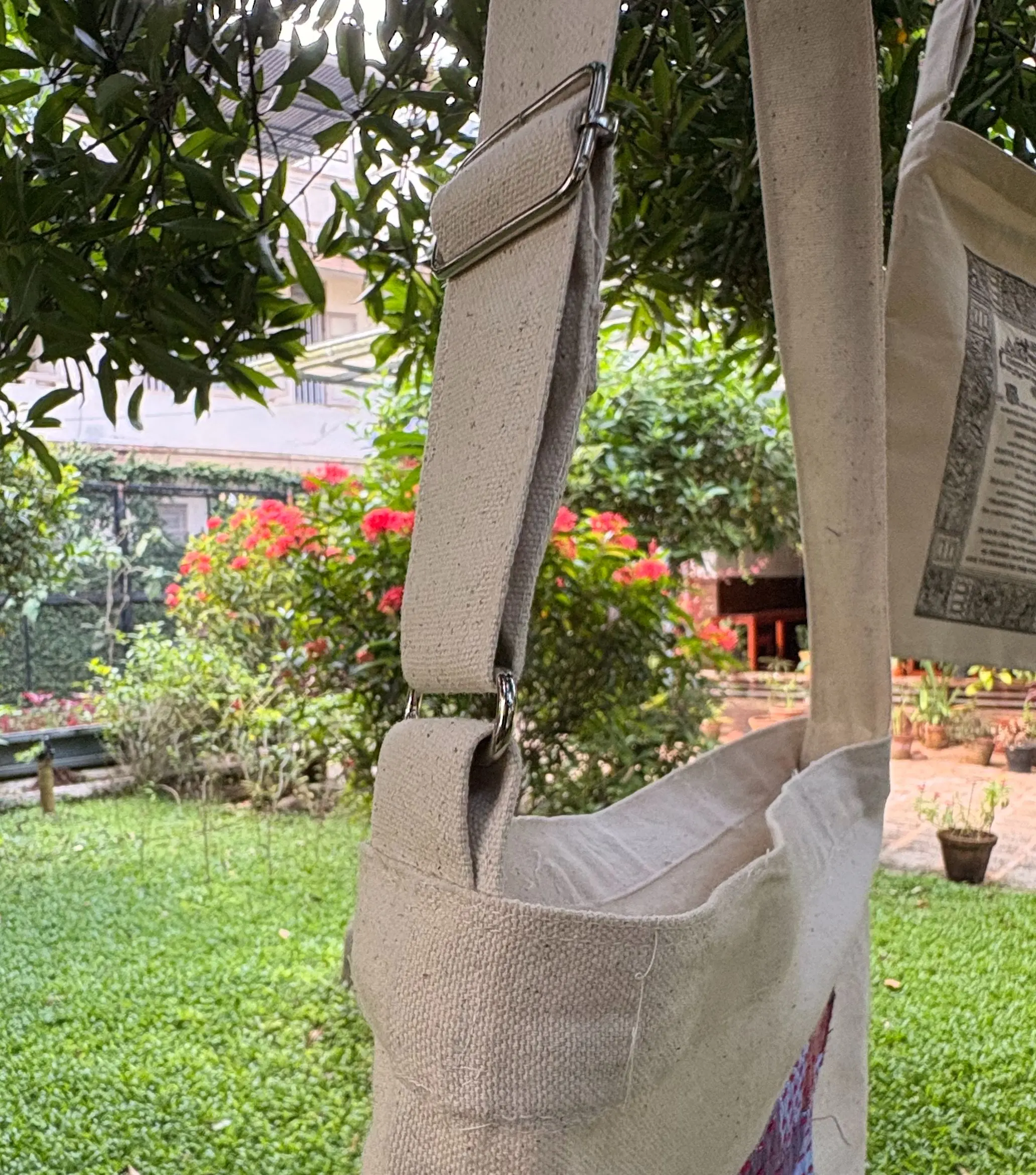
We looked for ways to get better strap adjusters for our bags. We contacted local shops and people to find out where they are sold and whether local workshops could make them. We also explored whether local welding shops could help us identify the material and make the adjusters. After these enquiries, we decided on good-quality stainless steel adjusters with local chrome plating for a better finish. Buying the adjusters and getting them plated are the next steps.
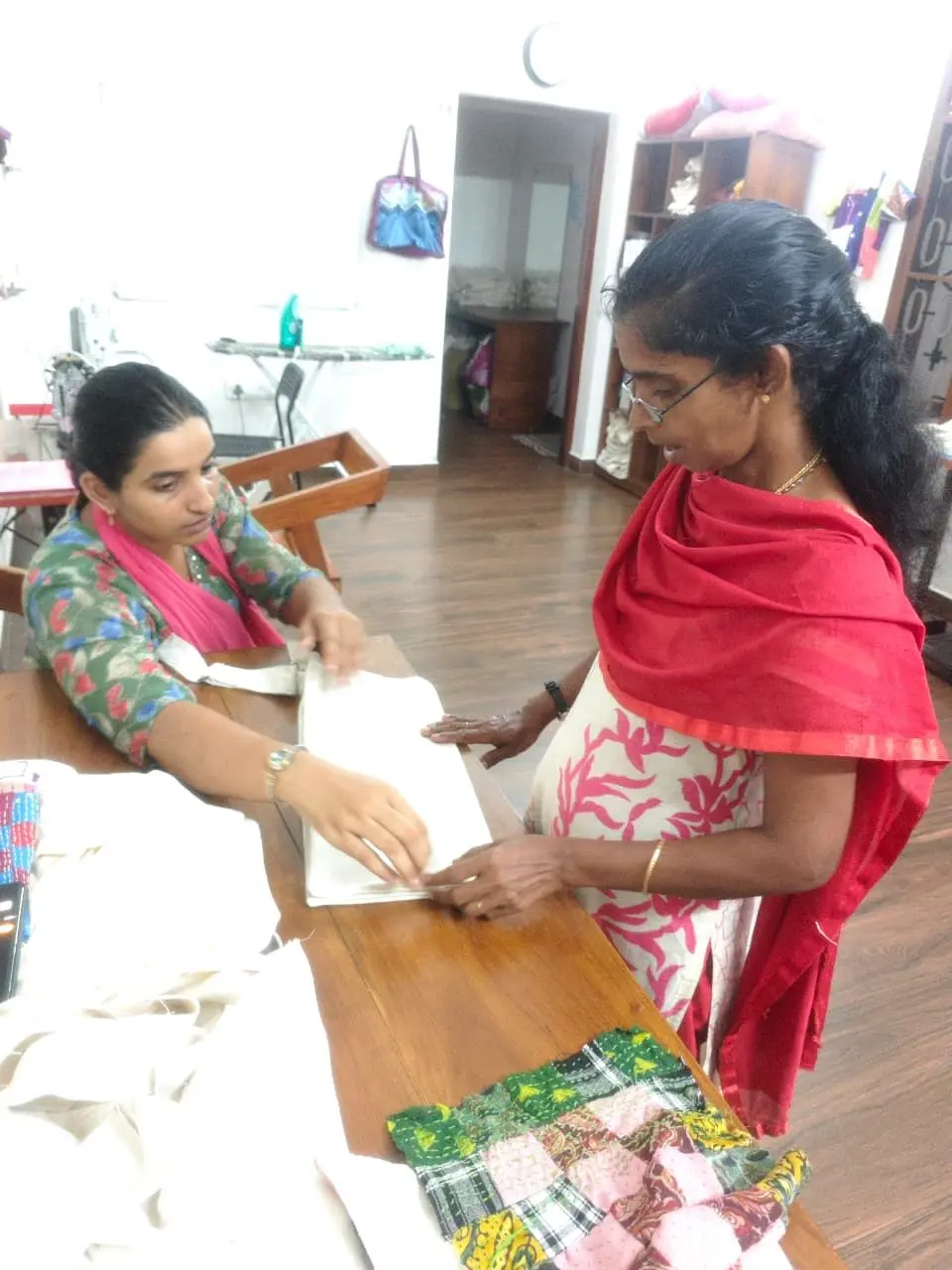
Advanced bag construction: attaching Kantha panels to inner pockets
We ran a specialized construction experiment on adding decorative Kantha panels to bag exteriors with pre-stitched inner pockets. Getting a clean and professional finish without breaking the bag's alignment or usability was a complex technical challenge. We needed to cut the pocket opening neatly and finish the raw edges safely. We also had to manage the seam allowances and decide whether to fold them inward or outward. We anticipated that a Kantha panel over a poorly finished pocket opening could make raw fabric edges snag or pull out when users reached in. To solve these problems, we analyzed different ways to fold the allowances and tested assembly methods on sample pieces. We cut the pocket opening directly into the bag body and folded the allowances outward, not inward. We anchored the folded edges securely with two parallel rows of topstitching, making a flat base. We then placed the complete Kantha embroidered panel directly over the prepared pocket region and stitched it into place. This gave a clean finish, and the inner pocket worked smoothly with no visible raw edges or loose fabric inside.