Independent to Interdependent Communities
Open Space in Fort Kochi for the Community, by the Community.
What is happening
LifSkool: Coping with Emotions
Local Government School | Std 5–7 | 19 boysMaterials: LifSkills workbooks, completed “This Is Me” folders, whiteboard & markers, Find Your Happy by Emily CoxheadSpace: Regular classroom with tables and benchesTiming: 45 minutes availableTuesday was about self-awareness; by Thursday, we were ready to explore coping with emotions. Meeting the boys twice a week during this 5-week programme helps us build naturally on the previous session.We started by looking at their completed “This Is Me” folders and asking a few students to recap what self-awareness meant.To get everyone moving, we played “Do the Opposite.” “Stand up” meant stay seated, “hands up” meant hands down, and “happy” meant showing a sad face. We gradually added emotions into the game, which gave us a fun bridge into the topic. There were plenty of giggles and confused faces, and it was lovely to see the boys come alive.From there, we explored what emotions are, why we have them, and how they can show up in the body. We also talked about the difference between reacting immediately and taking a moment to respond.This time, we came prepared with whiteboard markers after missing them on Tuesday. Being able to write and draw ideas as we spoke made the discussion much easier to follow.We then introduced STAR as a simple coping process:Stop and notice → Take a breath → Acknowledge what you’re feeling → RespondAs part of this, we practised STAR breathing. The boys held one hand up like a star and traced around it with the index finger of the other hand — breathing in as they moved up a finger, pausing at the top, and breathing out as they moved down.We used a few everyday situations to think about how taking that pause might help us choose what to do next.To close, we read Emily Coxhead’s Find Your Happy together — a gentle book about feelings and simple ways children can notice and respond to them. The boys were then asked to complete their workbook reflection at home and try the related activity with a family member.One of our main reflections was that we spoke more than we wanted to. When time is tight, explaining feels quicker, but it gives students less space to connect the skill to their own lives, share ideas and practise for themselves. Next time, we want to ask more, use simple role-play, and give the boys more time to share their own examples.We’re also still finding the best classroom rhythm. Even when we arrive on time, getting everyone together and settled can easily take five or ten minutes. A clearer arrival routine, visual prompts on the board and shorter activity blocks should help us protect more time for participation.A lively second session, plenty of laughs, and a useful reminder to keep the learning active and student-led.
Stitching Unit Update: Fabric Cutting and Template Size Correction
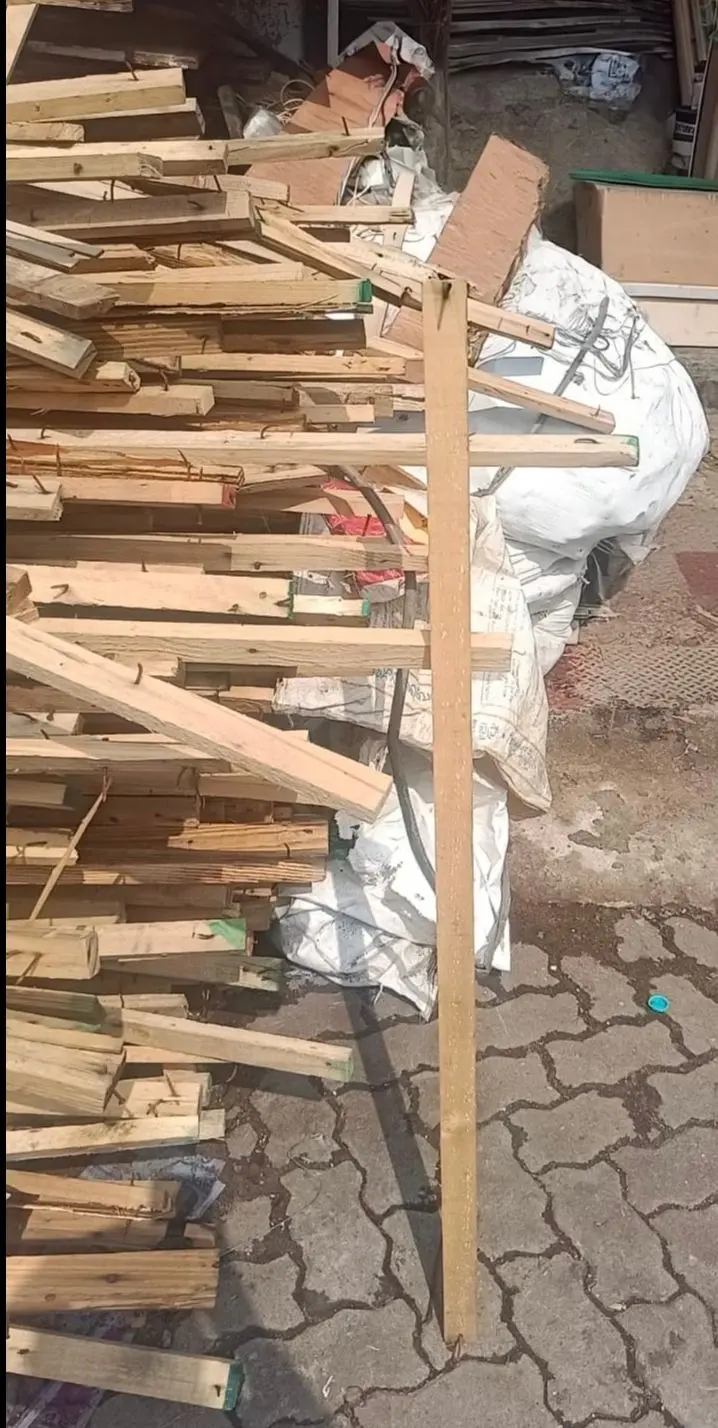
Today in the stitching unit, we completed cutting all the remaining fabrics from yesterday using the templates after ironing them. When we randomly measured a few cut pieces to check accuracy, we noticed a size discrepancy because the thickness of the cardboard templates caused the marked size to increase from 4.5 cm to about 5 cm on the fabric. To achieve the correct size, we adjusted and reduced the template size to 4.1 cm, which successfully yielded the required 4.5 cm fabric pieces. Following this, we corrected all the remaining pieces that had been cut at 5 cm down to 4.5 cm. Finally, we mixed and matched the cut fabric pieces to verify that the colors, designs, and cutting patterns coordinated and matched as intended.
Exploring Kantha Embroidery: Paper Prototyping and Fabric Preparation Workshop
During the Kantha workshop, the team faced challenges in aligning puzzle pieces, which led to experimenting with black and white contrasts as well as dark and light shades to achieve proper layout balance. This process highlighted the importance of visual prototyping before cutting fabric, allowing the artisans to learn how subtle tonal variations impact the overall structural design. Once the layout was finalized, participants developed technical precision by systematically ironing, cutting fabrics into 4.5 cm pieces, and sorting them by color palette.
A Wrinkled Heart opens a conversation about kindness
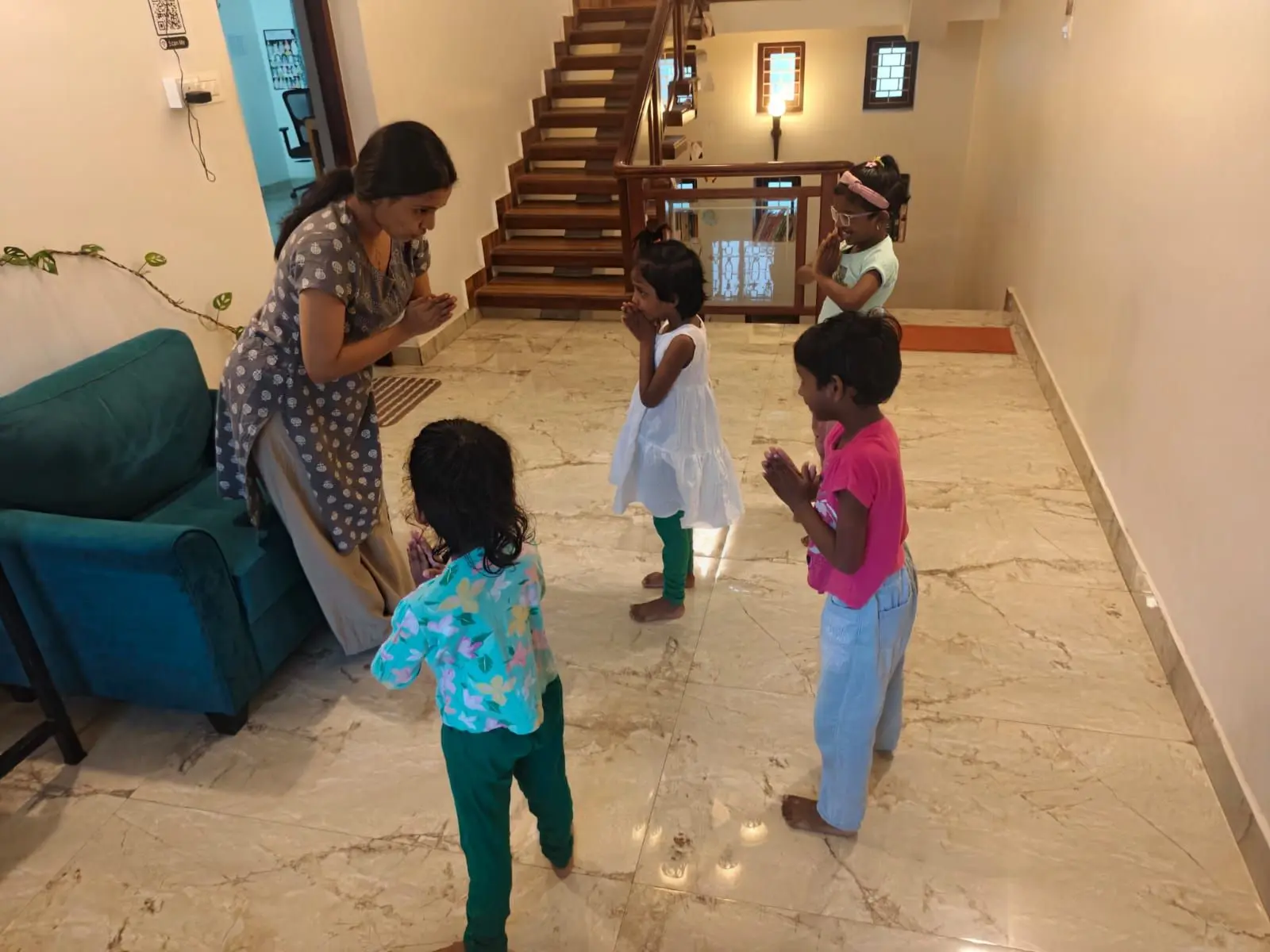
The children read A Wrinkled Heart by Tracy Hoexter and talked about how words and actions can affect other people. The story helped them think about kindness, feelings, and the importance of speaking to others with care.
Community Clubs
Stitching Club
Mon–Sat, 2–6 PM · Free
In Malayalam
Curiosity Club
Mon–Sat, 2–6 PM · Free
In Malayalam, English.
Reading Club
Mon–Sat, 2–6 PM · Free
In Malayalam, English
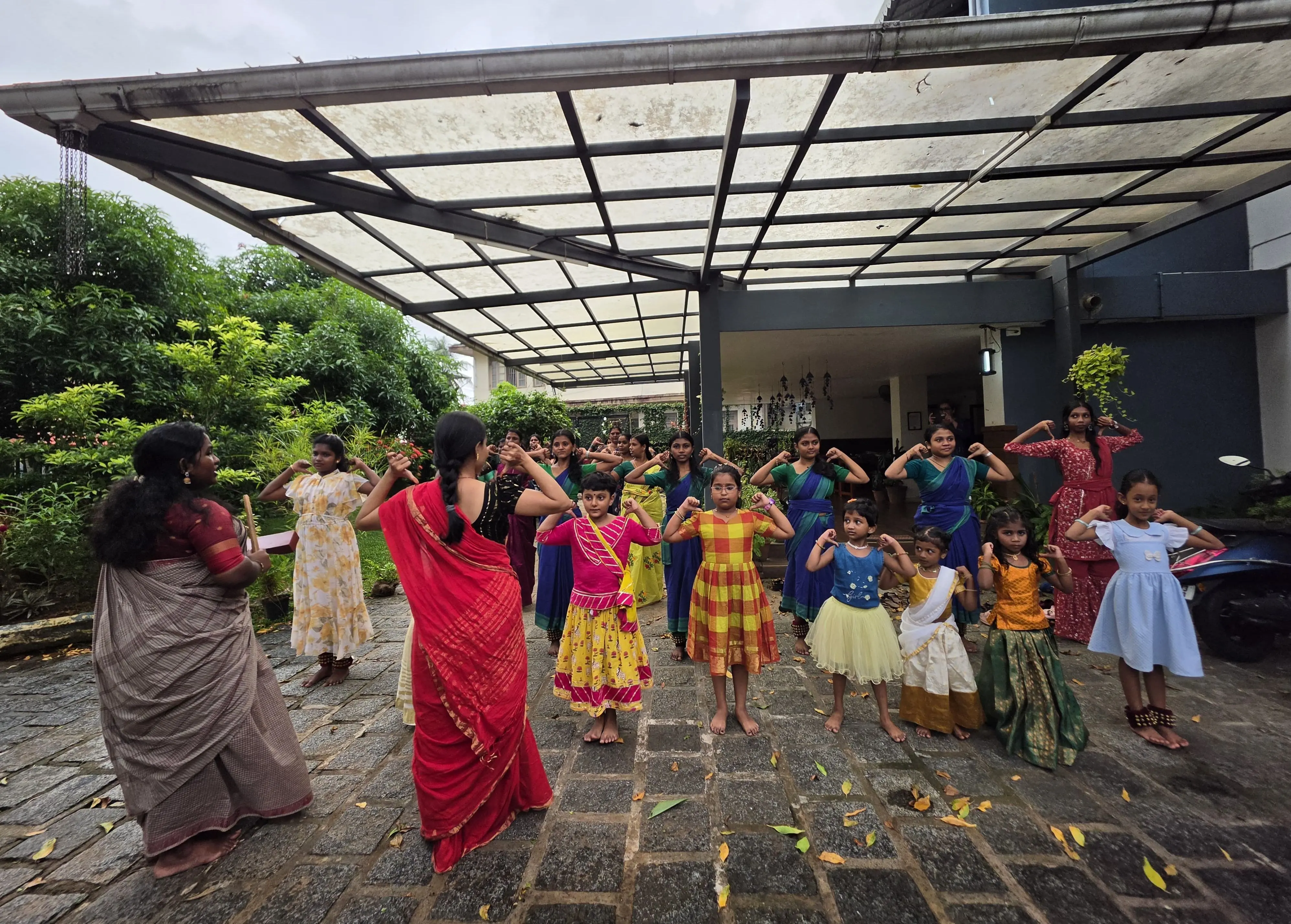
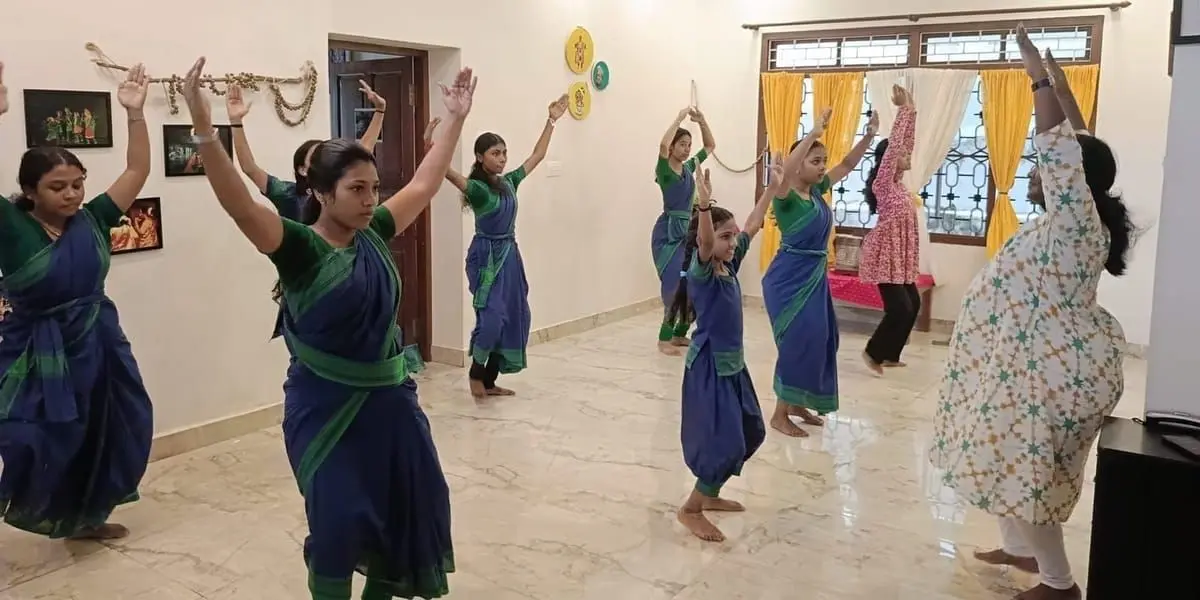
Dance Club
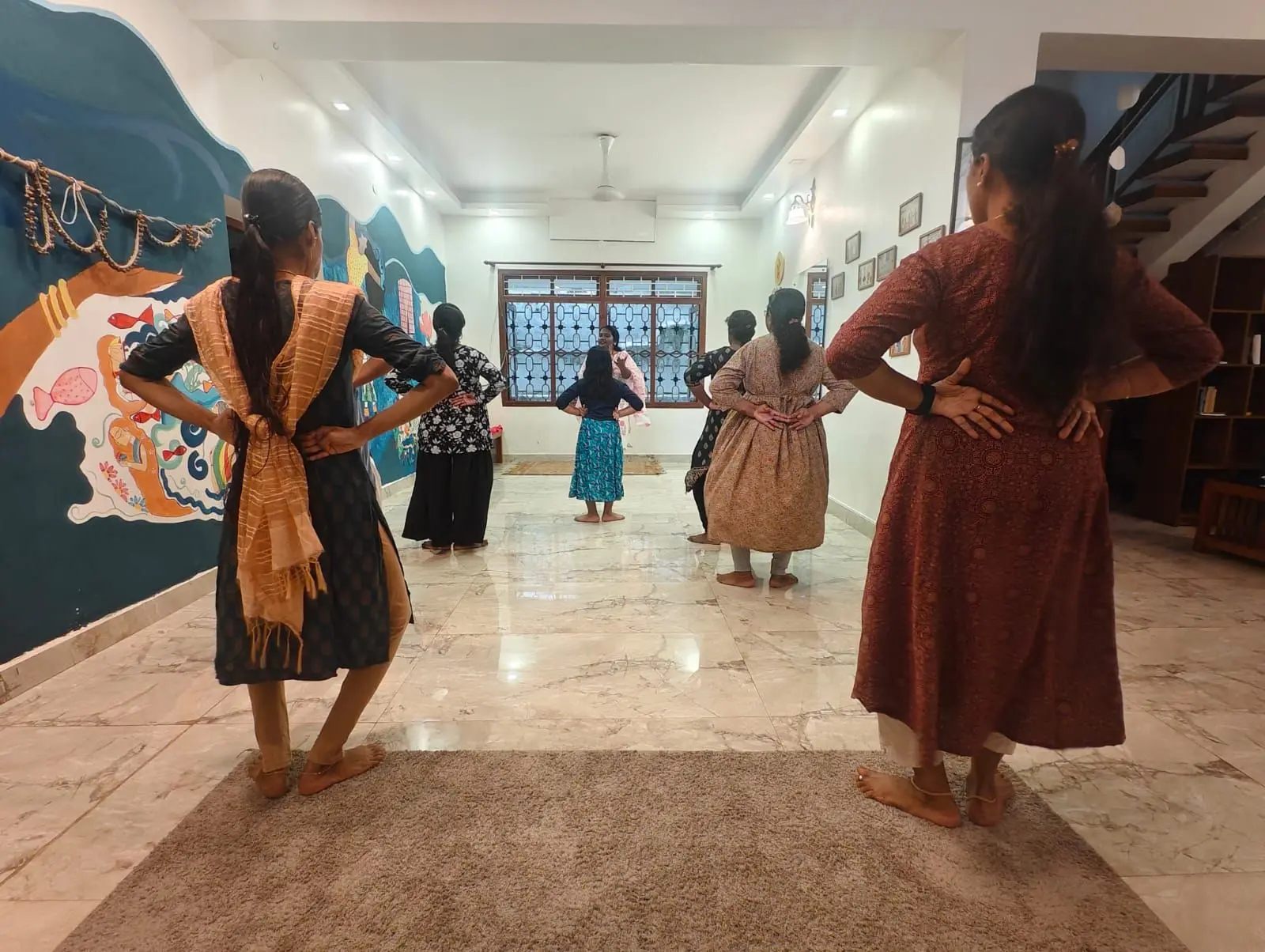
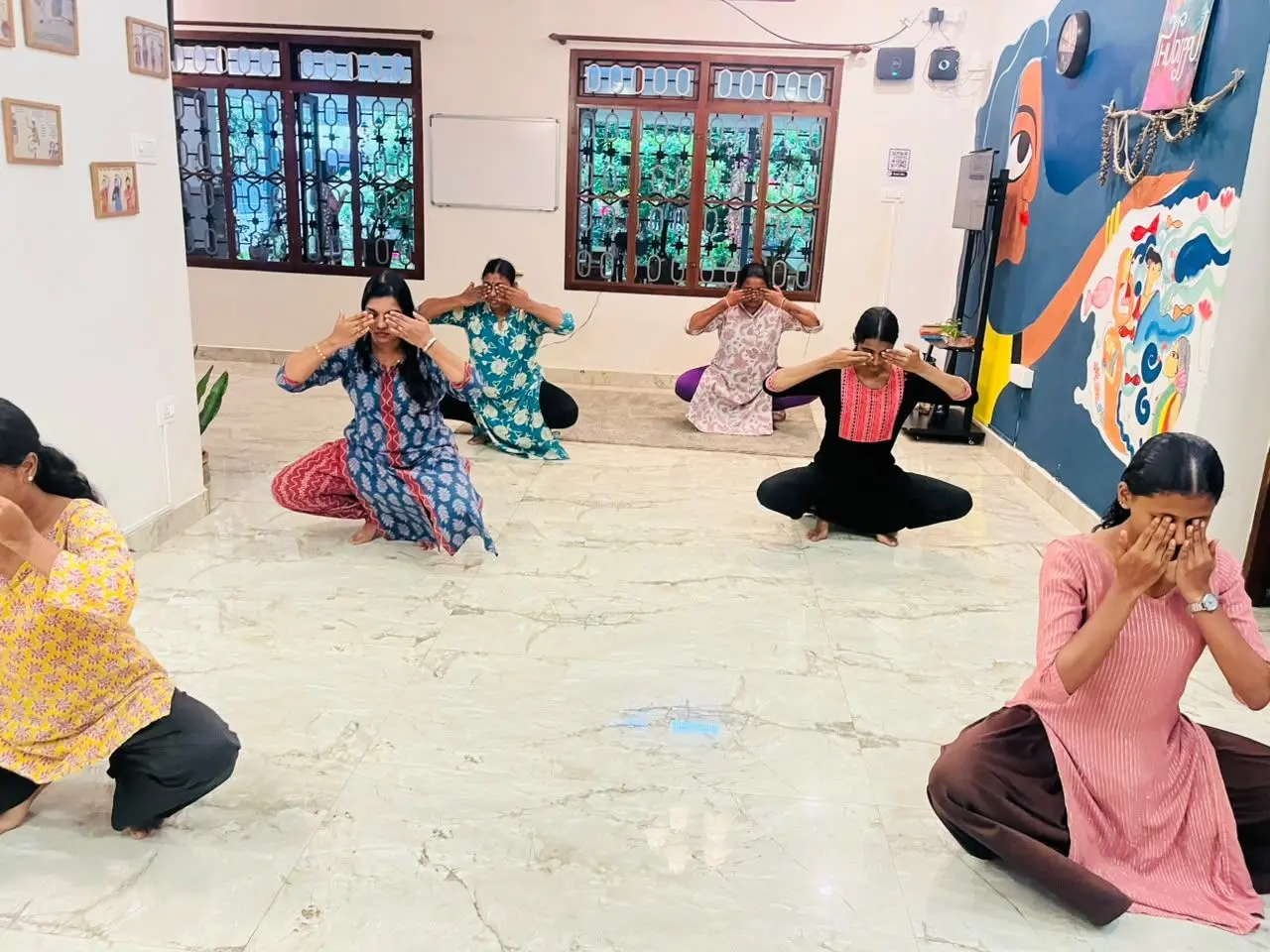
Sat–Sun, 2–6 PM · Free
In Malayalam
Partners
Stories
Open Spaces for Good
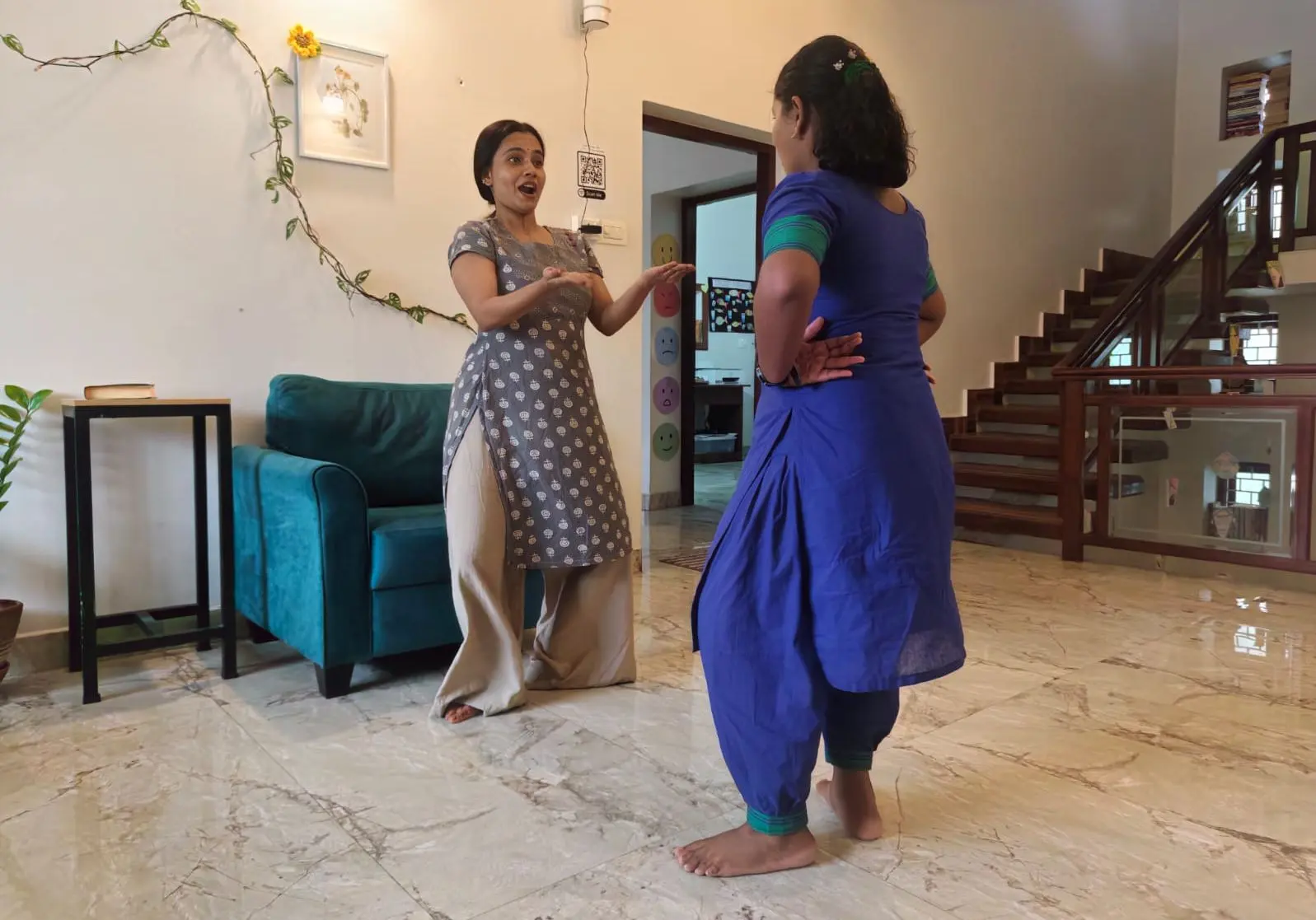
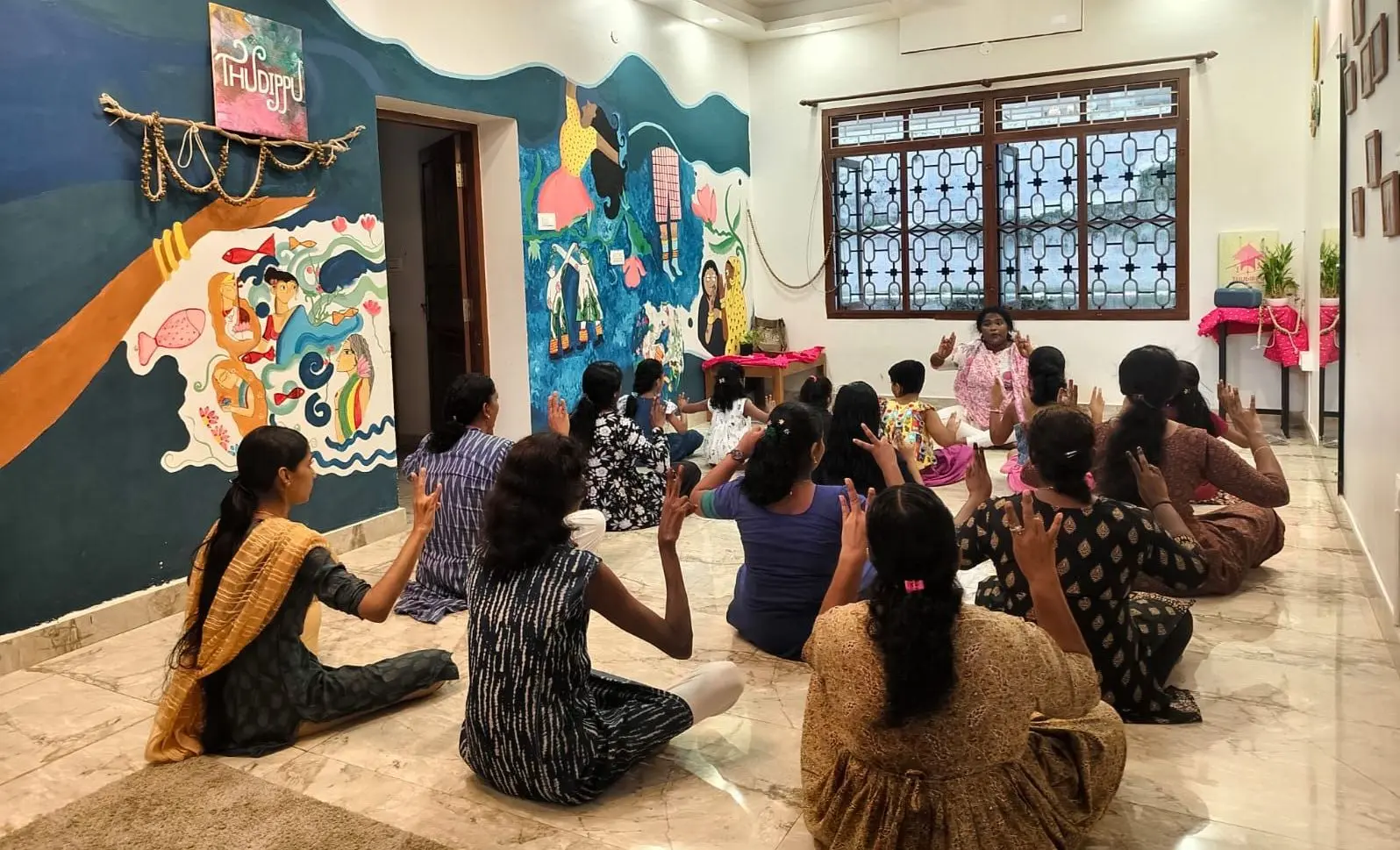
Aparna needed a room to teach dance in, and our office sat mostly empty at weekends — so we opened it. Then came Mary with her stitching, and others with their recipes, until our own team was working in smaller and smaller rooms. Here is how that became Open Spaces for Good, and how you might open a space of your own.
Stamping Through Time
A spectacular blend of theatre, music, dance, and powerful rhythmic footwork, Chavittu Nadakam is one of Kerala’s most distinctive performing arts traditions. Here is the tale of how it reflects the rich cultural heritage and collective memory of Kerala’s coastal communities.
Lighting the Way
Like a flower reaching for light, every child deserves the chance to bloom. Through Olimalar Foundation, a small team in Kochi is empowering children with the confidence, emotional strength, and life skills to shine both in school and beyond.
Why aikyam space?
To create an abundance of human interactions and interconnectedness in local communities.
Where we are
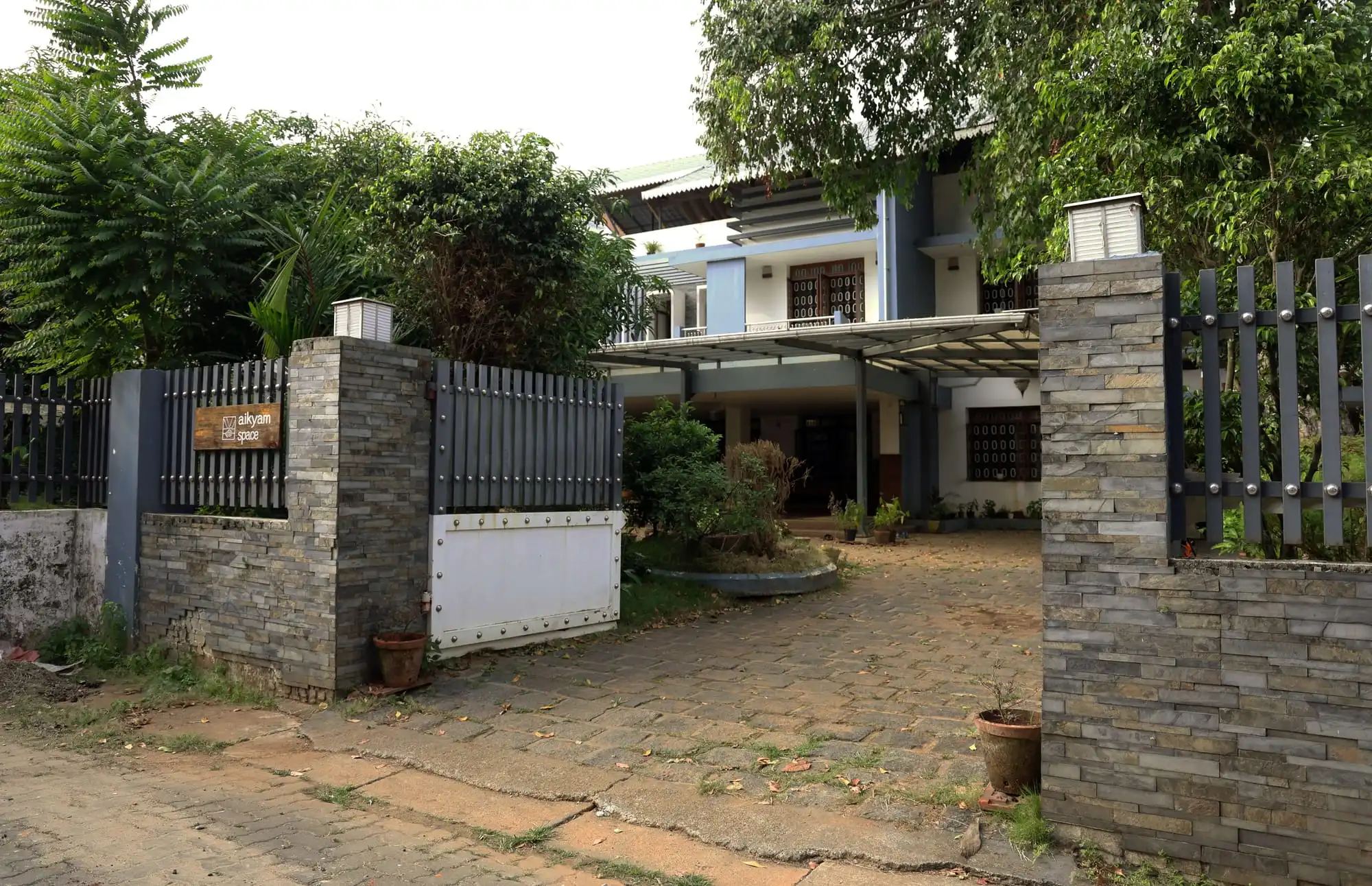
aikyam space, Fort Kochi.Open the map
Up to 25–35 participants