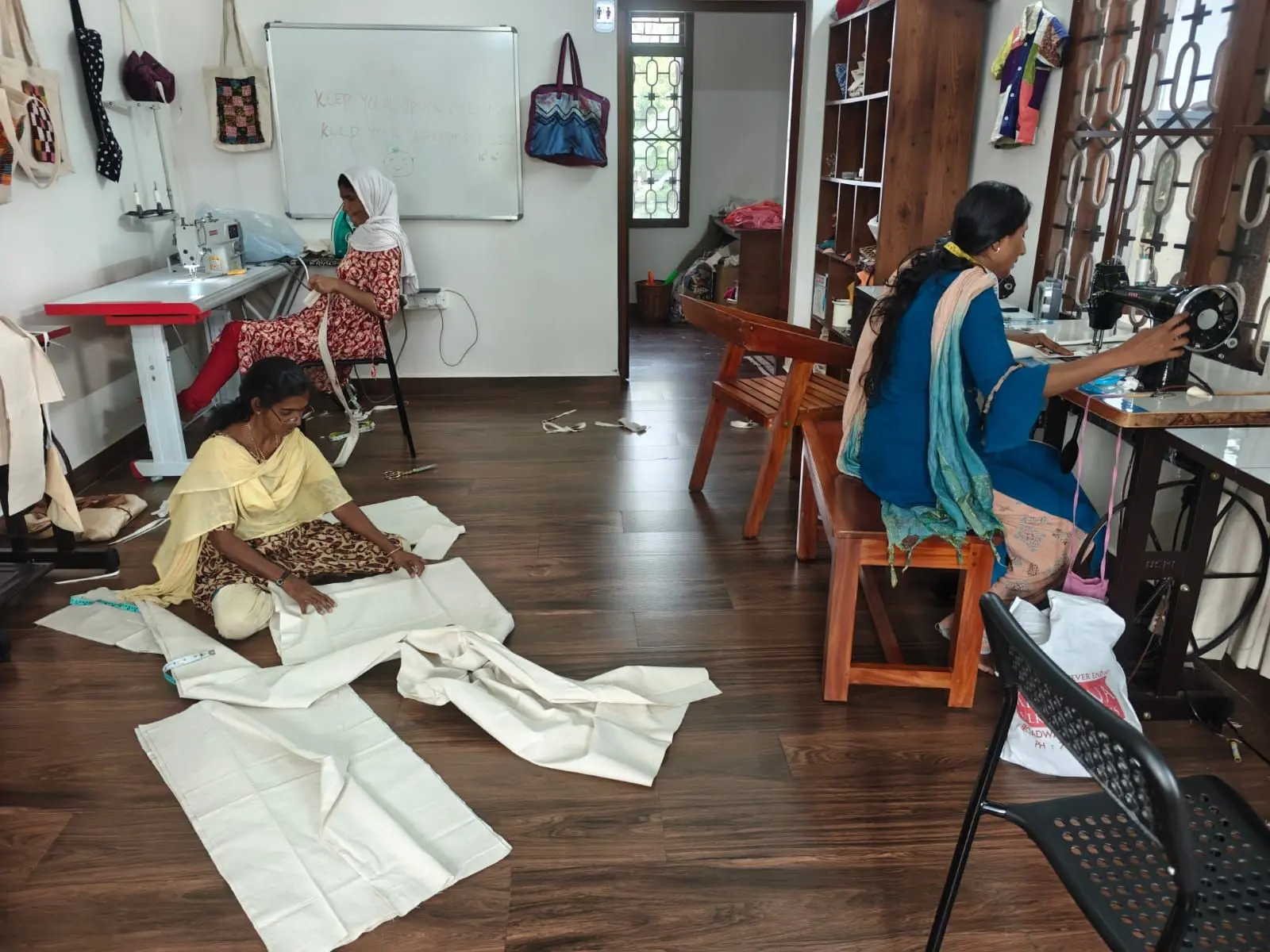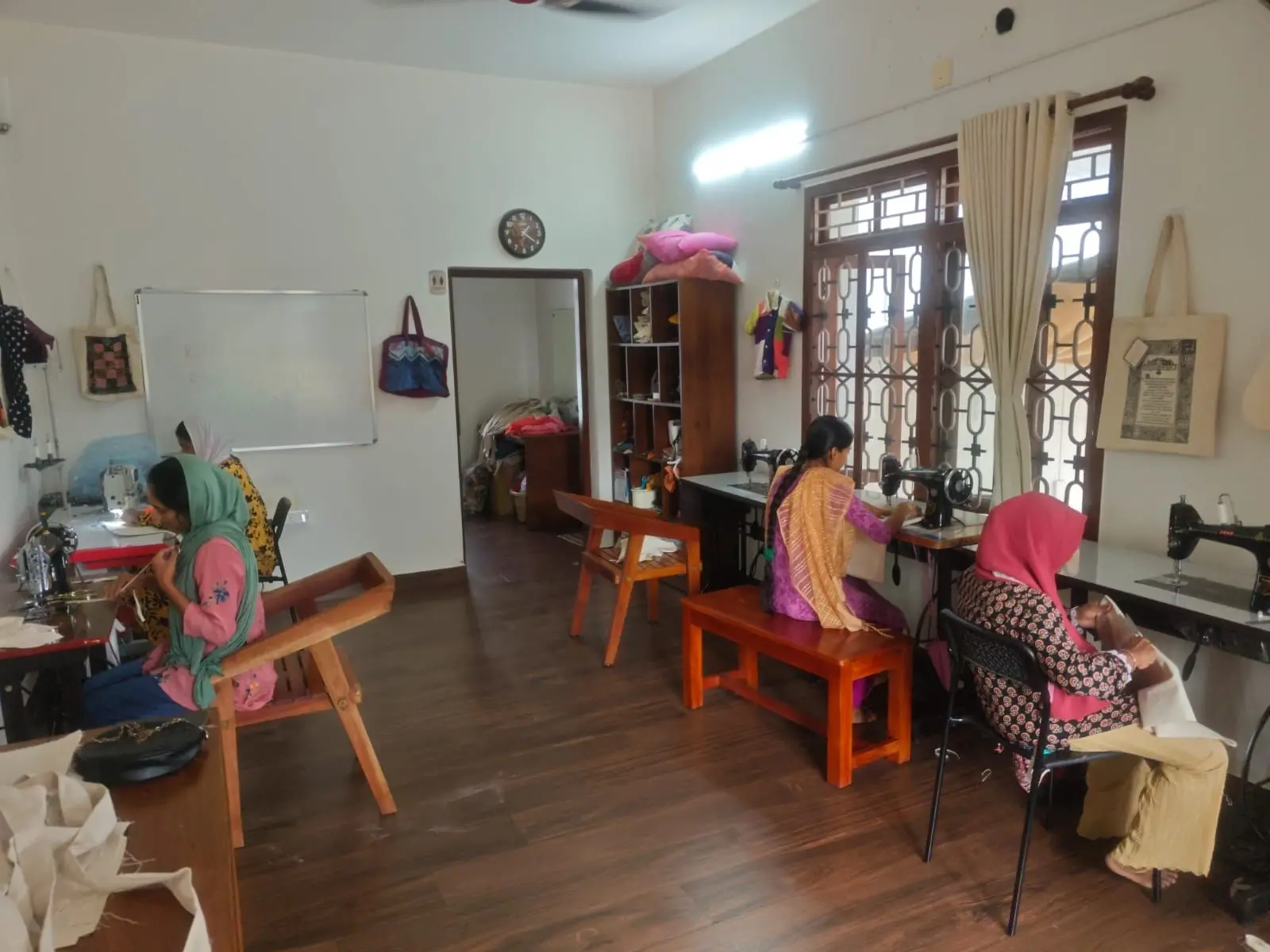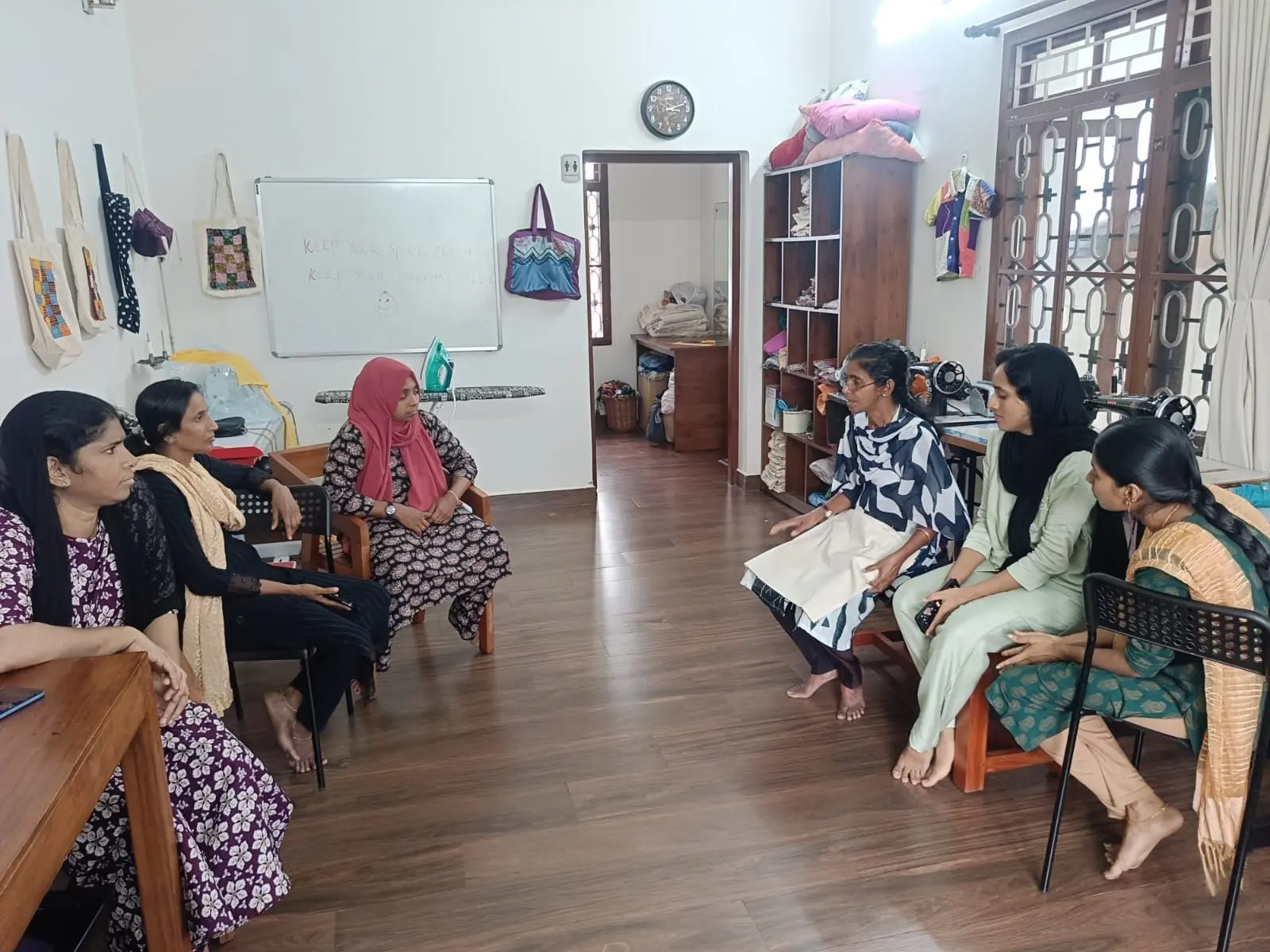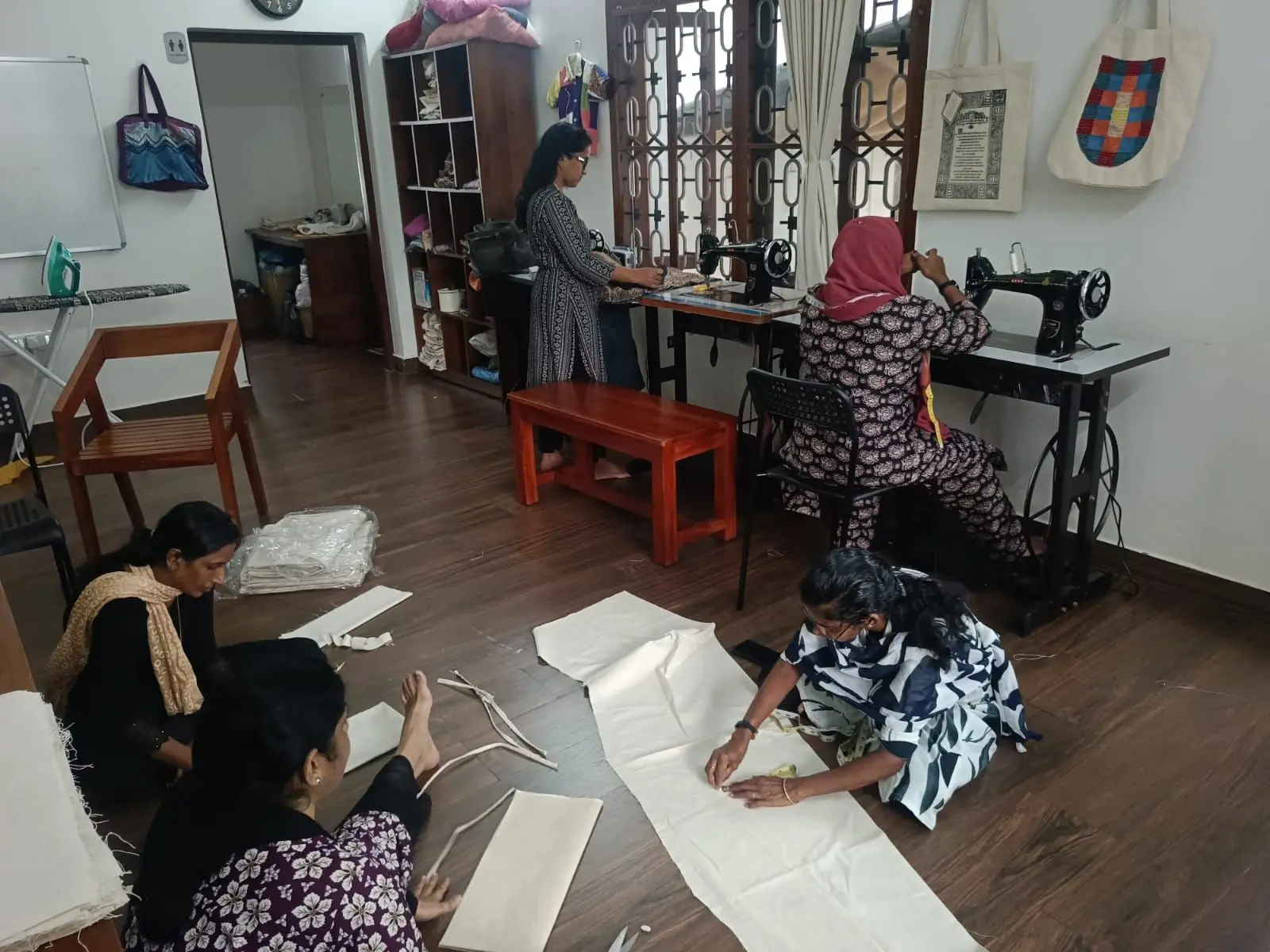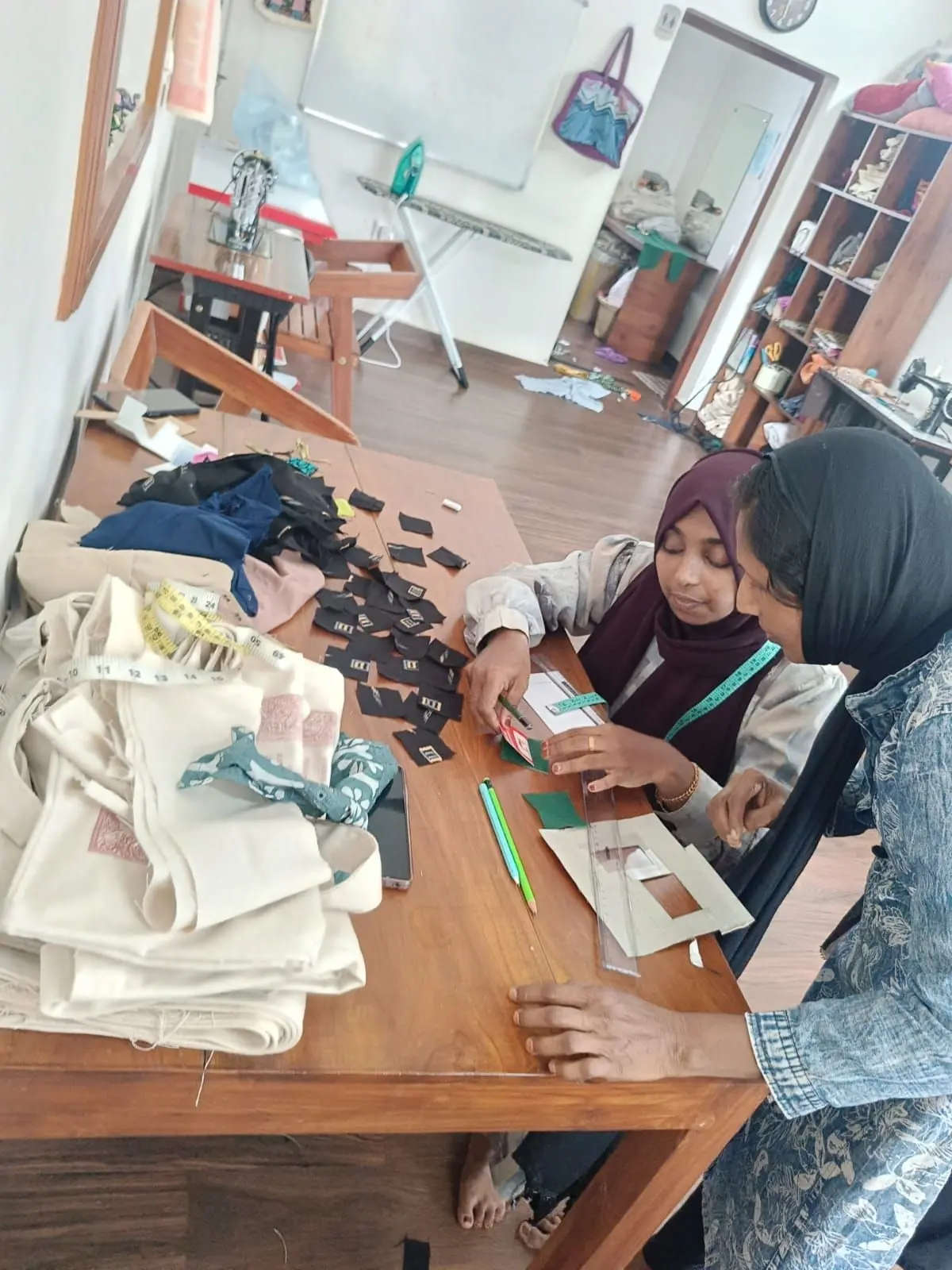
During Kantha panel preparation for our tote bags, we found inconsistent final dimensions and stitched line alignment. We began assembly with a 6 centimetre allowance, but the finished sections did not consistently match our required 4 centimetre target width. Individual panels varied between 3.5 centimetres, 4 centimetres, 4.5 centimetres, and 5 centimetres. These variations created uneven panel sizes that could compromise the symmetry and professional finish of our tote bags.
To fix these measurement differences, we added a strict template-checking step to our assembly workflow. After stitching each section, we checked the piece directly against a physical measurement template to confirm exact width and straight line alignment. By catching discrepancies early, we made corrections at every stitching stage. We achieved uniform, accurate panel dimensions, improving the quality, consistency, and neatness of the panels.
Eliminated dimensional inconsistencies in Kantha panel assembly, ensuring uniform 4 cm finished sections and straight stitch alignment across tote bag panels. How we know: Verified through post-stitching template checks and direct dimensional comparisons across completed panel batches.
(We measured it)
What worked: Checking each stitched section immediately against a physical measurement template ensured uniform 4 centimetre finished dimensions and straight line alignment.
What was difficult: Starting from a 6 centimetre allowance without intermediate template checks led to seam drift. This produced uneven panel widths ranging from 3.5 centimetres to 5 centimetres.
Changes for next time: We will require stage-by-stage template checks after every stitched row. Any alignment drift can then be corrected before moving to the next section.
Run this activity yourself. You are free to copy, change and share this write-up, as long as you credit aikyam space. Photos are not included. (Creative Commons licence CC BY 4.0)