
aikyam fellows
aikyam fellows work on important and urgent needs of the planet and underserved communities, across education, environmental conservation, poverty alleviation, public health, and art and culture.
What aikyam fellows did here
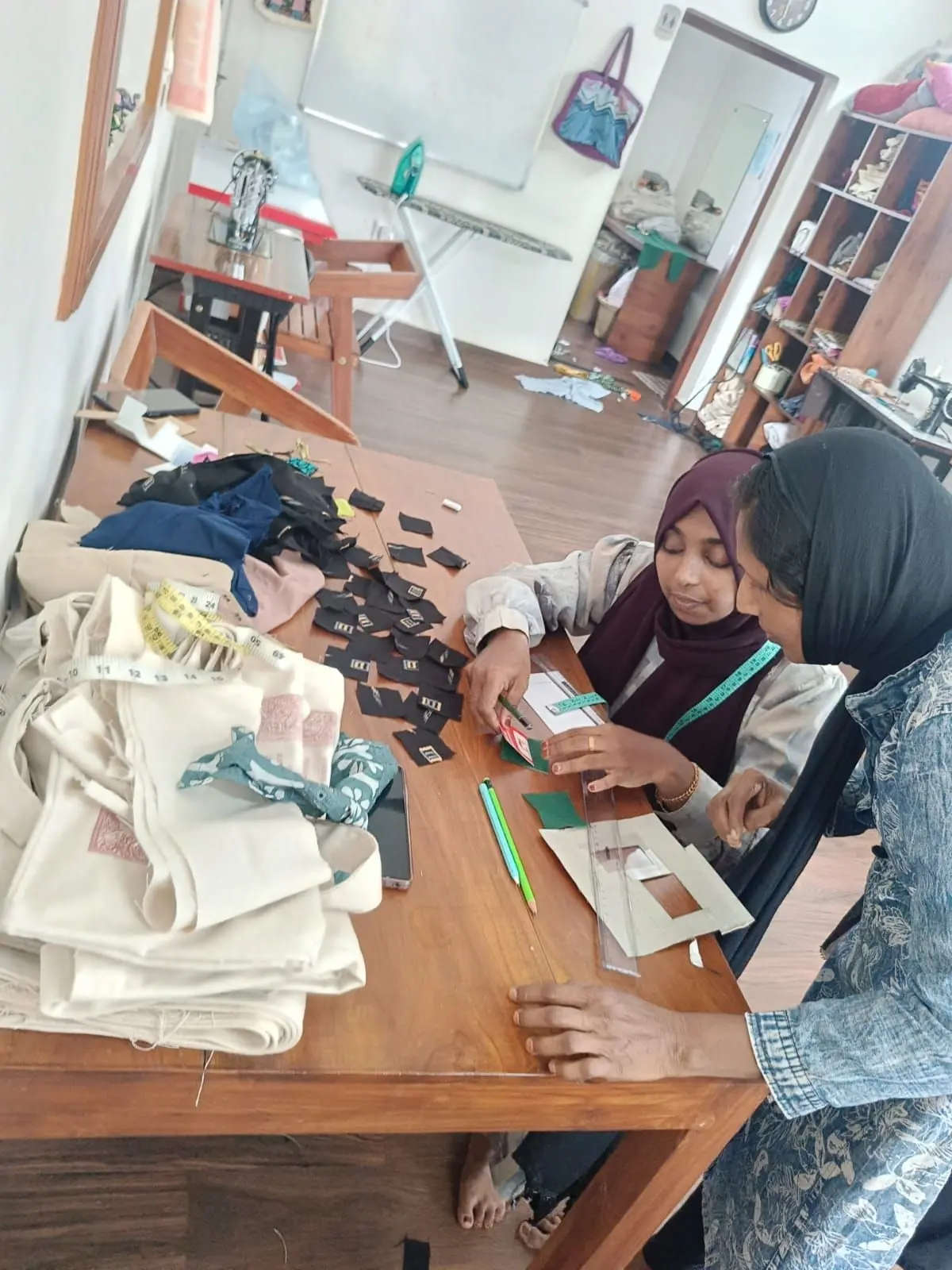
Scaling fabric preparation, precision cutting, and Kantha embroidery
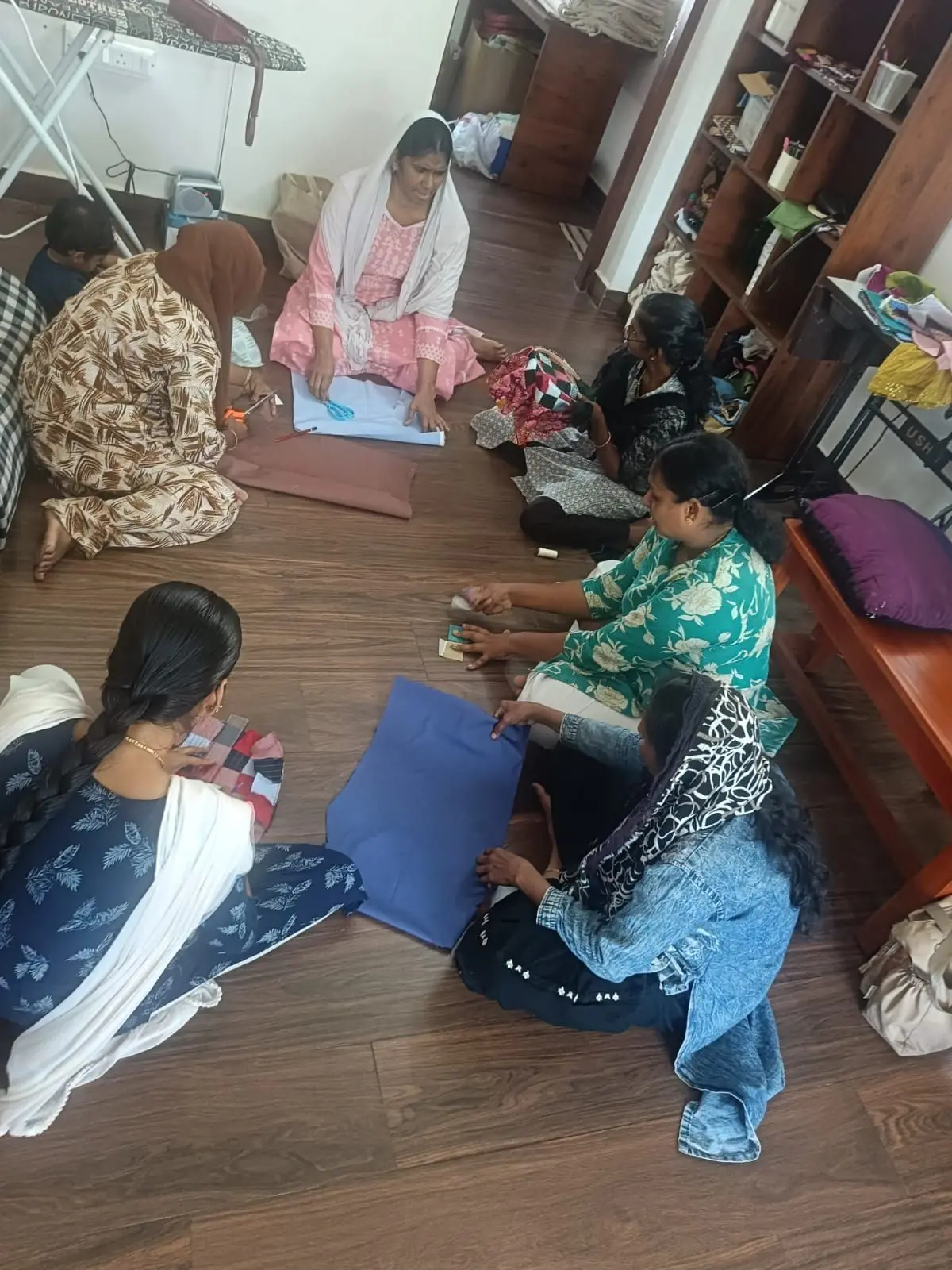
Production progress We had a busy and productive day. We continued our production sprint for our store launch. The launch needs an initial inventory of 400 to 500 different Kantha designs. As a team, we completed the full pre-treatment and sizing process. This included washing, drying, and ironing the cotton fabrics. Then we cut them into precise 6 × 6 inch squares. With teamwork, we finished about 350 cut squares in two days. We also photographed the pattern designs for cataloging. We kept steady progress on our Kantha embroidery panels. Challenges and solutions Scaling up our cutting volume created technical challenges. Managing bulk fabric was difficult. Keeping dimensional precision was hard. Even after thorough pressing, large stacks of fabric wrinkled again during handling. This required secondary ironing before final assembly. Folding and cutting too many layers at once caused inner layers to shift or bunch up. This led to uneven dimensions. To fix these errors, we used rigid cutting templates. We limited cutting stacks to one to three layers at a time. This ensured uniform 6 × 6 inch squares across the batch. We continued our daily Kantha stitching work.
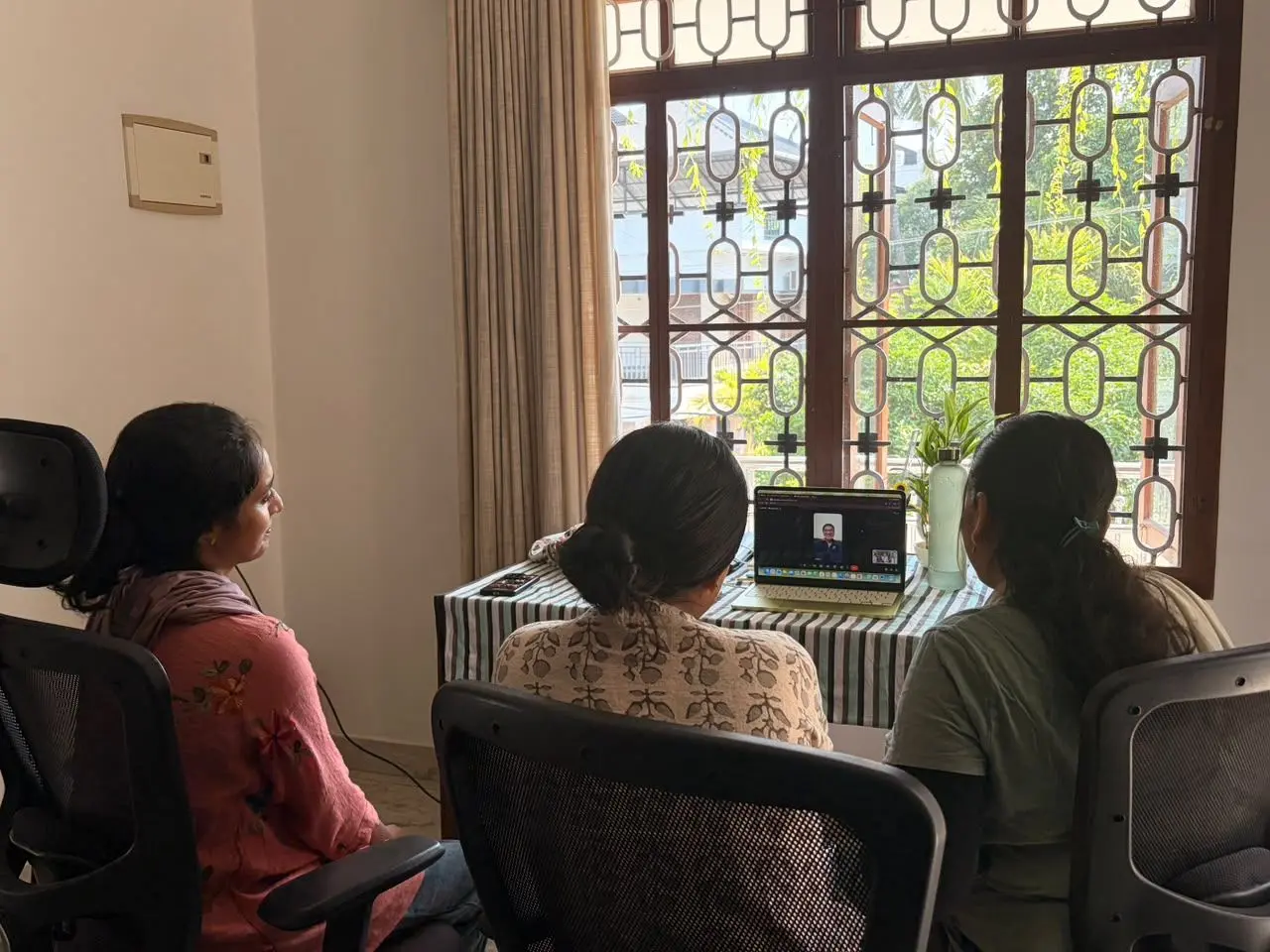
From Lalan Road to London: our weekly check-in
They are miles apart, and still make time to catch up. Shabana from the Stitching Club, Anjali from Thudippu Dance Foundation and Nasrin, a new aikyam fellow, gathered at aikyam. Aarthi from Olimalar Foundation joined online from London. They shared updates on recent activities. Their goal for the month is to find one free, open and safe community space. There they could offer dance, stitching or reading activities. The aim is to bring these activities closer to children and families who might otherwise find them hard to reach.
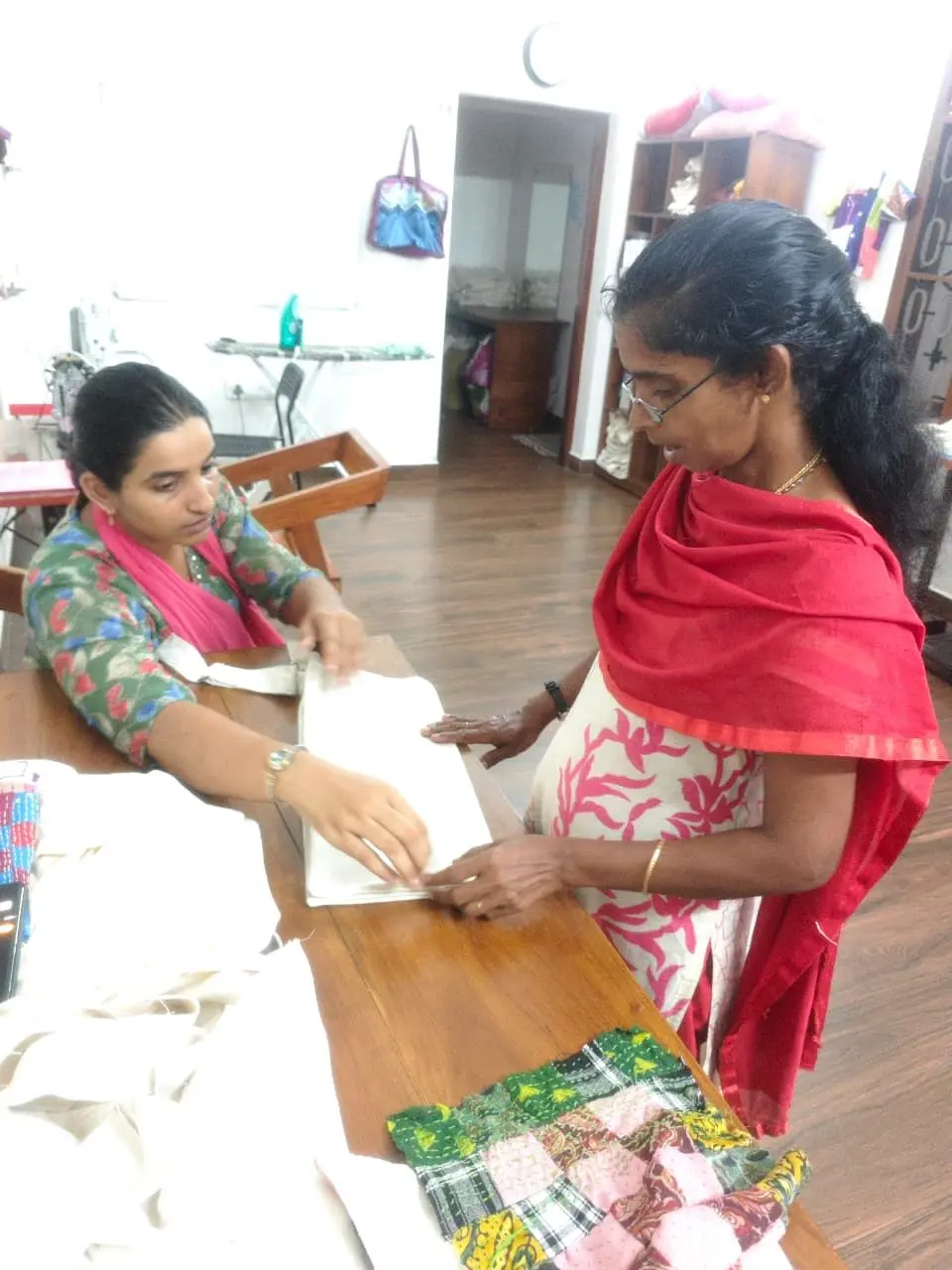
Advanced bag construction: attaching Kantha panels to inner pockets
We ran a specialized construction experiment on adding decorative Kantha panels to bag exteriors with pre-stitched inner pockets. Getting a clean and professional finish without breaking the bag's alignment or usability was a complex technical challenge. We needed to cut the pocket opening neatly and finish the raw edges safely. We also had to manage the seam allowances and decide whether to fold them inward or outward. We anticipated that a Kantha panel over a poorly finished pocket opening could make raw fabric edges snag or pull out when users reached in. To solve these problems, we analyzed different ways to fold the allowances and tested assembly methods on sample pieces. We cut the pocket opening directly into the bag body and folded the allowances outward, not inward. We anchored the folded edges securely with two parallel rows of topstitching, making a flat base. We then placed the complete Kantha embroidered panel directly over the prepared pocket region and stitched it into place. This gave a clean finish, and the inner pocket worked smoothly with no visible raw edges or loose fabric inside.
Show all 10 sessions
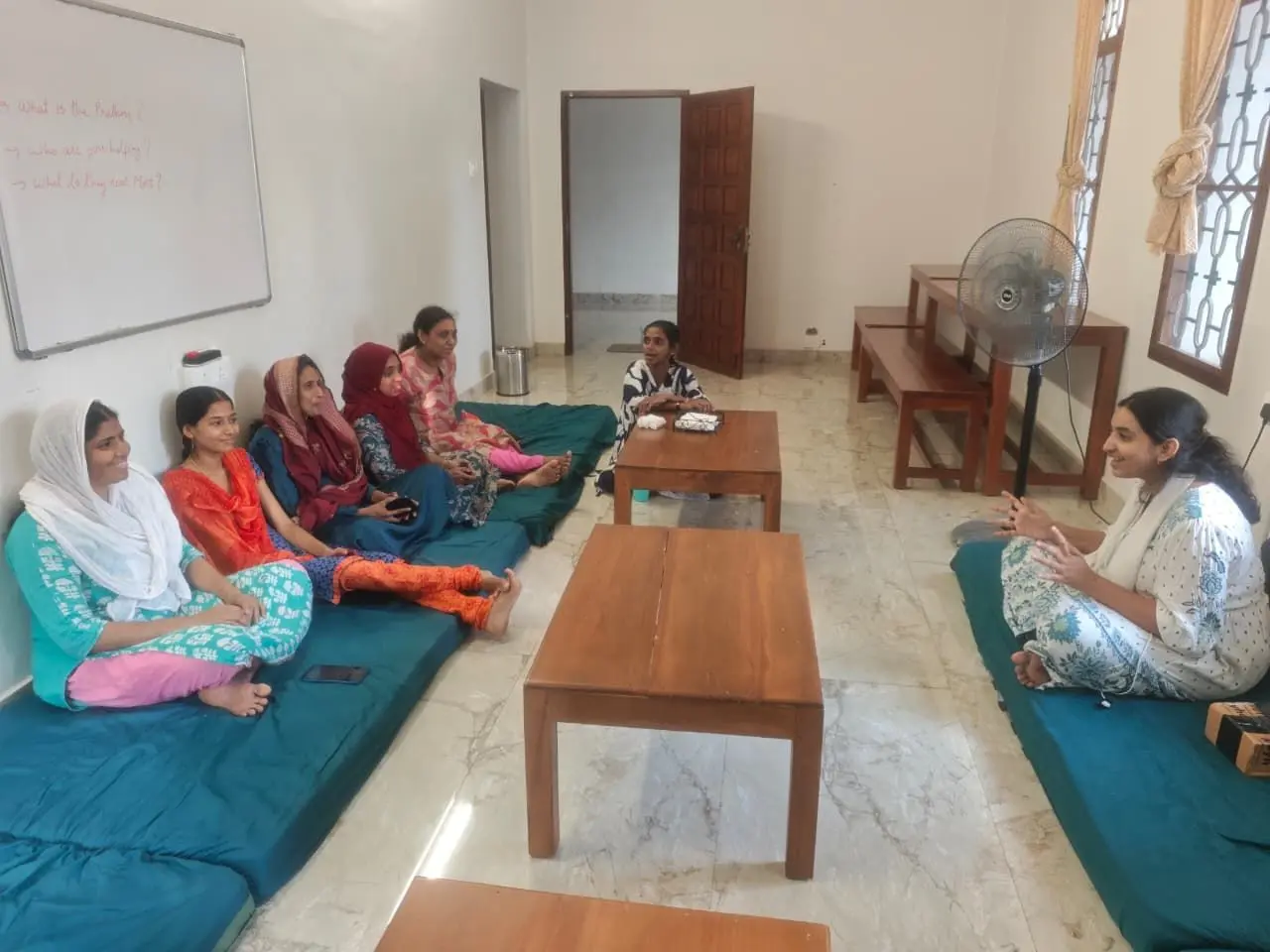
One-week initiation: participant progress review and skills assessment
We held a review meeting to close our one-week initiation. It gave everyone space to look back on what they learned and to share their work. Each person showed recent work. This sparked talks about growing confidence and new creative freedom. A highlight was that participants designed and executed diverse, intricate Kantha patterns on their own, without the Kantha app. That showed strong personal initiative. Those who used the Kantha app guided others through digital pattern creation and workflow planning. That was notable leadership. Beyond embroidery, participants took ownership of the main steps of making a garment. They cut fabric and line up patterns. They also put whole bags together. This means they do more of the work themselves. They need less step-by-step guidance or outside help in daily tasks. The meeting showed that everyone's skills grew and that everyone shared responsibility. Peers also led each other. This is a good base for the group to run production more independently.
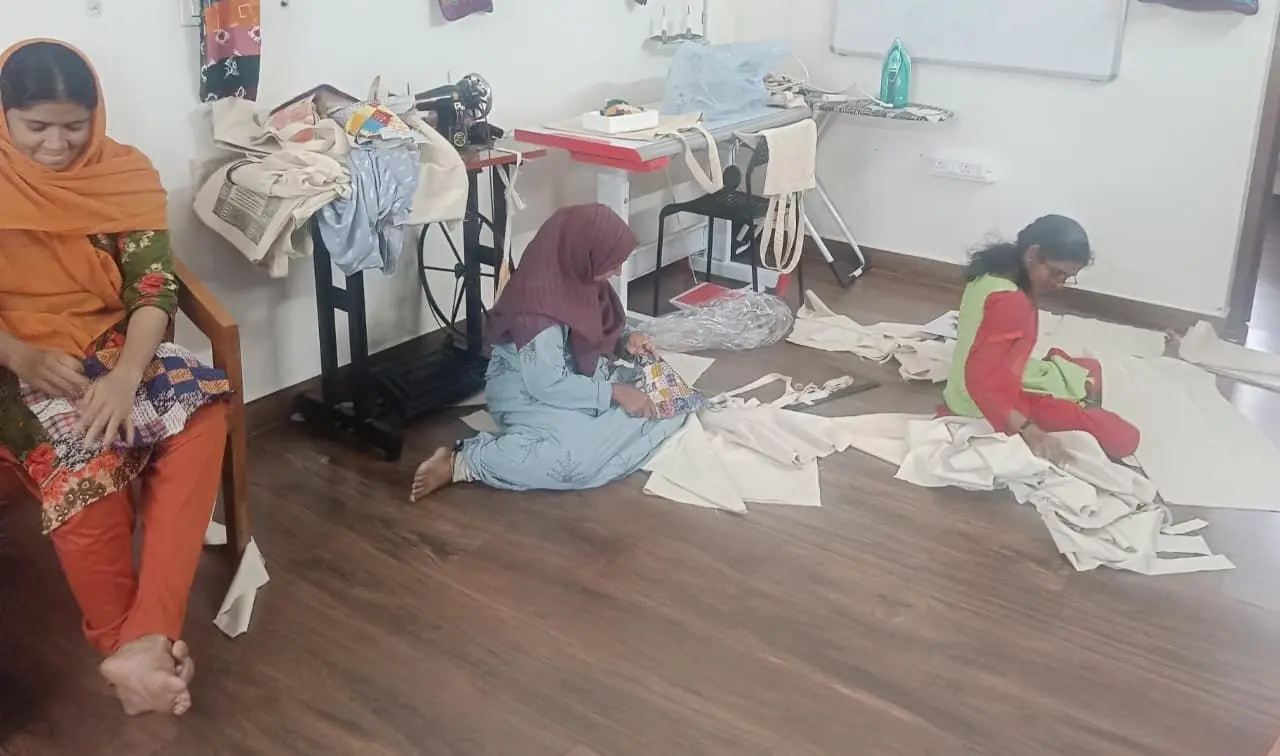
Tote bag handle redesign and adjustability testing
The team ran design tests to make tote bag handles more comfortable and useful. They made a prototype with one handle slightly wider and longer. They looked at how it looked and worked. Finding one standard handle length was hard. Users have different heights and body types. The team thought about making the whole bag smaller. They decided not to. They wanted the bag to stay the same size and wanted to avoid extra production problems. Instead, they tested an adjustable strap with buckles made from sustainable materials. This helps users of different heights. The team also looked at durability and machine washability. Metal buckles could rust and stain the fabric in the wash. Other materials must handle repeated washing and strain from use. They set baseline handle sizes. They began looking for adjustable buckles for more testing before finalising the design.
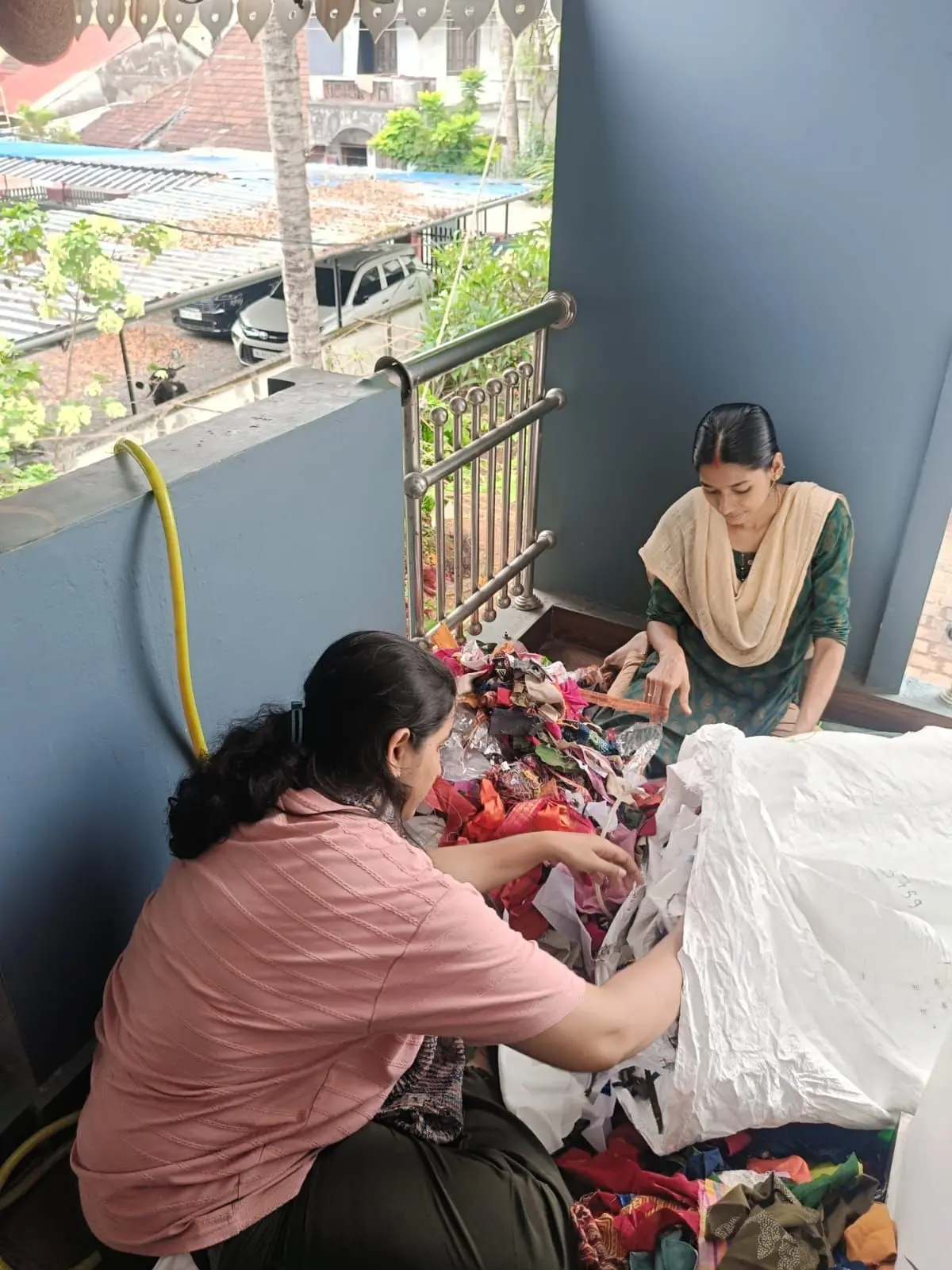
Quality control in fabric pre-treatment: managing shrinkage and color bleed
All team members gathered to select a fresh batch of cotton fabrics from a new supplier of higher-grade materials. We assumed premium quality would prevent dye transfer, so we soaked all the colourful fabric pieces together in one washing container for the first pre-treatment. During soaking and washing, we saw significant color bleeding across many pieces and visible fabric shrinkage as the cotton fibres reacted to the water. To assess the structural and aesthetic effects of the wash, we dried and ironed each fabric panel. Ironing let us examine the extent of color fading, cross-staining, and dimensional shrinkage across the batch. This experience was a crucial quality control lesson: even high-quality cotton fabrics naturally release excess surface dye and contract during their first wash. We realised that using unchecked, colour-releasing fabrics in finished bags would make dyes bleed onto nearby panels and ruin the final products. So we set a mandatory quality control protocol: every newly purchased cotton fabric must be washed individually and thoroughly inspected before we approve it for bag construction.
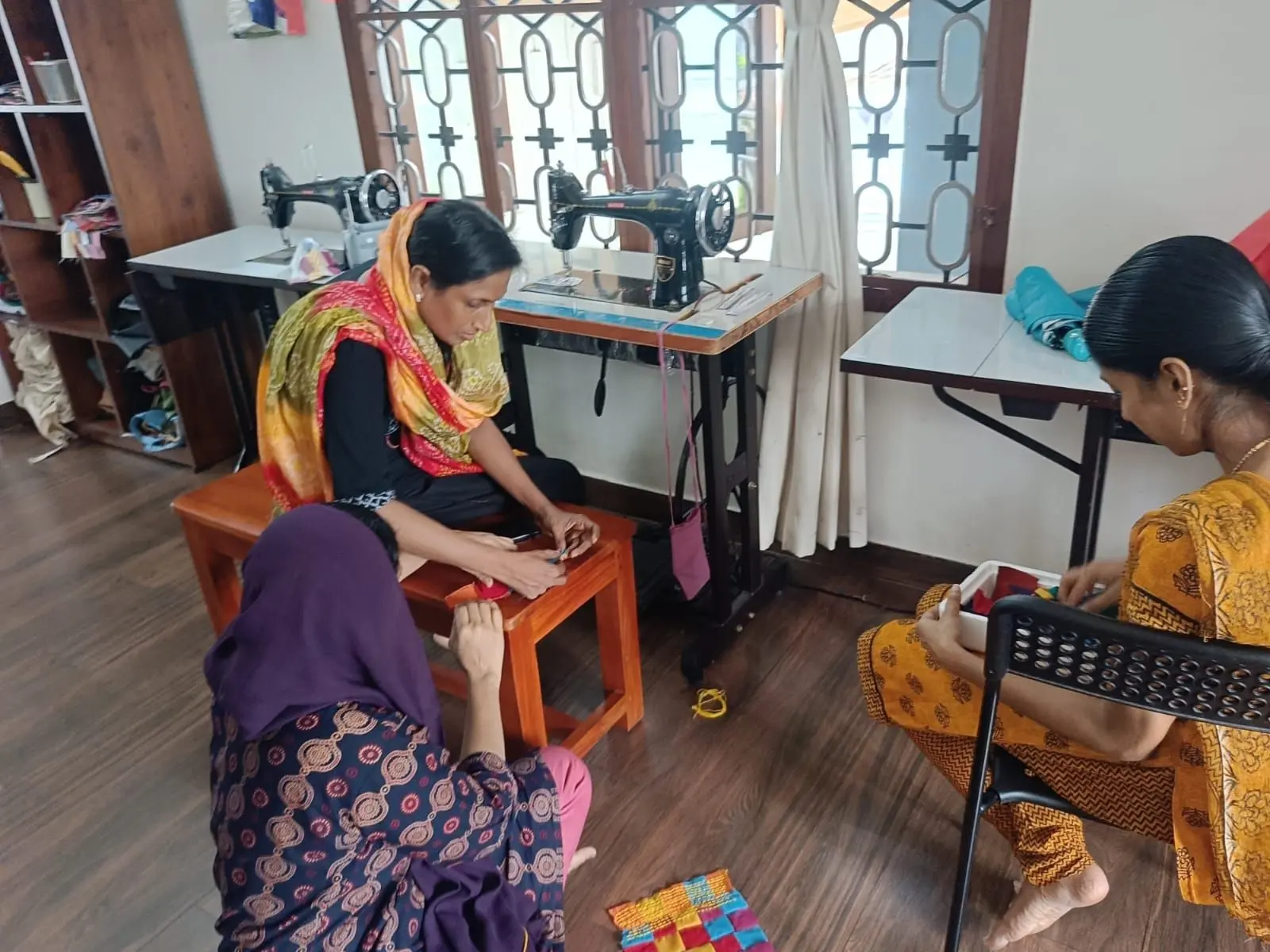
We continued our Kantha work by joining the fabric strips prepared in earlier sessions. The aim was to practise following a design, aligning fabric strips and keeping hand stitching even. Each participant used their design from the Kantha app, printed on A4 paper, to select and arrange the matching 6 cm-wide fabric strips. The printouts helped them check the colour order and placement before stitching the strips side by side into fabric panels. Participants then added rows of Kantha running stitches along the panels. We focused on consistent stitch lengths, even spaces between rows and thread tension, particularly at the thicker seams.
Digital visual planning and Kantha App pattern printing
We used the Kantha App to plan pattern variations. It let us test how different strip widths and color sequences look together. This gave a clear digital preview before we sewed. When we had the best combinations, we printed the design sheets on A4 paper. Each page guided artisans on aligning, ordering, and placing the pre-cut strips for panel assembly.
Exploring photo frame designs for the Constitution’s Preamble
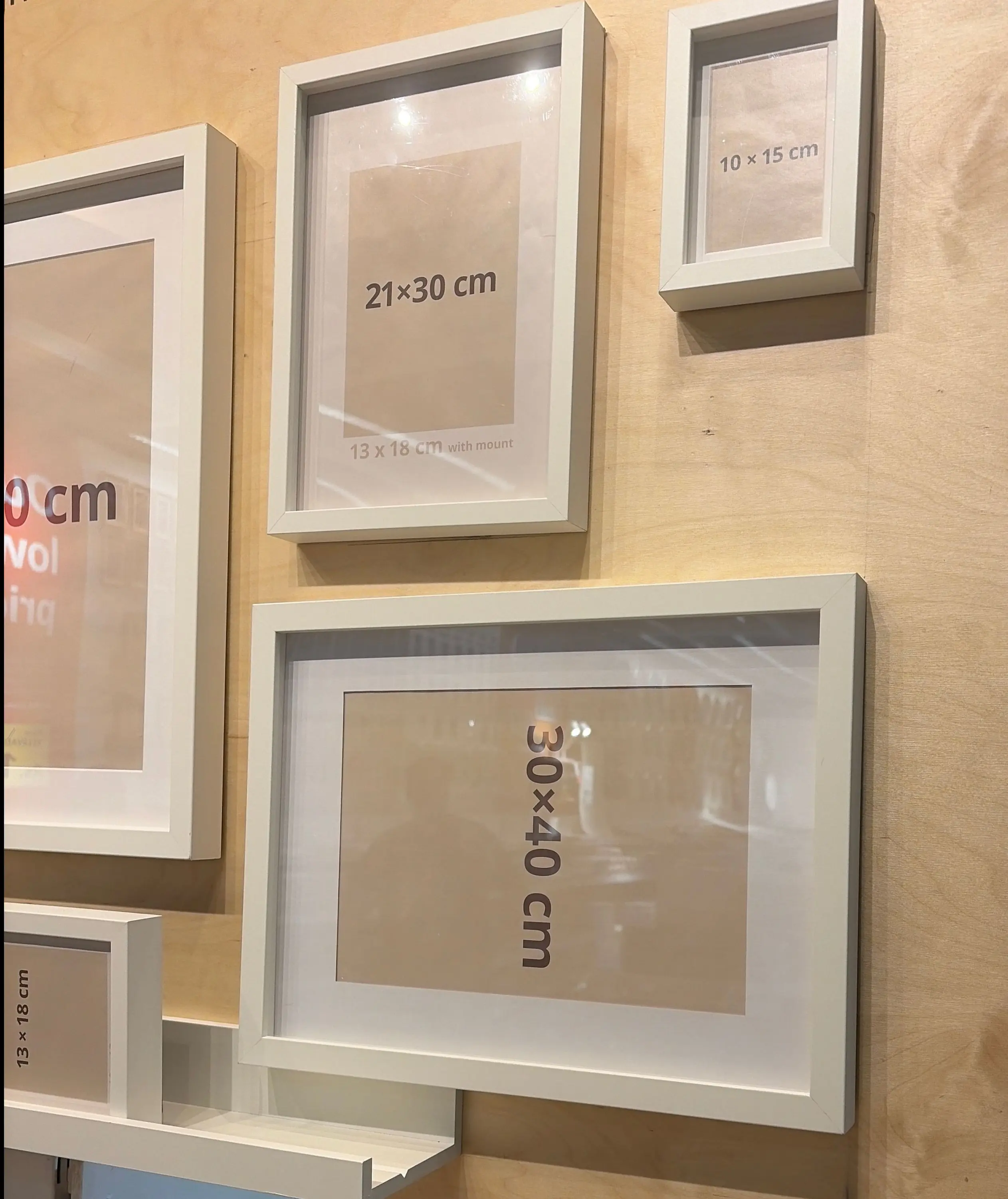
We are exploring how to make frames from sustainable materials. The frames would display the Preamble to the Indian Constitution. We visited IKEA to compare frame designs and chose one as our reference. We plan to make a similar model with carpenters from Fort Kochi and Mattancherry. We will use local materials where possible. This supports local craftsmanship and makes the frames more sustainable.
CDF STEM Femme fellows and their programme manager meet in person for the first time
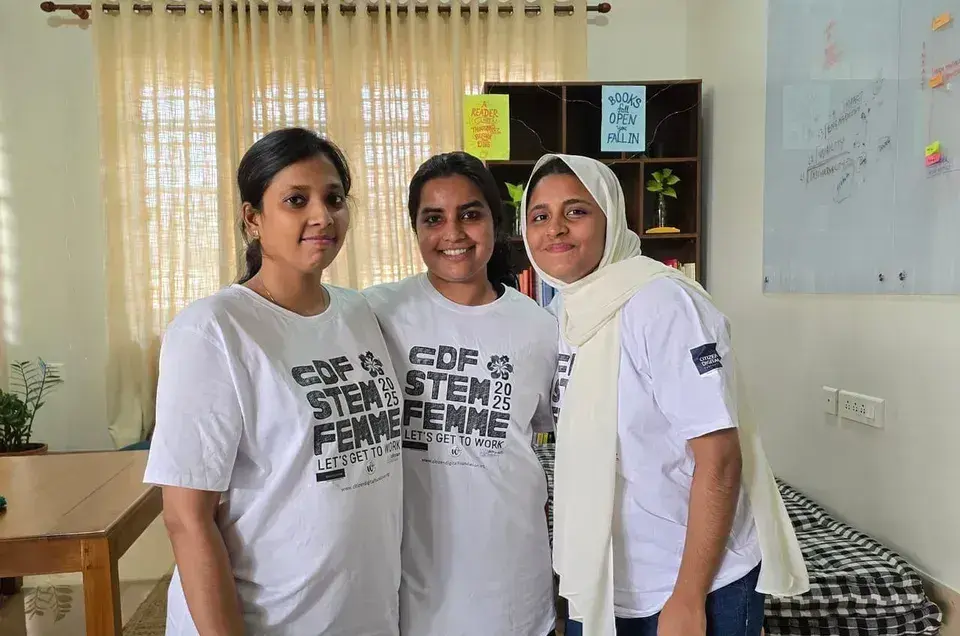
CDF STEM Femme fellows Fathima Hiba and Sharon C came to the Tools for Storytelling Residency that aikyam fellows led. Their programme manager, Shana Shihab, came too. They met in person here for the first time. The residency included a website design session and conversations about setting boundaries and learning from stakeholders directly.
What people said
"I have been running iLAB for the past eight years, but I have rarely come across such in-depth support sessions. Most support programs for NGOs follow a ready-made, one-size-fits-all model. A mentoring program that takes the time to understand the organisation and its activities is incredibly valuable," says Nasmina.
Mary Gracy, facilitator, Stitching Club
“It is their genuine interest in learning that drives me forward everyday”
Revathy
“It's the coming together of so many women, the making of mistakes and sharing of knowledge that helped me gain confidence to start stitching bags”
Hiba, iLab India
“When I think about aikyam space, the first thing that comes to mind is the ambience.”
Sharon, architect and urban planner, Kerala Tourism Infrastructure Ltd
“The most remarkable aspect is the spatial arrangement, which fosters a welcoming atmosphere with ample light and ventilation. The open kitchen enhances the overall experience, while the warmth and hospitality of the people make the space even more inviting.”
Meenu Yadav, co-founder of Udyami Tech
“We didn't think we could create a website with little to no coding.”
Preeti, ex-Sajhe Sapne
“This was so easy for me to understand. I'm excited to see what I can create with this.”
Kadeeja Fidha
“It was great to have a facilitator and at the same time, these interactions really showed me the potential of the team I am working with.”
Revathy Sreekumar, Executive Member
“The workshop helped me reflect on the greater impact of our projects and areas for improvement about the project in an easier way.”
Shilpa Sasi, Trustee
“The workshop was really nice with smooth interaction throughout the session. It provided great insights into various ways for fundraising and created a positive environment for open discussion.”
Ashik Maheen, Operations coordinator
“After the discussion, I got the understanding that the aspects initially perceived as smaller components of the project in fact constituted the significant part. These elements when examined in relation to the overall objectives, were found to have a meaningful impact on the project's outcome.”
Yasar Arafath, Co-Founder
“The opportunity to reflect on my past activities in a supportive and safe space made the experience truly meaningful.”
Junide Khalid Odungat, Co Founder
“Workshop encouraged me to reflect on previous actions.”