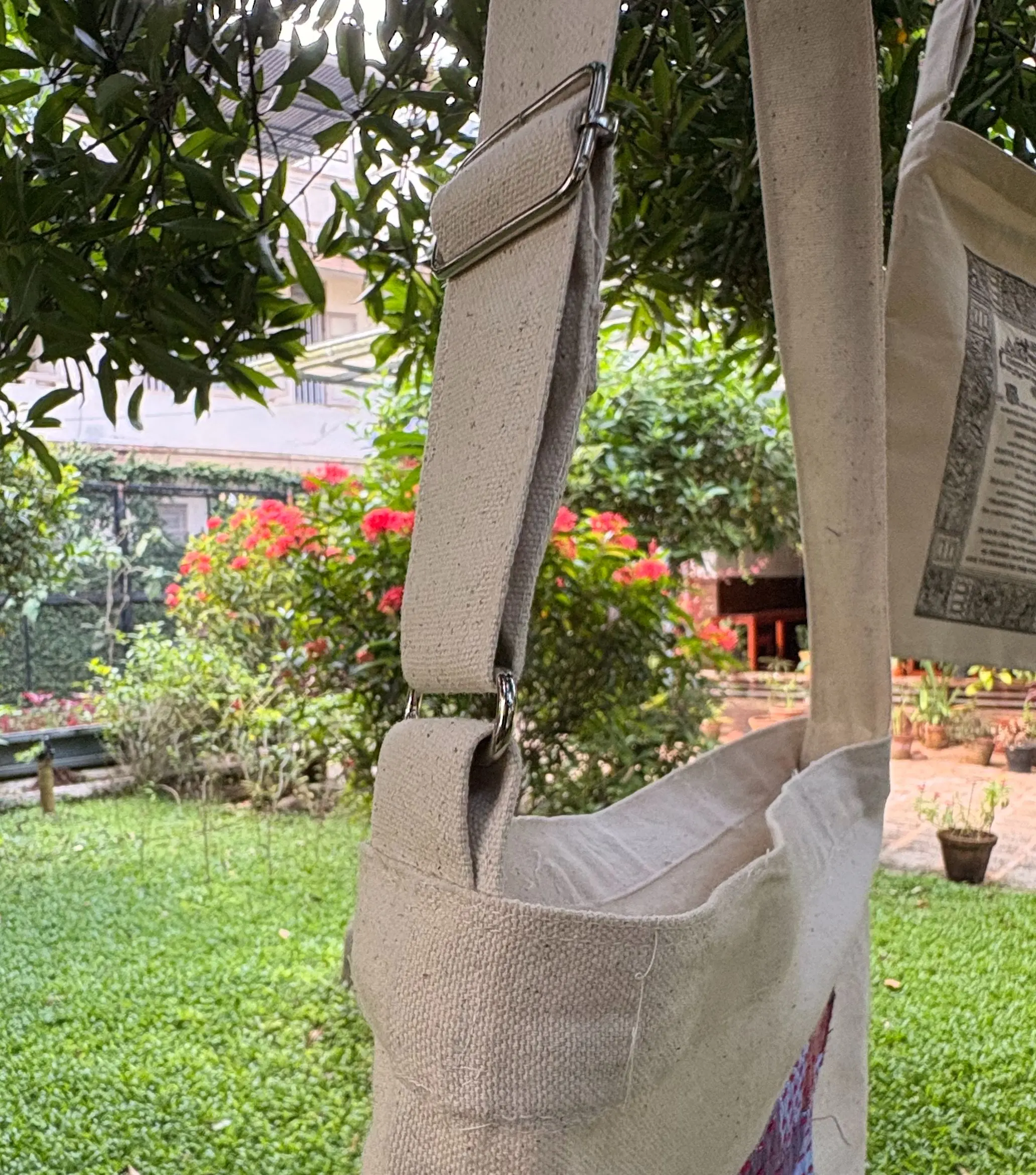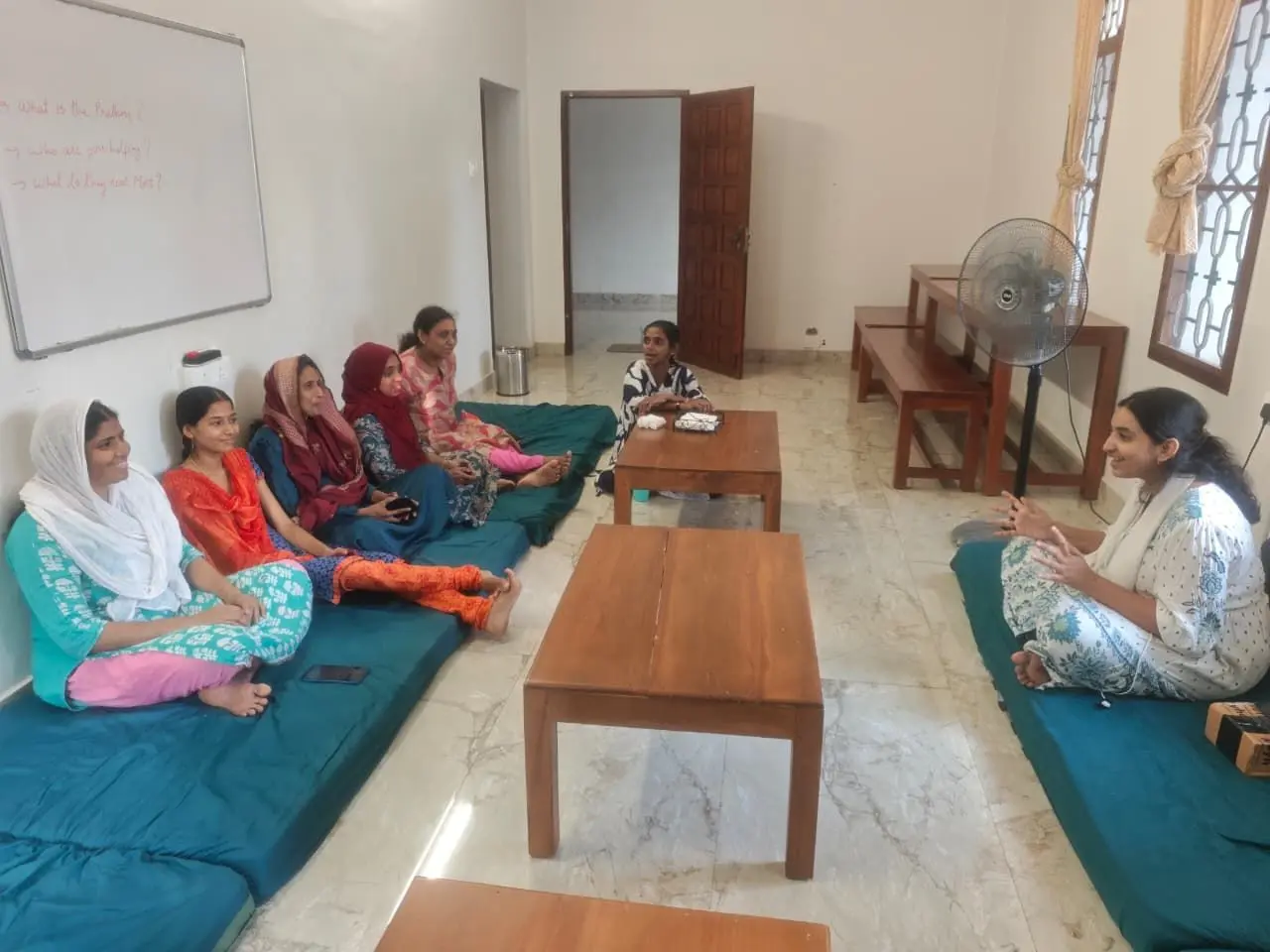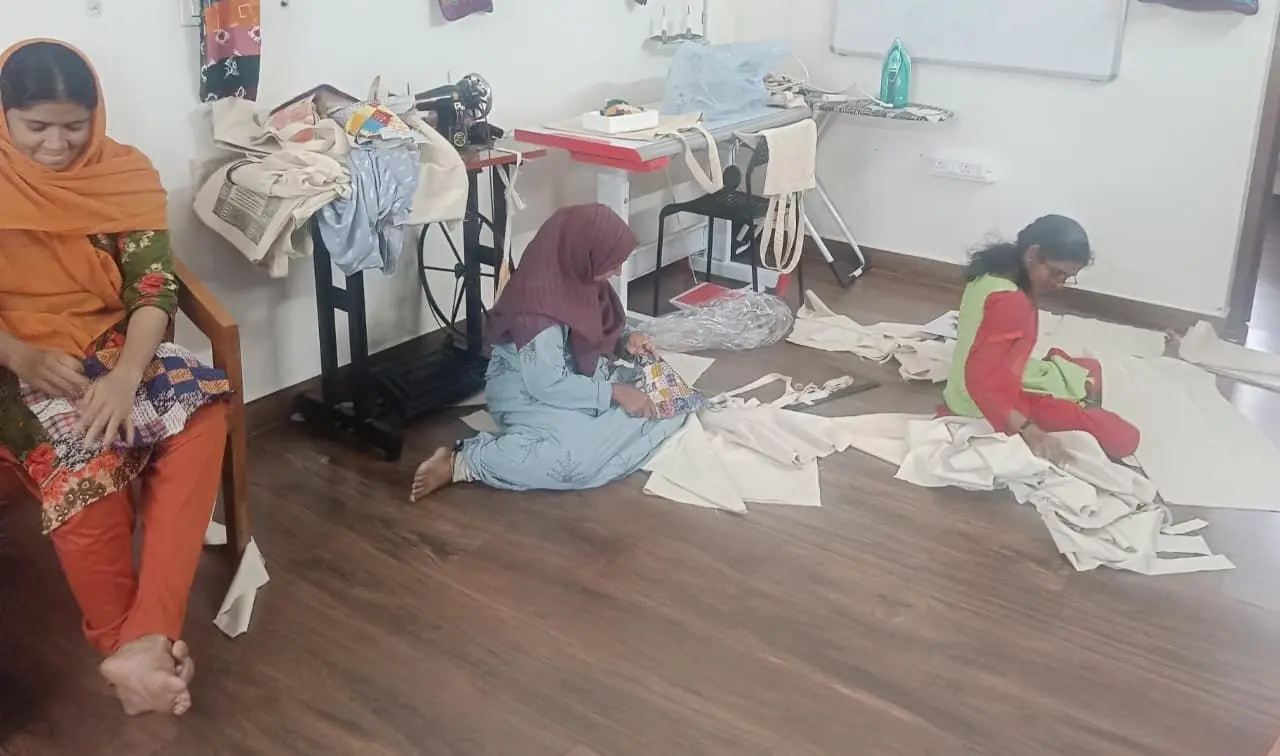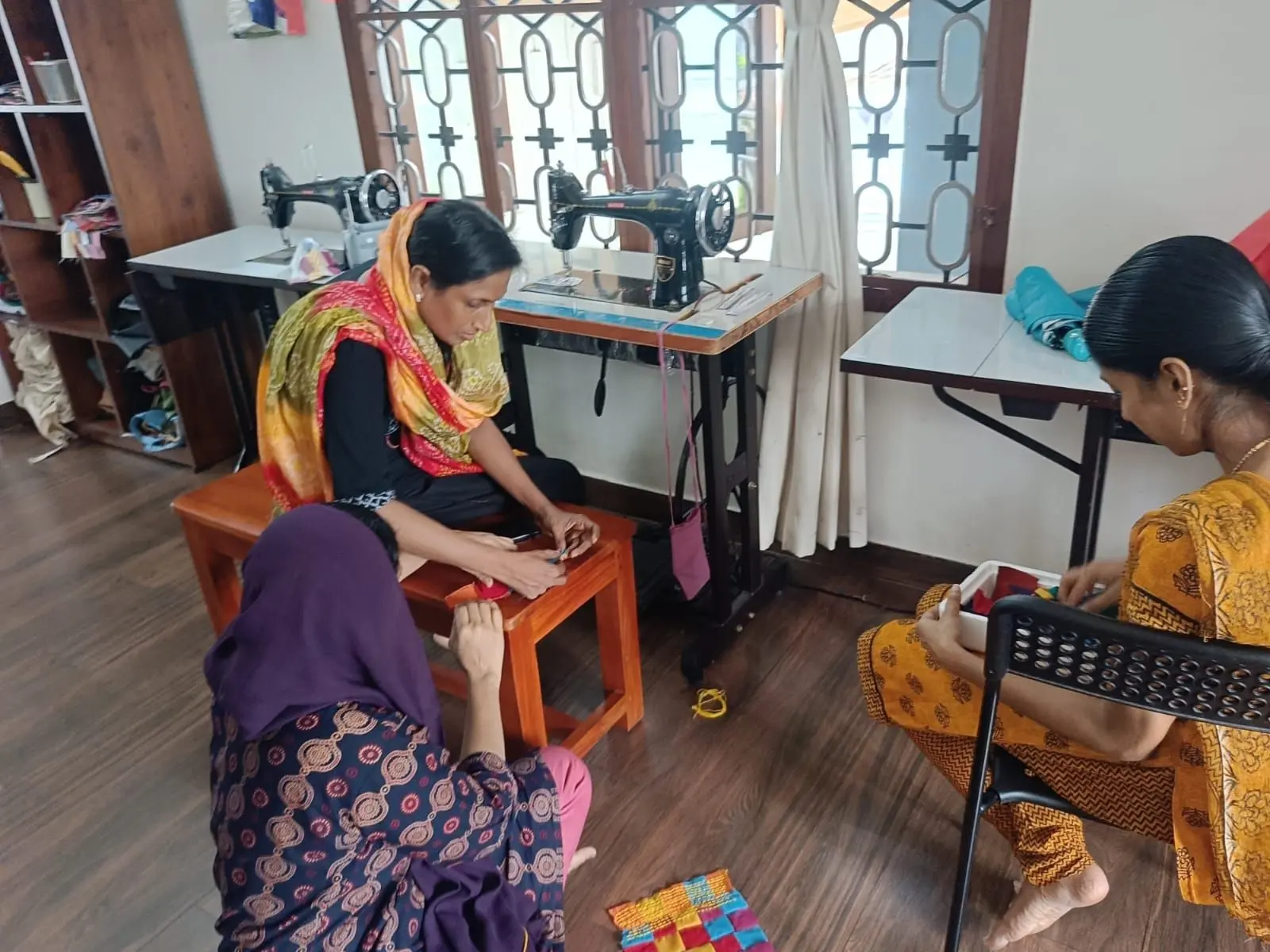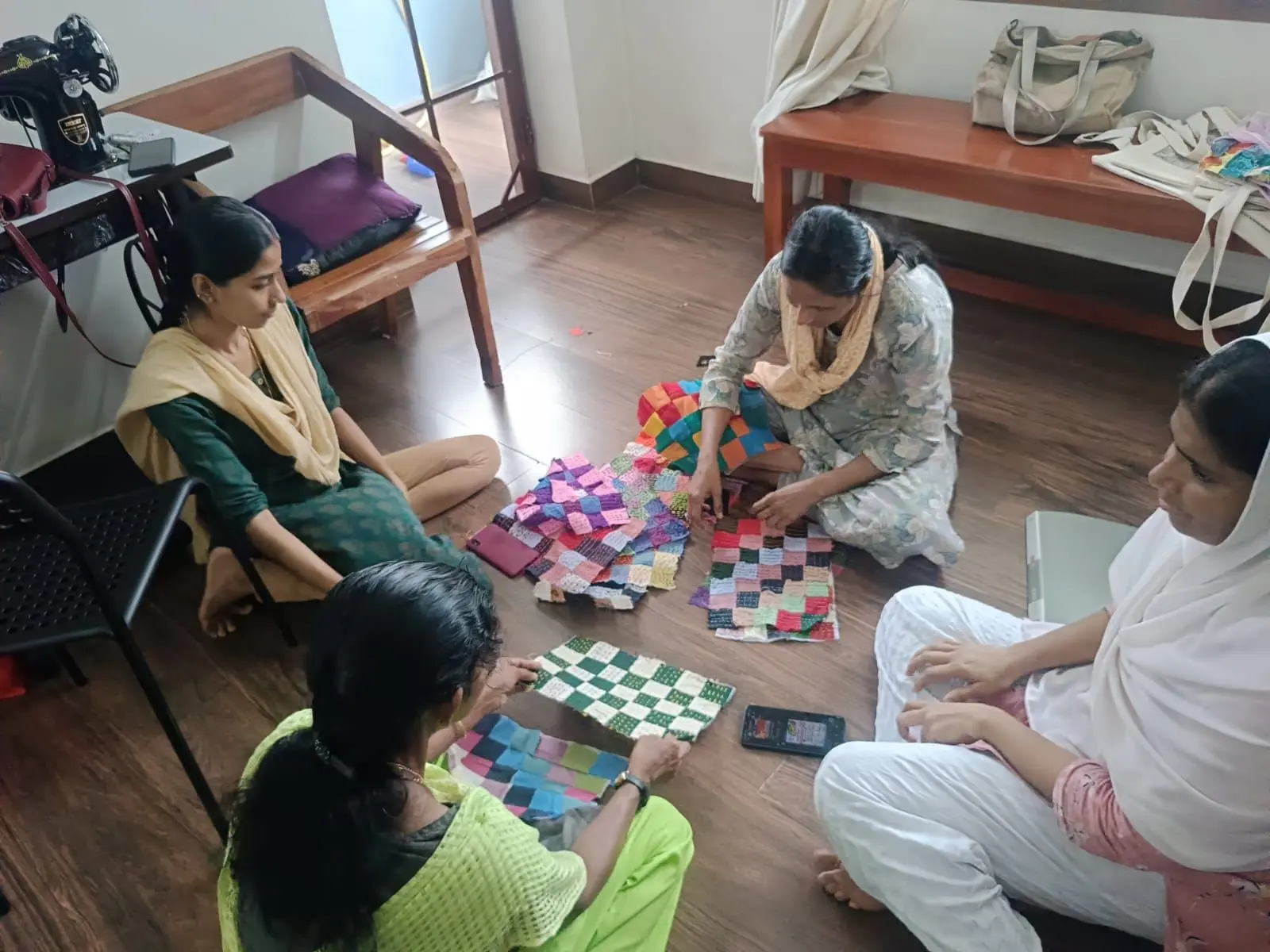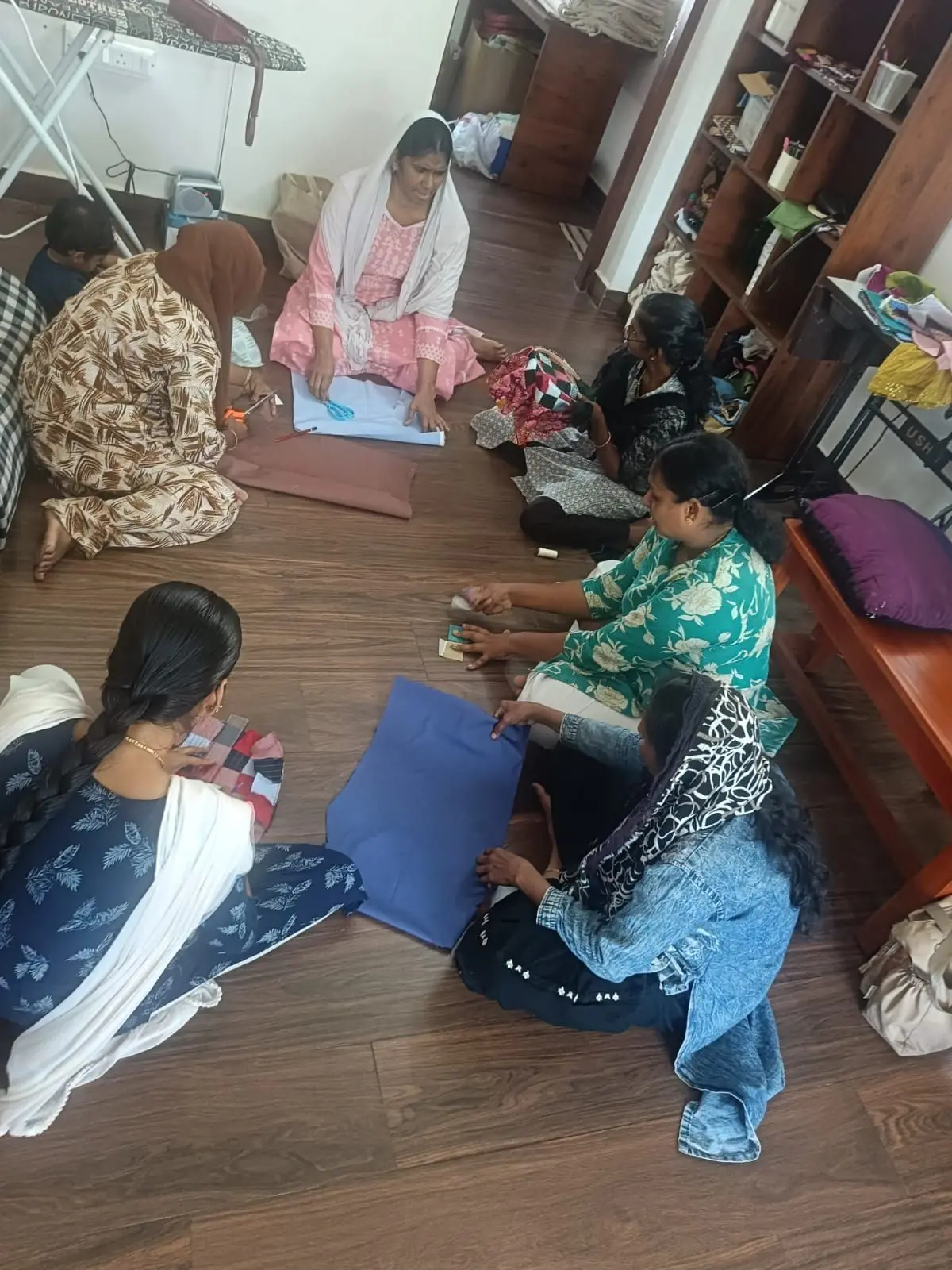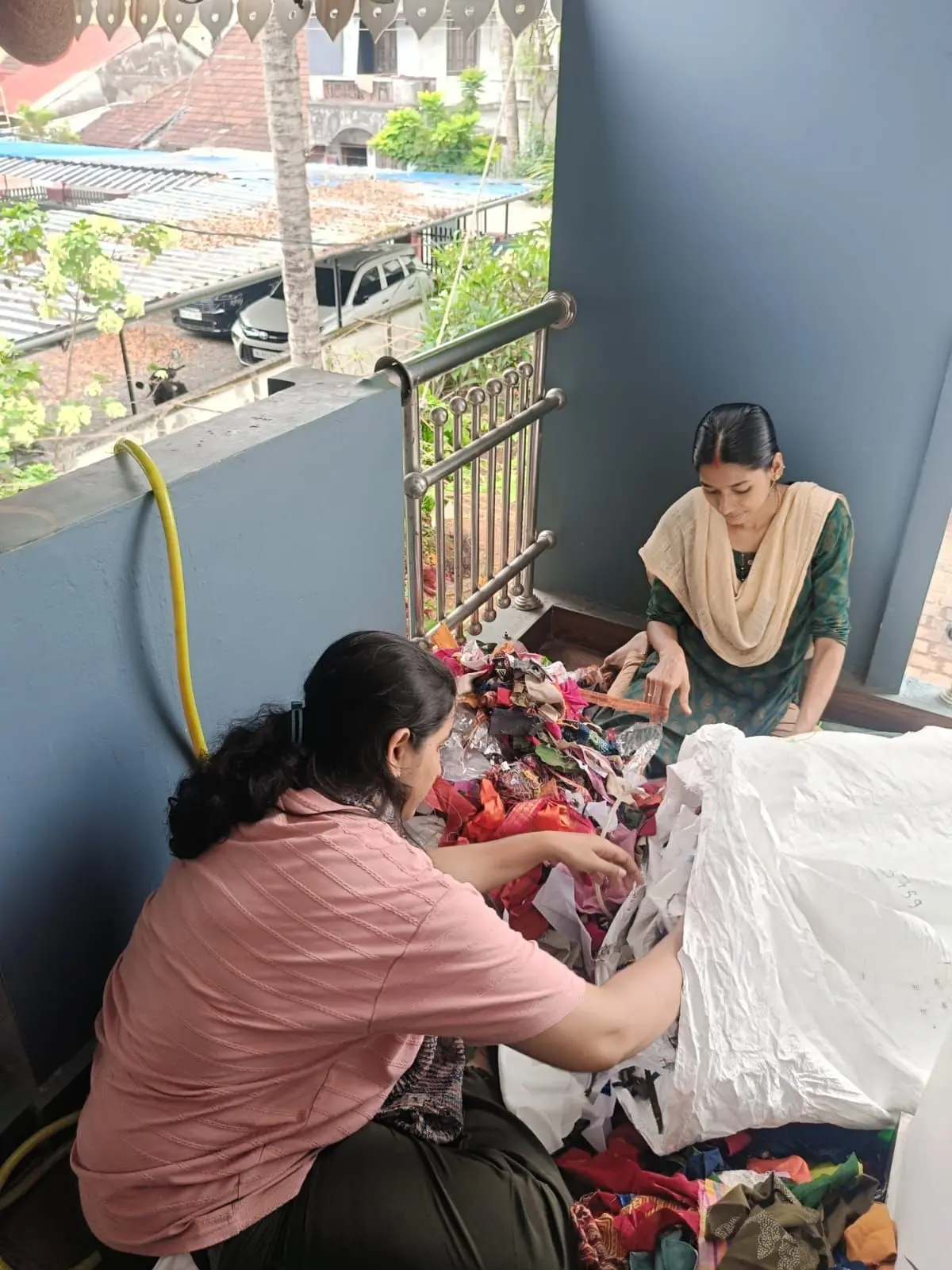
All team members gathered to select a fresh batch of cotton fabrics from a new supplier of higher-grade materials. We assumed premium quality would prevent dye transfer, so we soaked all the colourful fabric pieces together in one washing container for the first pre-treatment. During soaking and washing, we saw significant color bleeding across many pieces and visible fabric shrinkage as the cotton fibres reacted to the water.
To assess the structural and aesthetic effects of the wash, we dried and ironed each fabric panel. Ironing let us examine the extent of color fading, cross-staining, and dimensional shrinkage across the batch. This experience was a crucial quality control lesson: even high-quality cotton fabrics naturally release excess surface dye and contract during their first wash. We realised that using unchecked, colour-releasing fabrics in finished bags would make dyes bleed onto nearby panels and ruin the final products. So we set a mandatory quality control protocol: every newly purchased cotton fabric must be washed individually and thoroughly inspected before we approve it for bag construction.
- Fabric pre-treatment quality control protocol
Established a standardized pre-washing, drying, and inspection procedure across the stitching unit to protect product quality. Observed: The team successfully identified colour bleeding and dimensional shrinkage during initial testing, leading to the immediate implementation of an individual pre-washing rule for all future fabric stock.
What worked: Ironing the thoroughly dried fabric panels gave precise measurements of shrinkage and a clear assessment of overall color retention. What was difficult: Soaking many multi-coloured cotton fabrics together in one tub caused dye bleeding and cross-staining between pieces. Changes for next time: Wash every newly purchased cotton fabric panel separately during the first pre-treatment to stop cross-contamination and isolate dye release before cutting.
Run this activity yourself. You are free to copy, change and share this write-up, as long as you credit aikyam space. Photos are not included. (Creative Commons licence CC BY 4.0)