
Ponnu Sanjeev
What Ponnu Sanjeev did here
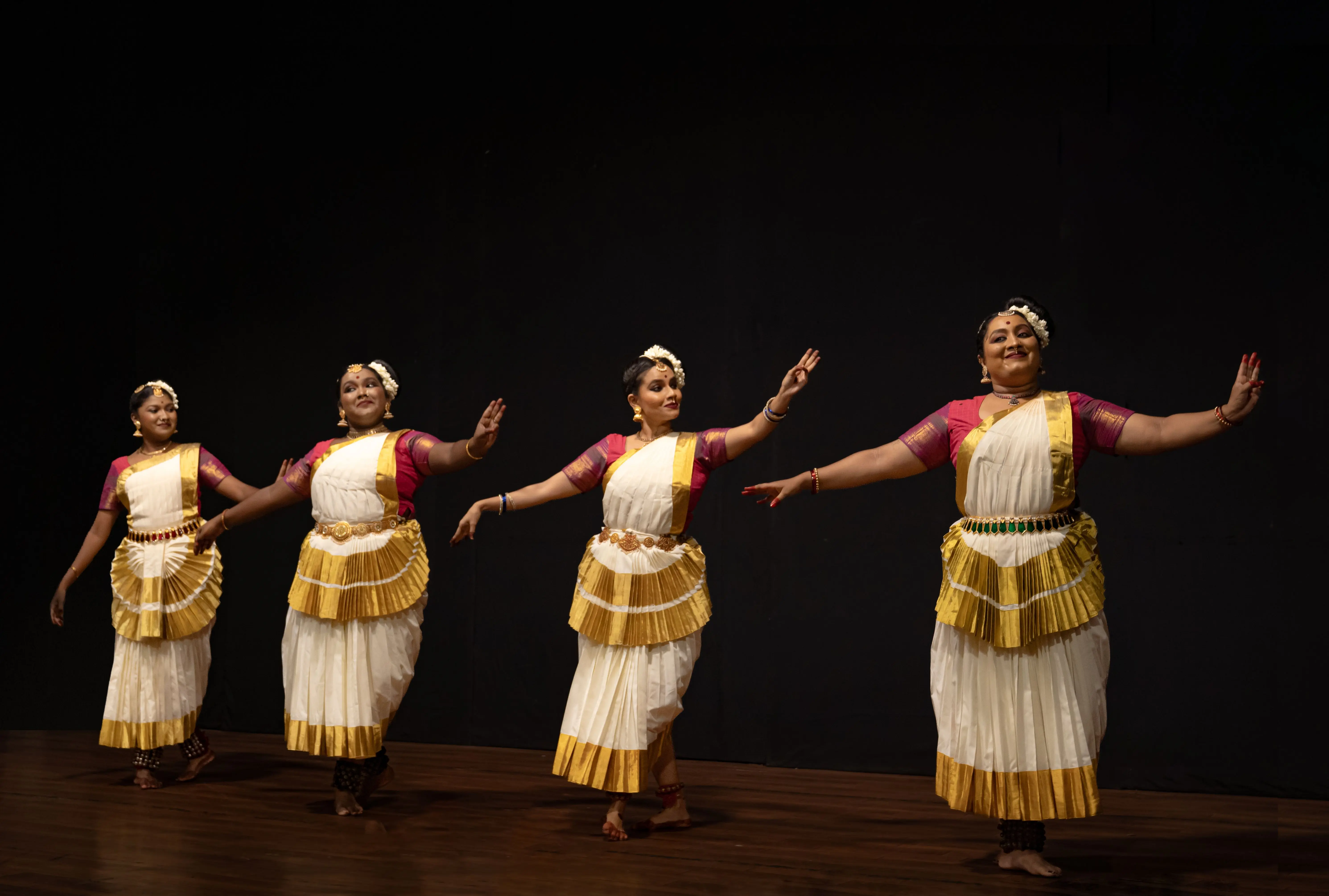
Faculty performance of Mohiniyattam and Kathak for students
On Sunday, we organised a one-hour performance by our faculty for the students. It featured Mohiniyattam and Kathak. Watching live performances is an important part of learning dance. It lets students see how movement, expression and technique come together on stage. The performance was organised especially for the students. It gave them the chance to experience what a dance performance looks and feels like. They also learned by observing the artists.
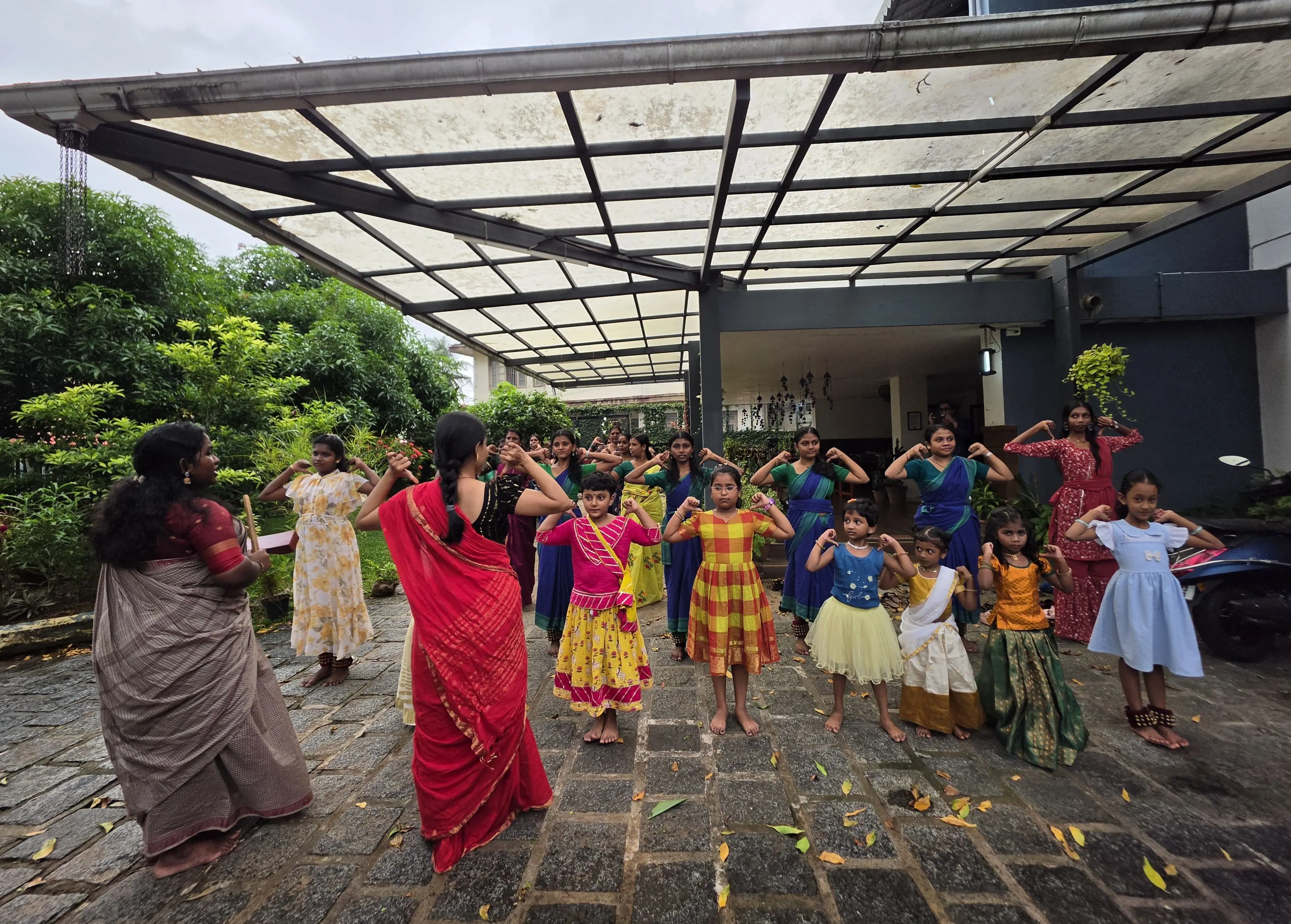
Dance Together Day: celebrating a new milestone
Students from our batches came together for Dance Together Day. They met, danced, and celebrated as one community. This brought together students from different batches and age groups. Students aged 40 and above danced alongside children as young as three years old. It was special to see generations sharing the same dance space. All four teachers were present at the dance gathering. Many students dressed for the occasion. Some students could not attend, but those who came brought plenty of joy and energy. We also celebrated students who were ready for the next level. They wore the chilanka (dance bells) for the first time. Teachers tied the bells for the students, who then danced wearing them. The day felt like a joyful meetup, as students from different batches and age groups shared the dance space.
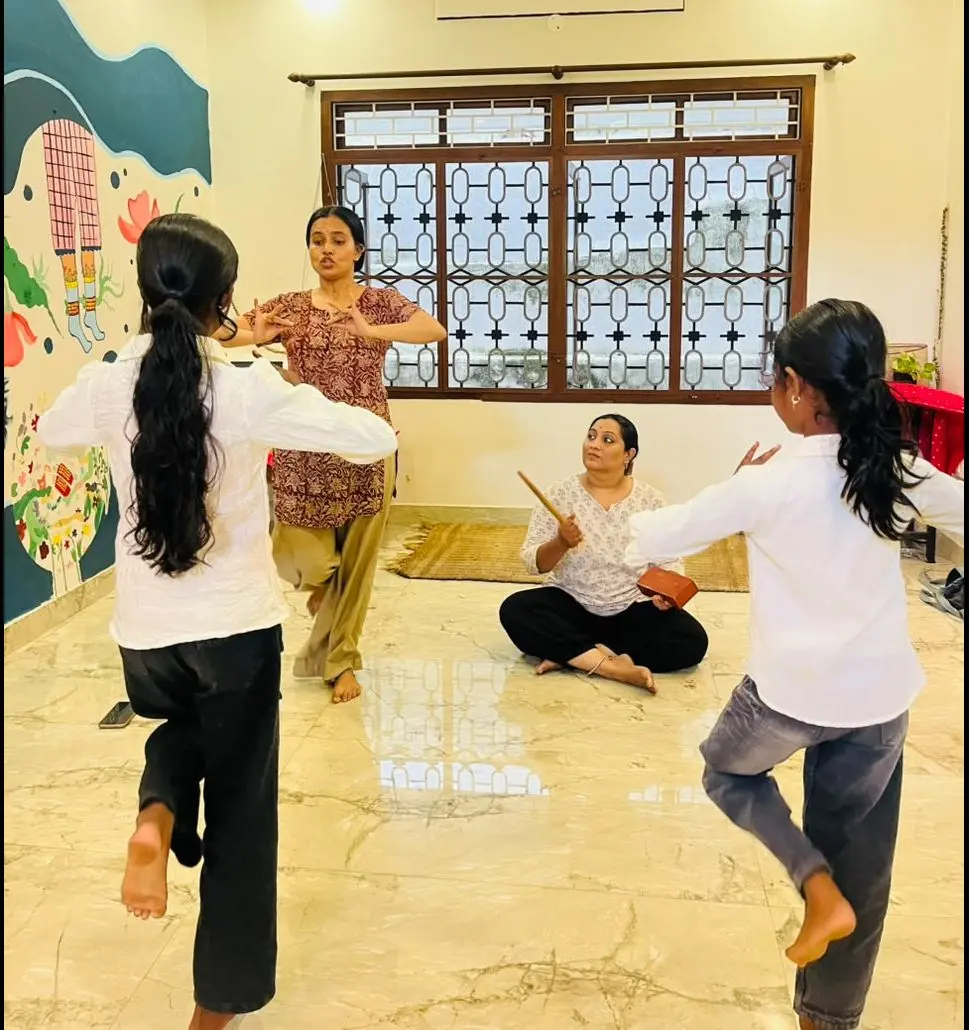
Children feel rhythm beyond sound in classical dance
We began a new batch for Deaf and hard-of-hearing children. This work has been in preparation for a few months, shaped by our years as dancers and teachers of Indian dance. We believe Bharatanatyam and Mohiniyattam can give children useful ways to explore rhythm, movement, co-ordination and expression when taught in accessible ways. Two teachers led the session. One demonstrated the steps while the other gently guided the child's hand to clap along with the rhythm. We loved seeing her grasp the rhythm, and she recognised the gaps between beats. She also responded to changes in speed. In time, she copied the movements and soon performed the steps on her own. By the end, she had learnt five Nattadavu sequences, the basic movement units of Bharatanatyam. The session used visual demonstrations, clear movement cues and repetition. We gave patient, one-to-one attention and encouragement. The child learnt at her own pace. This was our first session with the children. One child attended, and three more have registered for the upcoming sessions. This start has strengthened our belief that, with appropriate support and ways of teaching that children can see and feel, classical dance can become an open and good space for Deaf and hard-of-hearing children to explore movement, rhythm and self-expression.