
Sreena Swaminathan
What Sreena Swaminathan did here
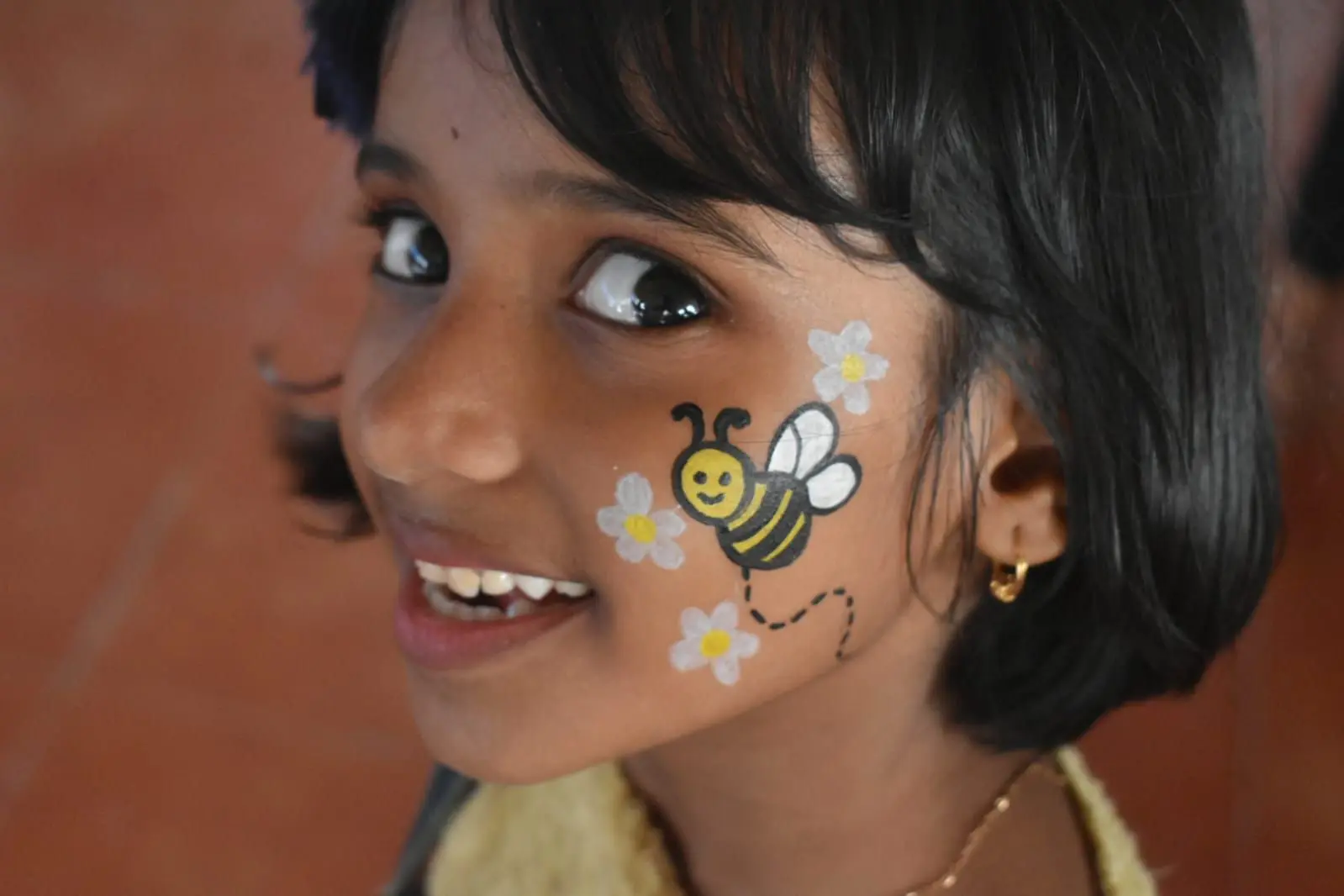
Art stations and a talent showcase to welcome children back
For Children’s Day, we ran an open art afternoon at aikyam space. There was a warm-up, art stations children could move between freely, and a showcase of their work and talents. Parents were invited too. It was the day we had been working towards. For weeks, fewer children had been coming to Curiosity Club. We didn’t know why. After reconnecting with children and families, we hoped familiar faces would return. We planned for about 15 children. 24 came, about double our usual, many for the first time in weeks and several parents came with them too. George and Sreena ran the afternoon, with Diya, an external facilitator, on face painting. Warm-up (2 pm). “Heads, Shoulders, Knees and Toes” got everyone moving. Sign-up. We listed the activities on the whiteboard and children wrote their names under the ones they wanted. Art stations. Children moved between the three stations on the terrace. Some tried every one. Others made one piece and were happy with that. Clay was the favourite. We ran out and had to buy more. Getting ready to perform. We had asked children to tell us if they wanted to perform. On the day, few put themselves forward. Around 3:30, Sreena went round and suggested small groups of three to five. That way, no one had to perform alone. Groups chose a song, dance, story or speech and practised. Snacks and display (4:15pm). Downstairs, we had snacks and laid out everything the children had made. Showcase (4:45–5:20pm). Face painting took longer than planned. So we moved it downstairs and ran it alongside the showcase. Children gave speeches and dances, including two or three group dances. Then they presented their own work. Some children missed the day because of school cultural festivals, but others came along afterwards and joined in. Letting children choose what to make, and whether to perform, meant every child found their own way to take part. Everyone left happy, and with a painted face. It was lovely to see them again.
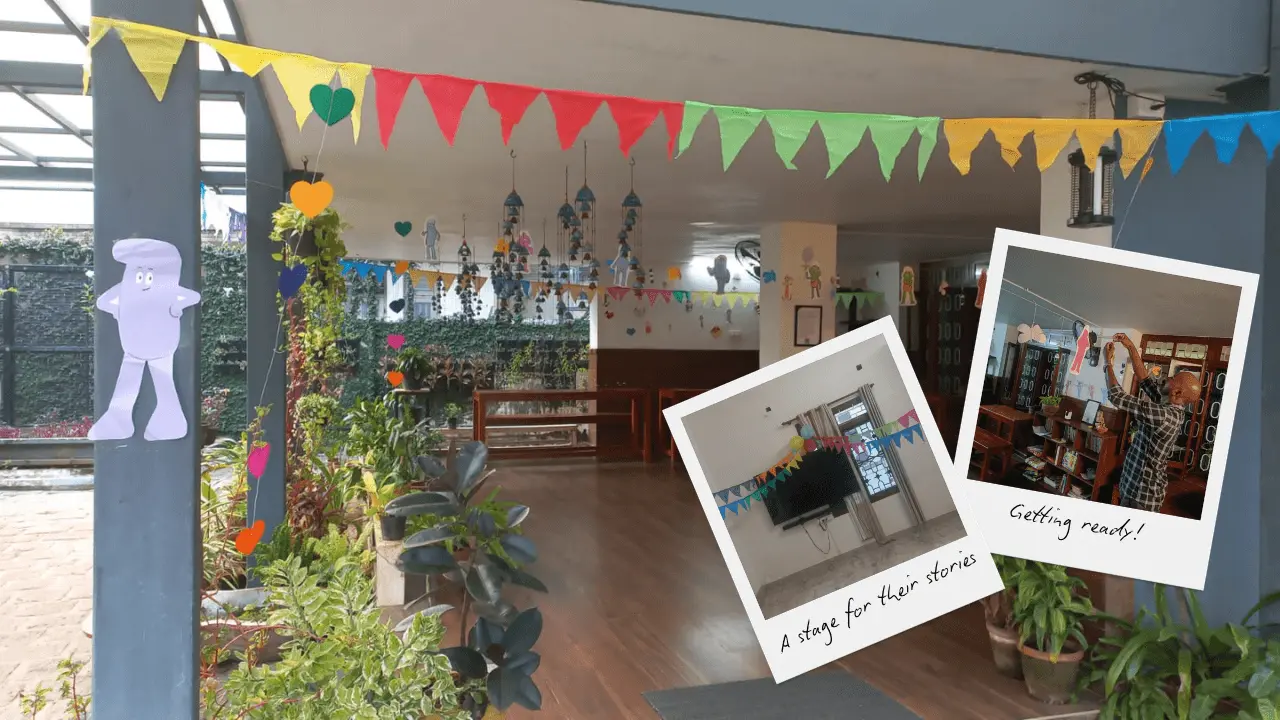
Reconnecting with Curiosity Club children and families
Attendance at Curiosity Club has been uneven. We wanted to find children we had lost touch with. We also wanted to reconnect with their families and understand what makes attending difficult. Over a week, we brought existing records into one master register. This helped us identify children who had not returned recently. We corrected names and removed duplicates. We also added every family to WhatsApp. Children's Day gave us a welcoming reason to reach out. We individually invited all families through messages and voice notes. We kept the invitation separate from questions about absence. We will follow up next week to understand what might help children return. We have planned games and art. We also planned crafts and clay modelling. We will offer face painting and opportunities to perform. We want children to enjoy themselves and choose how to take part. We also want them to feel welcome to come back. Today, we decorated aikyam, ready to welcome everyone tomorrow.
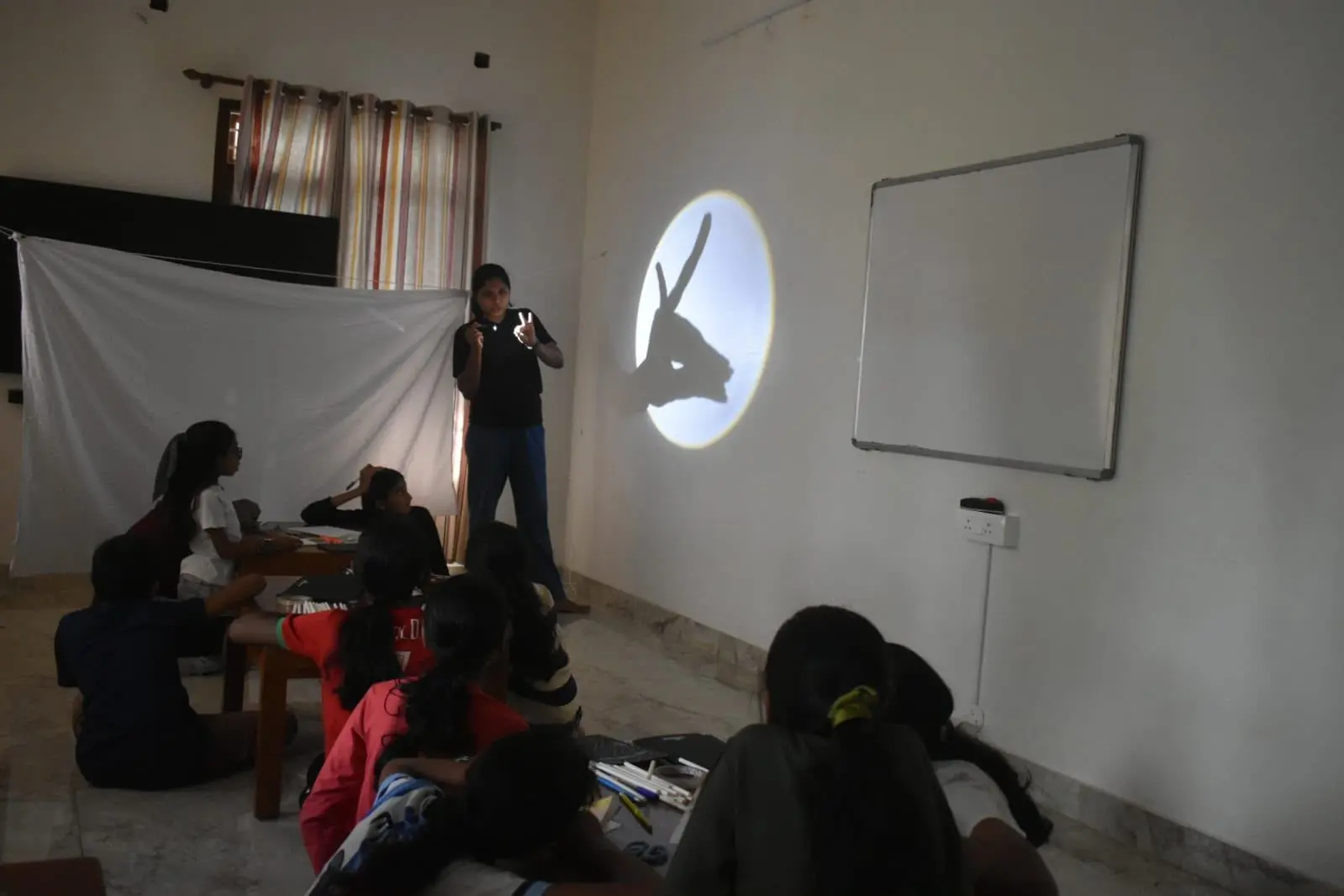
Shadow puppetry returned at the children's request, giving those who missed the earlier session a chance to try it. After free play, we brought reading and puppet-making together. We formed three groups and gave each a short storybook to turn into a shadow show. Children read together, wrote simple scene plans and cut out characters and shapes from paper and card saved from previous activities. We explained how shadows form when an object blocks light and how moving puppets between the light and screen changes their shadow's size. Each group performed its story. One group cut out letters for a "Thank you" ending and worked out how to arrange them so the audience could read the message. We treated the shows as a first trial, with room to practise and improve. We closed by asking what children enjoyed about recent sessions and what they wanted to explore next.
Show all 8 sessions
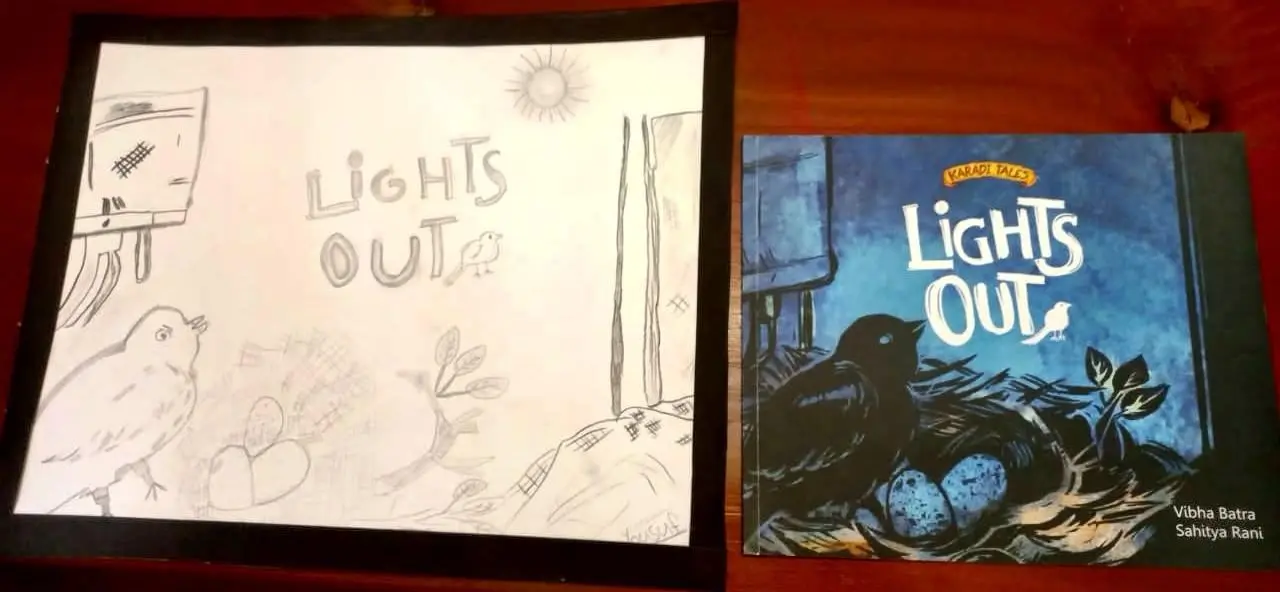
A quiet Saturday of drawing and making
We had prepared a full afternoon. The children would begin with a word activity. Then they would choose books and read together in pairs. After that they would work in teams to invent something that could solve a problem they had noticed at home or around Kochi. This Saturday, just one child arrived. We waited until 2:30 p.m. in case others were coming late. When no one else came, we asked whether he was happy to stay and what he would like to do. He chose drawing. As he had missed the previous session, the word activity was unfamiliar to him. Instead, he tried the Circles Challenge. He turned the empty circles into faces, planets, balls and other pictures. Afterwards, he picked up "Lights Out" written by Vibha Batra and illustrated by Sahitya Rani. He asked whether he could draw his own version of the cover. We gave him chart paper and colours and let him work. When he finished, we cut strips from black paper and added them around his drawing to make a frame. He was curious about what else we could make, so we tried cutting and folding paper into a small cube. While his hands were busy, we talked. He told us about his drawing at school and the prizes he had won. It was not the session we had planned. It became a quiet afternoon of drawing and making, and we got to know one child a little better.
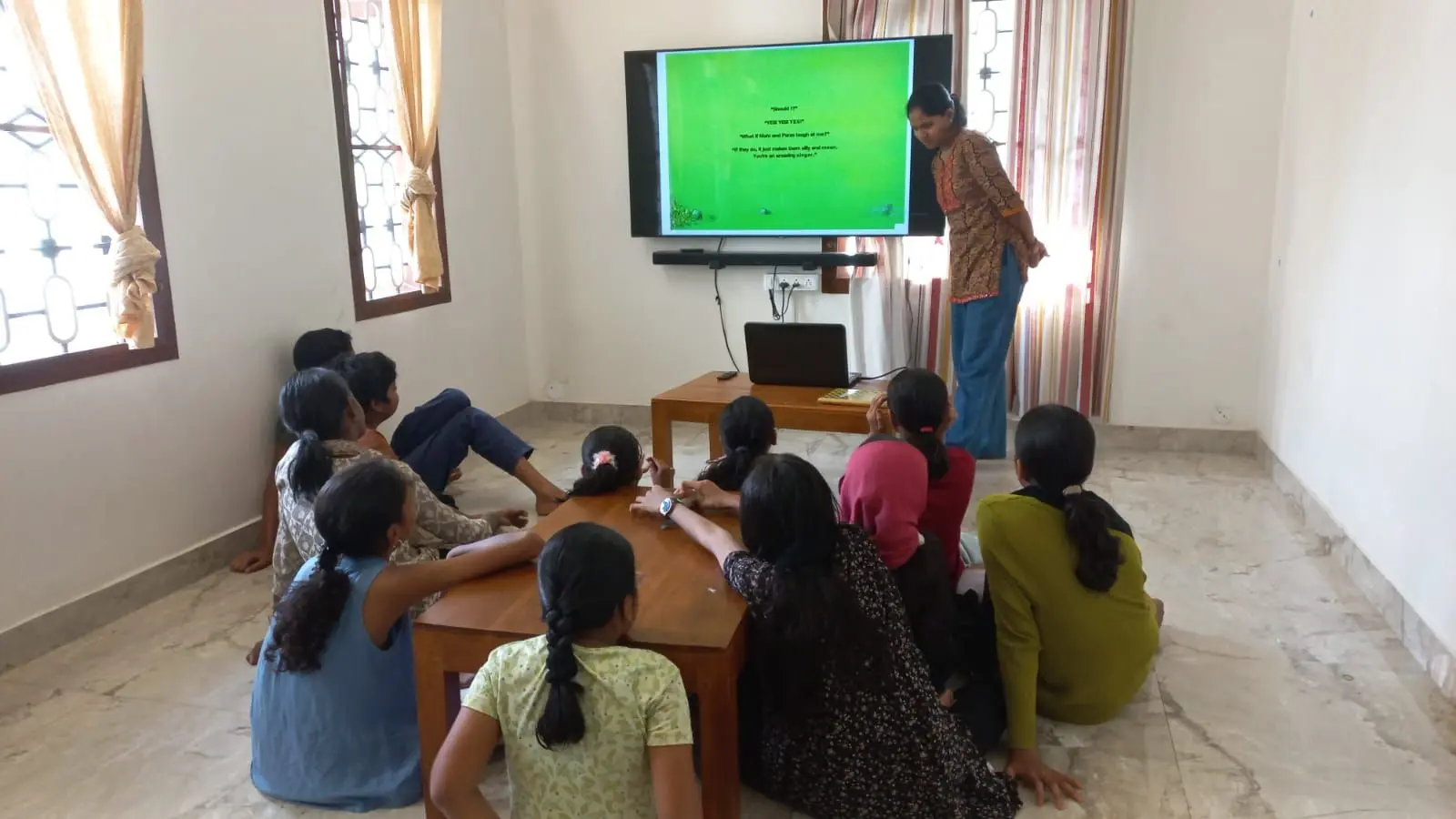
In earlier sessions, some children could read words aloud without fully understanding them. This week, we changed from paired reading to reading aloud together. We paused to explore unfamiliar words and discuss the story's meaning. We chose "Stage Fright" by Pratham Books. It is a story about Champa, who loves singing but is afraid to perform on stage. We prepared slides with selected tricky words. Children guessed their meanings from the story before we revealed the Malayalam explanations. We discussed why Champa felt scared. We asked who had felt like her before. Children shared their own experiences of nervousness. They connected the story to their lives and explored the feelings behind the words.
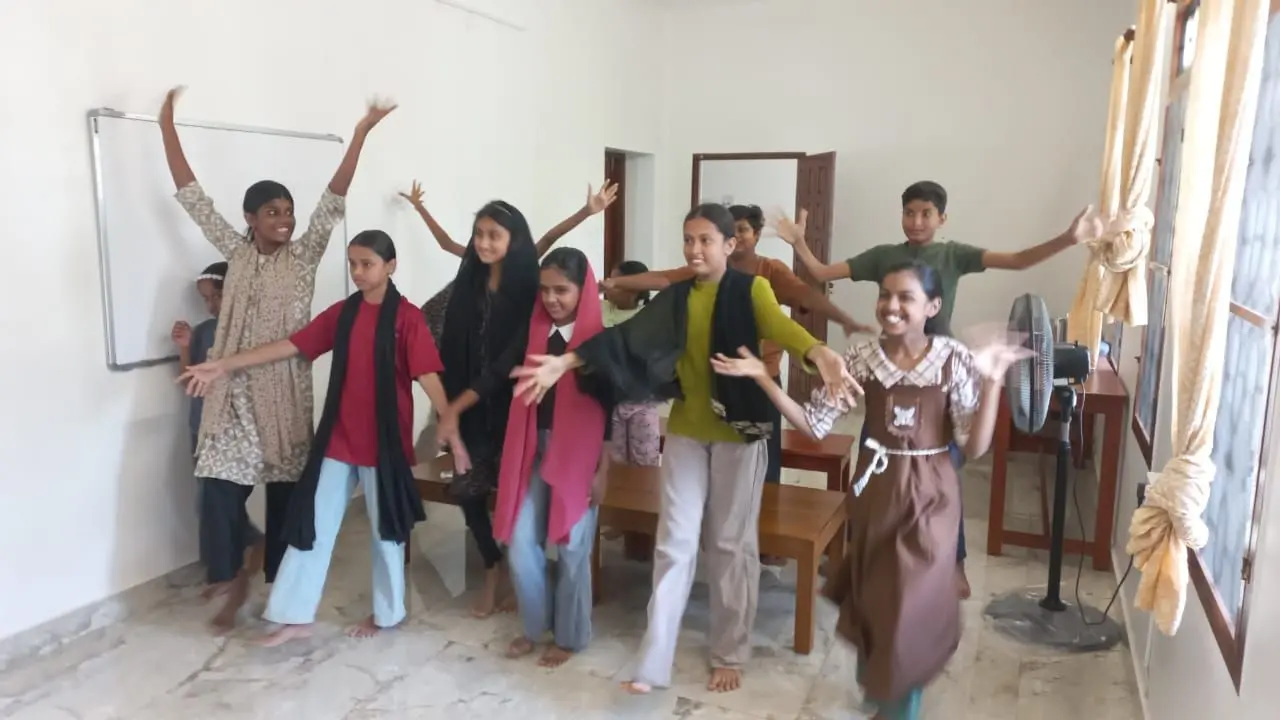
This week at Curiosity Club, we explored a question. What helps us share our ideas when we feel nervous? We began with Champa from "Stage Fright", a story about a child who loves singing but is afraid to perform. Her worries helped children talk about their own feelings when facing an audience. We prepared slides with prompts and examples. We set up a microphone for practice. We started by inviting each child to introduce themselves with an action. Afterwards, we asked how it felt to stand up and speak. Children described shaking hands, trembling legs and sweaty palms. Their experience matched Champa's. This led us to practise breathing to calm our bodies and shaking out our arms and legs to release tension. We then warmed up our voices with tongue twisters and tried changing our volume and expressing different emotions. A facilitator demonstrated different speaking styles, and children noticed the difference posture, voice and energy made. They then chose topics for short talks in Malayalam or English. We introduced PREP, which stands for point, reason, example, point. It helped children organise their thoughts. We provided paper for notes. They then came to the front and used the microphone to share their ideas with the group. We closed by reflecting on how it felt to speak and what had changed after trying.
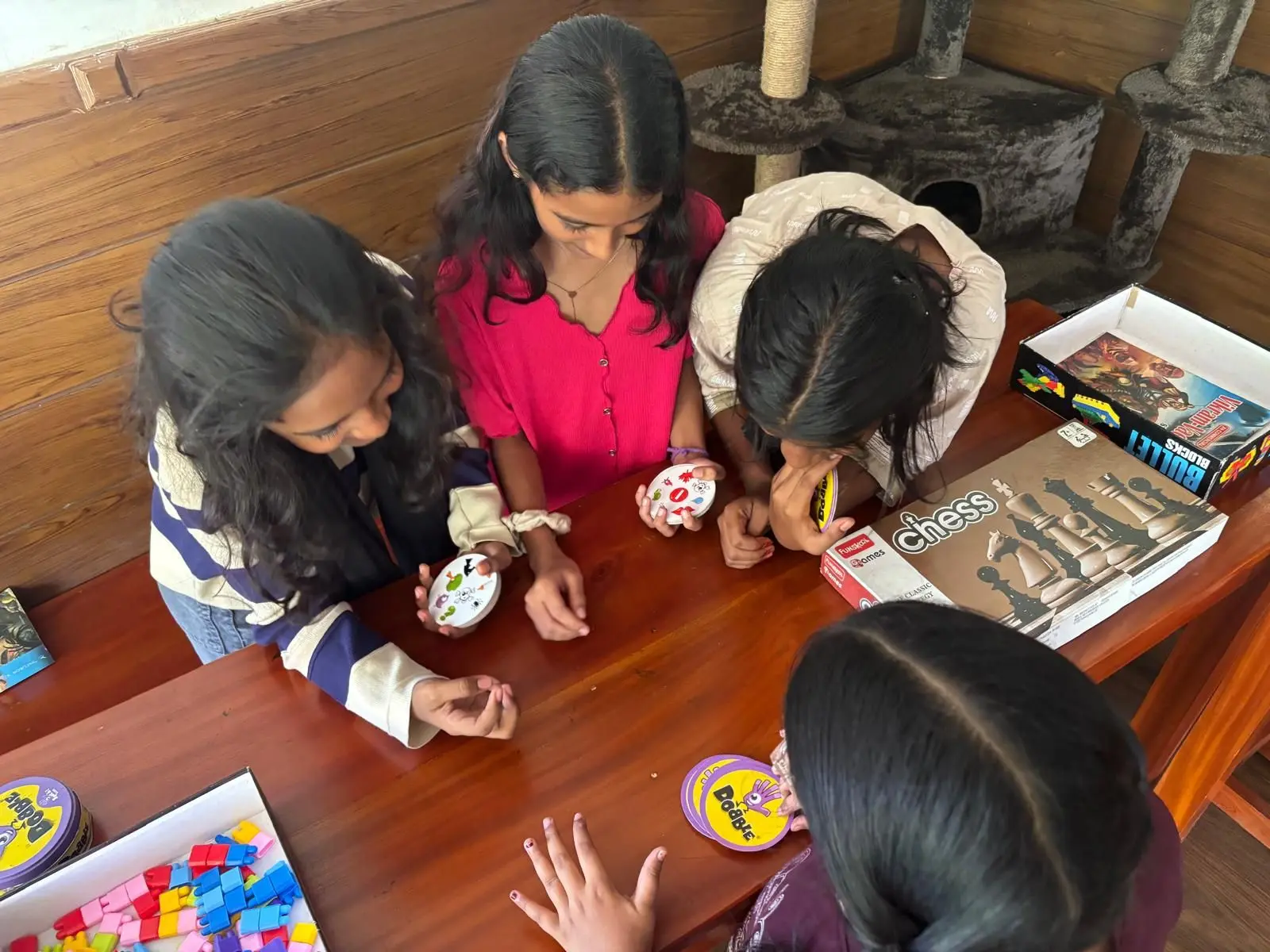
We start our Curiosity Club with free play as children arrive. They choose games and building materials, then play together. This gives everyone time to arrive before we gather for the guided activity. We asked children what they wanted to play and added games based on their suggestions. The children were excited to see their choices. They started setting the games up themselves. With six games going on at once, children could choose what interested them. On their first visit, two older children were unsure how to join in. Our facilitator invited them into an "UNO" game with others. As they played, they became more involved and helped explain the rules to younger children. The group later learned dominoes together too. Another group prepared "Guess Who" for next week. "Jenga", "LEGO" and "Dobble" were also popular.
Malarvattam: making space to share
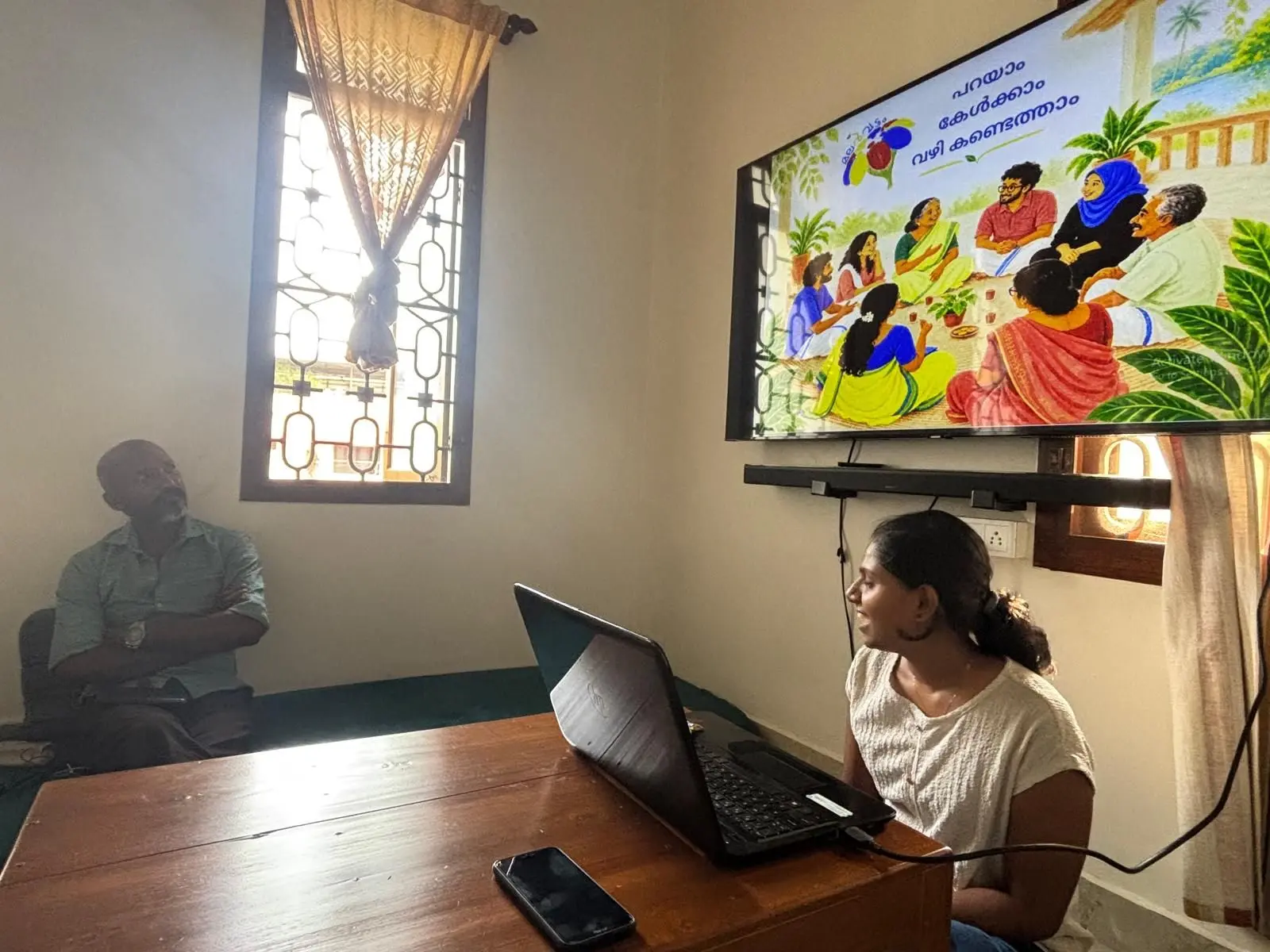
We surveyed nearly 100 people in Fort Kochi and Mattancherry to find out what support parents and caregivers wanted. They told us they wanted to share experiences, feel heard and support one another. This led us to create and name Malarvattam ("flower circle"), a monthly circle for parents and caregivers. For the first gathering, we chose a get-to-know-you conversation. The facilitators reviewed the survey together, developed discussion prompts and prepared slides. Their role was to make space for everyone to contribute, listen and summarise what participants shared. They did not give expert parenting advice. We designed a poster and shared it widely through partners and community contacts. On Saturday, the facilitators ran a mock circle. They worked through the slides and practised how they would introduce questions and guide the discussion. They also prepared their own scripts for Sunday's session. The first circle had two participants. Together, we explored memories of childhood, children's lives today and experiences of parenting and caregiving.