- What went in
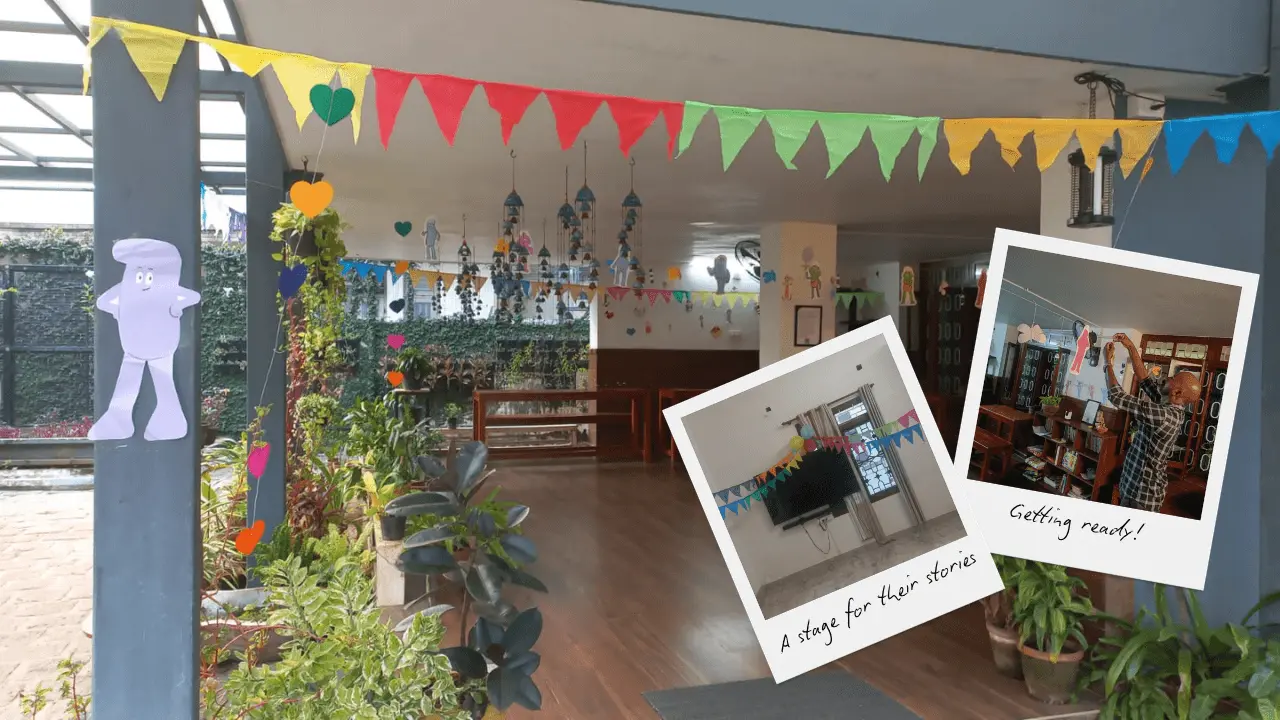
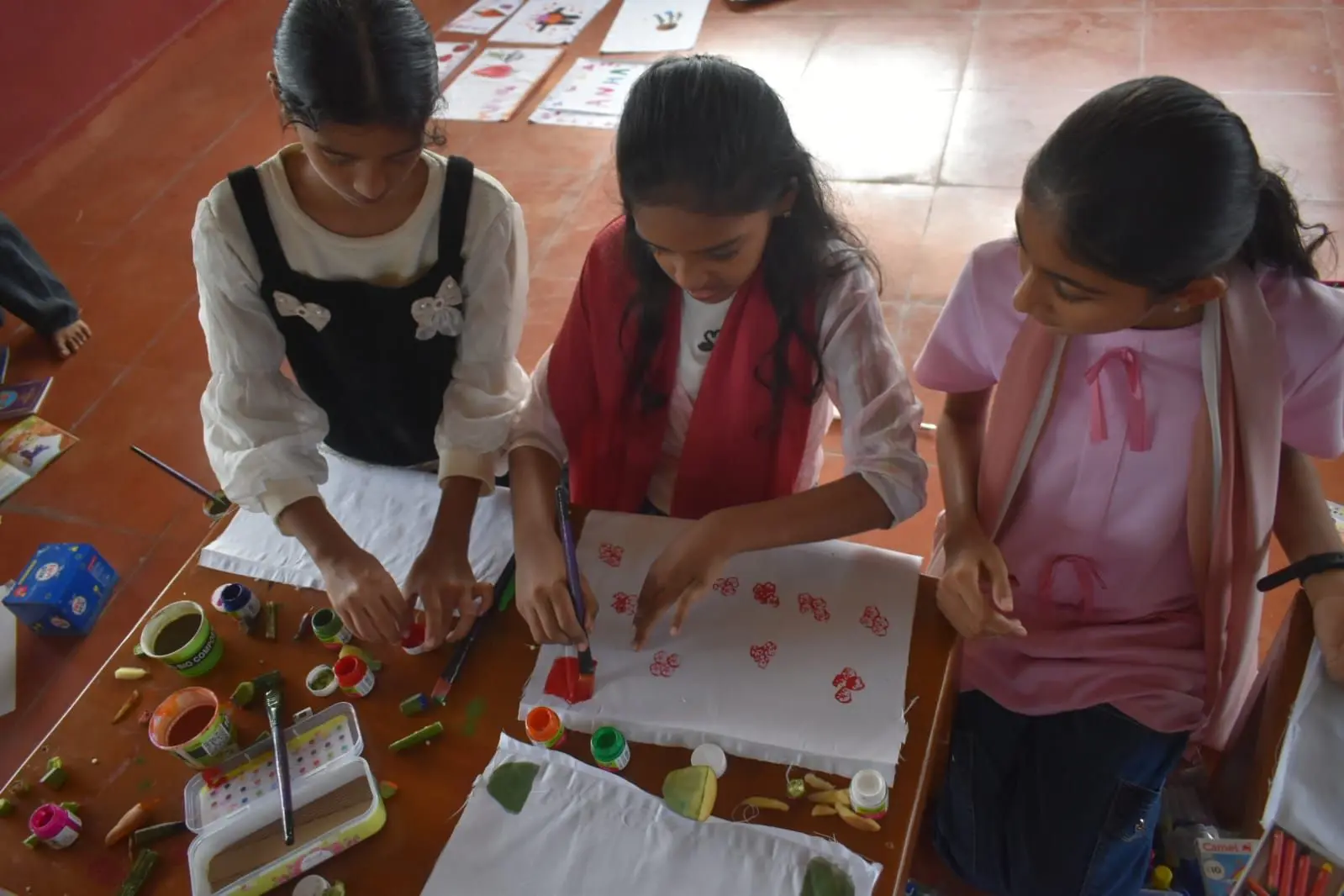
- We spent about two hours setting up, the evening before and that morning. On the terrace, we set out three benches as stations: face painting, vegetable printing, and drawing, painting and clay. Each had its materials ready. For vegetable printing, we cut vegetables into stamps and used old pillow covers and office fabric as cloth, with paint and brushes. Drawing and painting had paper, colour pencils, crayons, sketch pens and paint. For clay, we had two kinds: coloured modelling clay and natural clay. Downstairs became a stage. We already had most materials, so we only bought clay and a few extras. We decorated with our old exhibition decorations, origami cats and dogs, bunting and balloons. We also bought cookies from the bakery and juice for snack time.
- Outside help
- Diya, an external facilitator who had also supported our art exhibition, ran face painting.
- Time
- 3.5 hours
- Cost
- ₹5,700
For Children’s Day, we ran an open art afternoon at aikyam space. There was a warm-up, art stations children could move between freely, and a showcase of their work and talents. Parents were invited too.
It was the day we had been working towards. For weeks, fewer children had been coming to Curiosity Club. We didn’t know why. After reconnecting with children and families, we hoped familiar faces would return. We planned for about 15 children. 24 came, about double our usual, many for the first time in weeks and several parents came with them too. George and Sreena ran the afternoon, with Diya, an external facilitator, on face painting.
Warm-up (2 pm). “Heads, Shoulders, Knees and Toes” got everyone moving.
Sign-up. We listed the activities on the whiteboard and children wrote their names under the ones they wanted.
Art stations. Children moved between the three stations on the terrace. Some tried every one. Others made one piece and were happy with that. Clay was the favourite. We ran out and had to buy more.
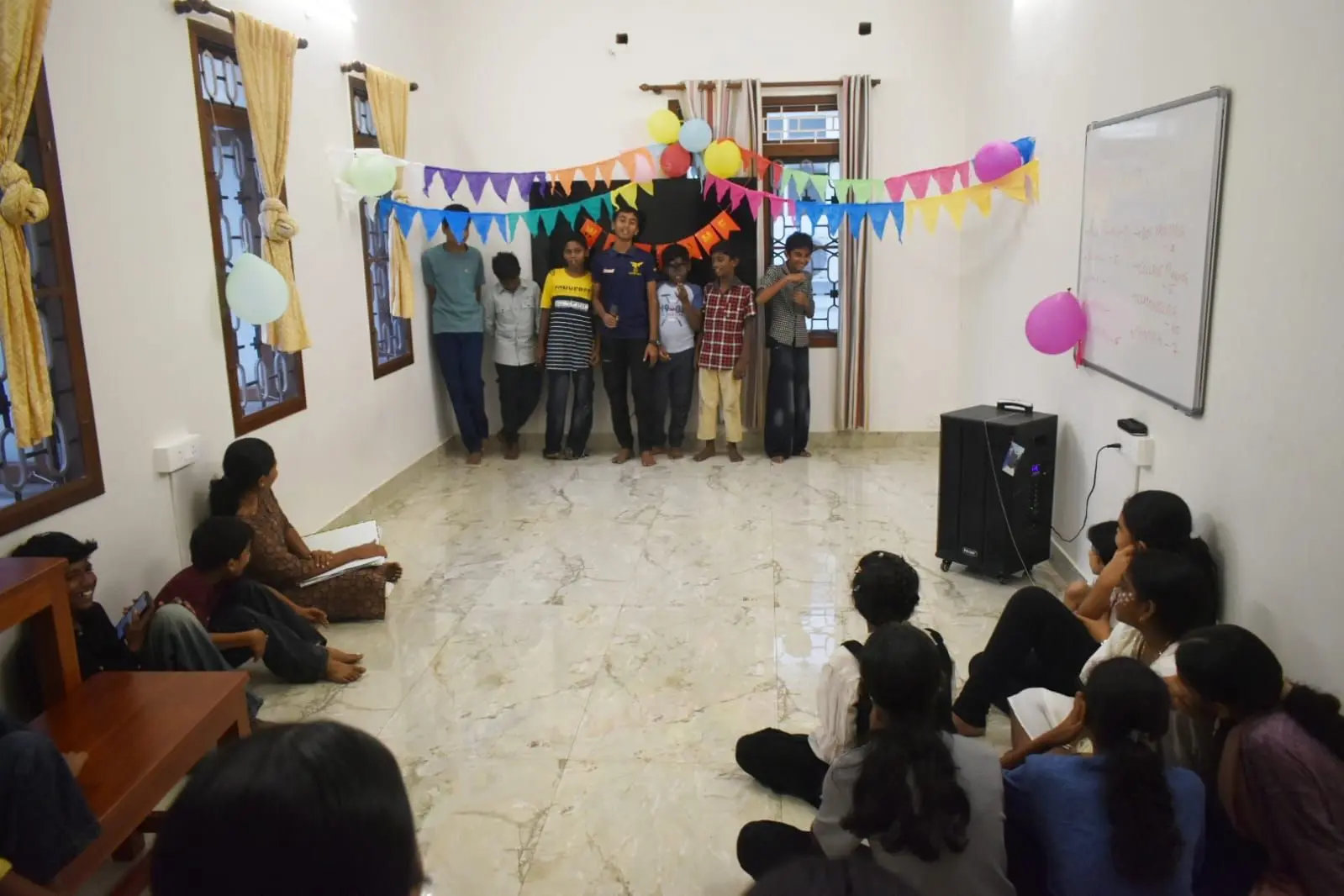
Getting ready to perform. We had asked children to tell us if they wanted to perform. On the day, few put themselves forward. Around 3:30, Sreena went round and suggested small groups of three to five. That way, no one had to perform alone. Groups chose a song, dance, story or speech and practised.
Snacks and display (4:15pm). Downstairs, we had snacks and laid out everything the children had made.
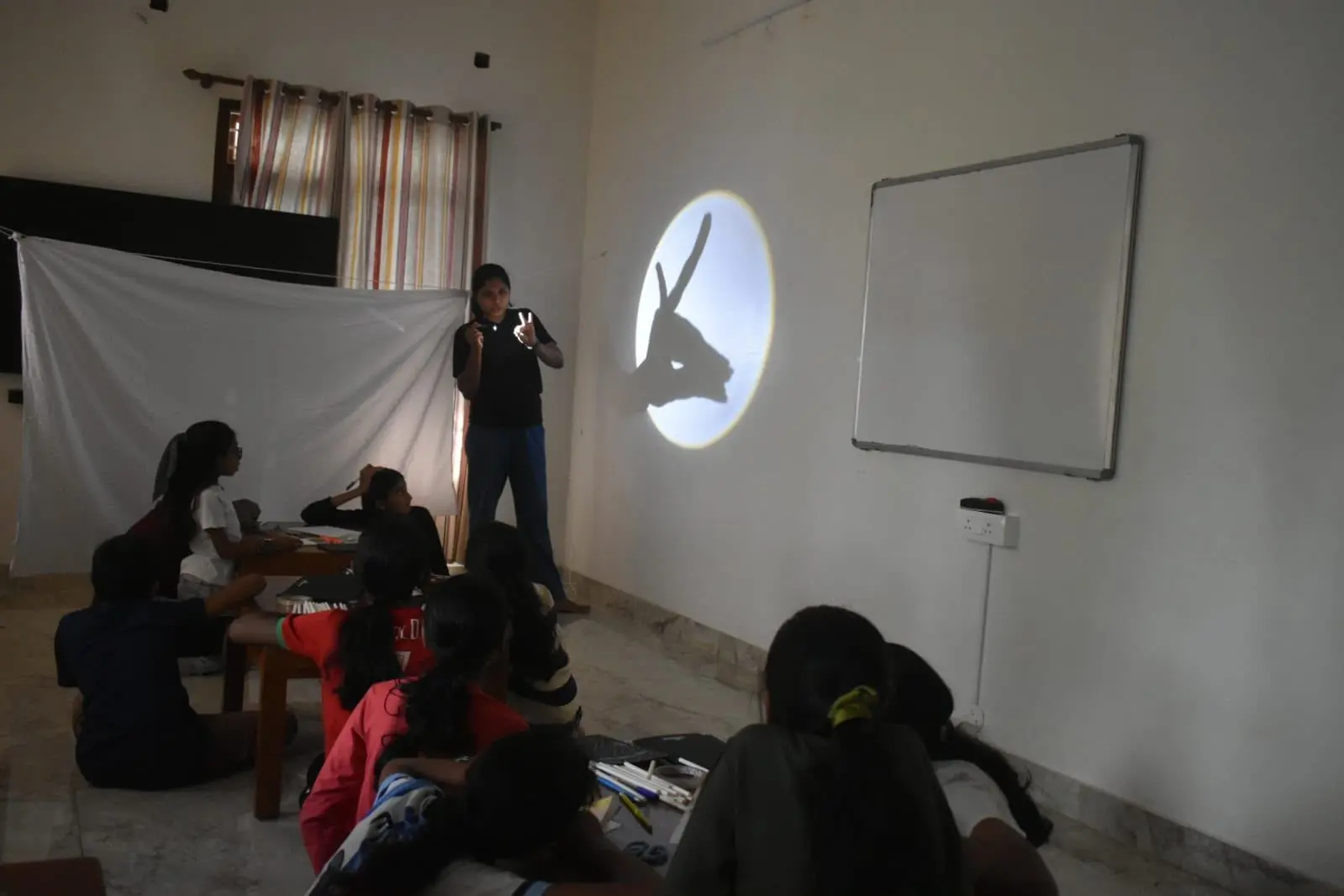
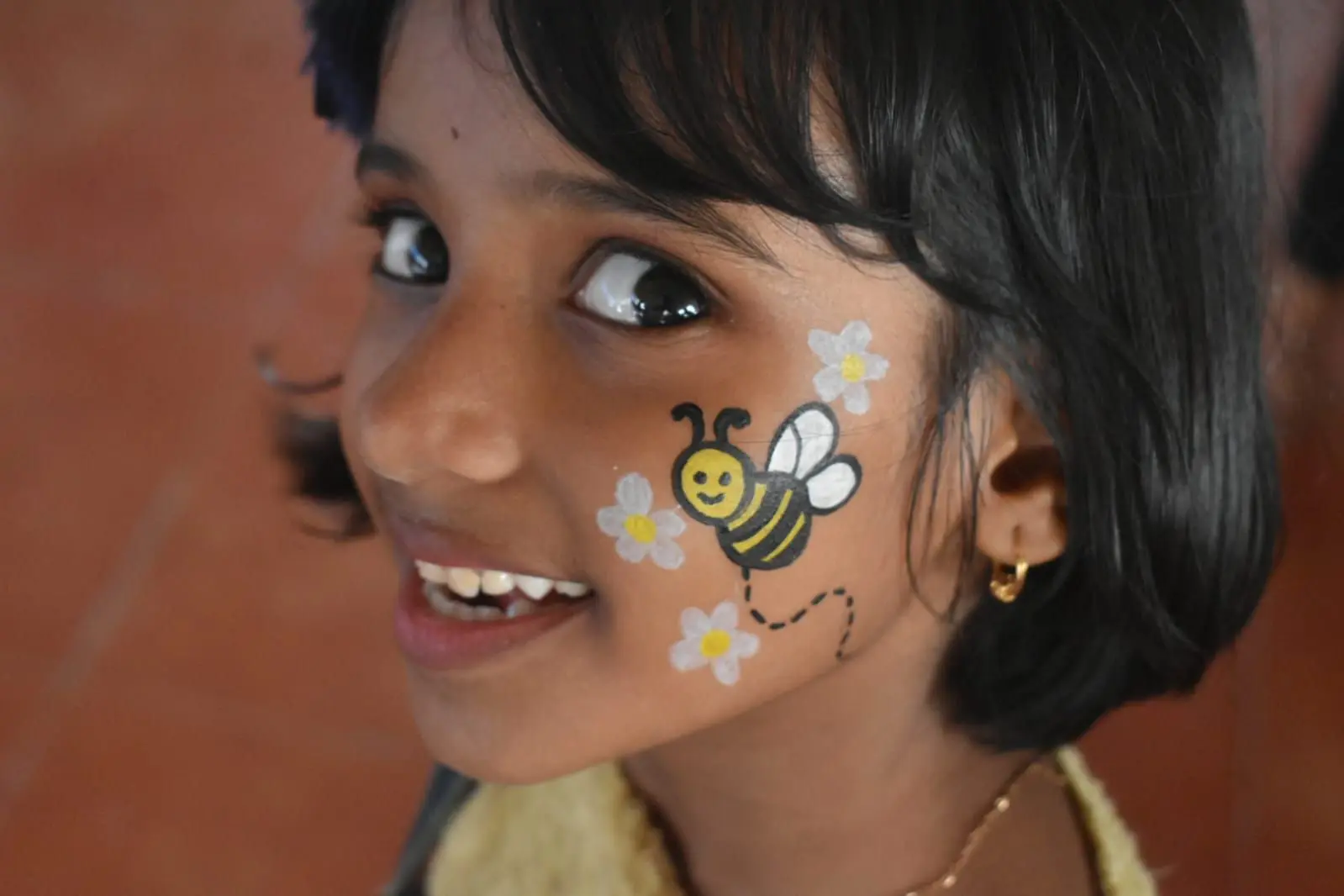
Showcase (4:45–5:20pm). Face painting took longer than planned. So we moved it downstairs and ran it alongside the showcase. Children gave speeches and dances, including two or three group dances. Then they presented their own work.
Some children missed the day because of school cultural festivals, but others came along afterwards and joined in.
Letting children choose what to make, and whether to perform, meant every child found their own way to take part.
Everyone left happy, and with a painted face. It was lovely to see them again.
- 1 Children’s Day celebration
- Group dances and speeches
- Clay models
- Vegetable-printed fabric
- Drawings and paintings
Children came back. Attendance was about double our usual 10–13. Many hadn’t been for weeks. Parents joined in, and we got to know them better. Since then, families seem more comfortable replying to us.
Many children tried more than one station. Children who wouldn’t perform alone took part in small groups. It’s an encouraging first step, not the end of it.
(We observed it)
Few children volunteered to perform alone. Next time, we’ll suggest groups from the start. We’ll begin face painting earlier, too. We’ll also hold the showcase sooner, as some children had to leave for tuition. Two of us across two floors was a stretch. A volunteer would really help.
The sign-up board helped us plan materials and the face painting queue. Reusing what we had kept costs down. For bigger turnouts, we’ll keep spare clay. We’ll also check school calendars before big events. This week, we’ll call the families whose children didn’t come.
This week, we’ll follow-up the families whose children didn’t come. We want to understand if there is anything getting in the way.
Run this activity yourself. You are free to copy, change and share this write-up, as long as you credit aikyam space. Photos are not included. (Creative Commons licence CC BY 4.0)