- What went in
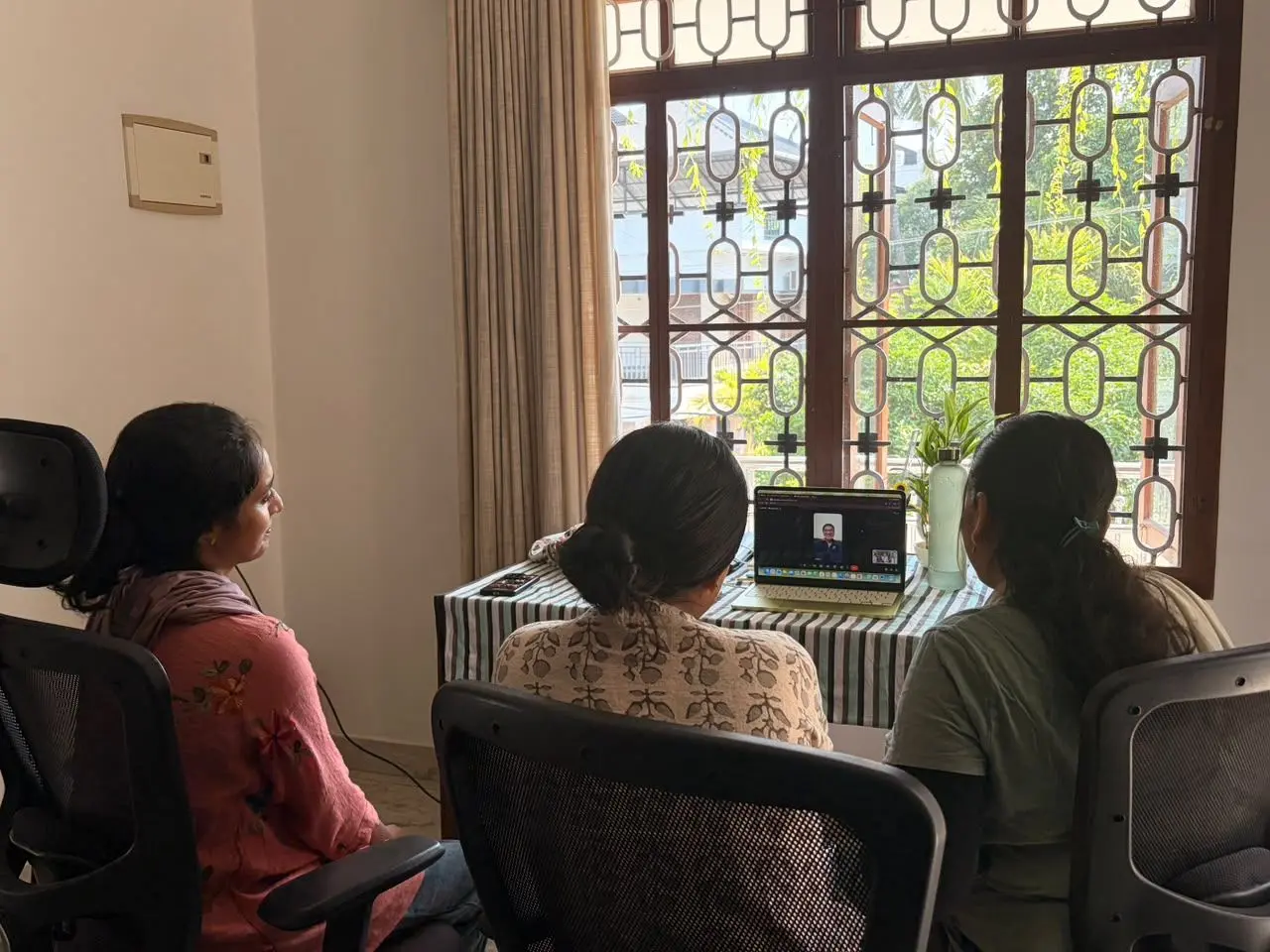
- Olimalar developed a detailed lesson plan and led a one-hour online training session with the facilitator. The session materials included printed emotion worksheets, feedback slips, existing visual charts and writing materials.
- Outside help
- Session delivery by a Mind Empowered facilitator.
- Time
- 1 hour
Our Life Skills and Mental Well-being Programme runs at GVHSS Kadamakudy. It brings together Olimalar Foundation, Mind Empowered and Sajeeva Counselling and Coaching Centre. The partners help Plus One students with school pressures, relationships and everyday choices. Topics include self-awareness, emotions, communication, managing stress and making decisions.
Olimalar designs the sessions and trains a Mind Empowered facilitator to lead them. We led the opening session. Our aim was to learn about the students and plan the programme to fit what they need. After that, the facilitator ran the sessions.
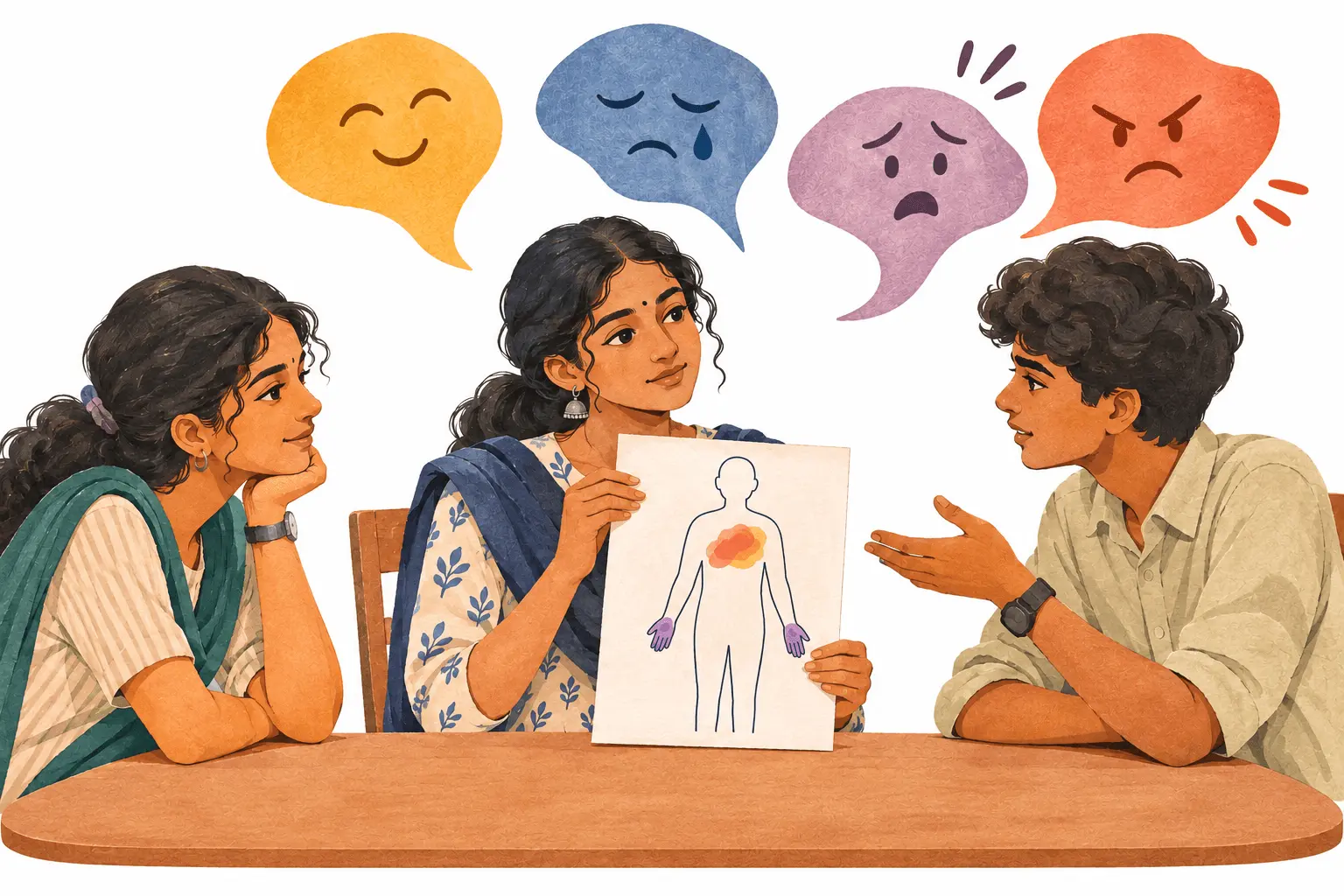
This was our third session. Earlier sessions covered introduction and trust-building, then identity and self-awareness. We prepared worksheets. They had a body outline and spaces for emotional triggers, thoughts, reactions and what might help. The facilitator brought existing visual charts about feelings and coping strategies.
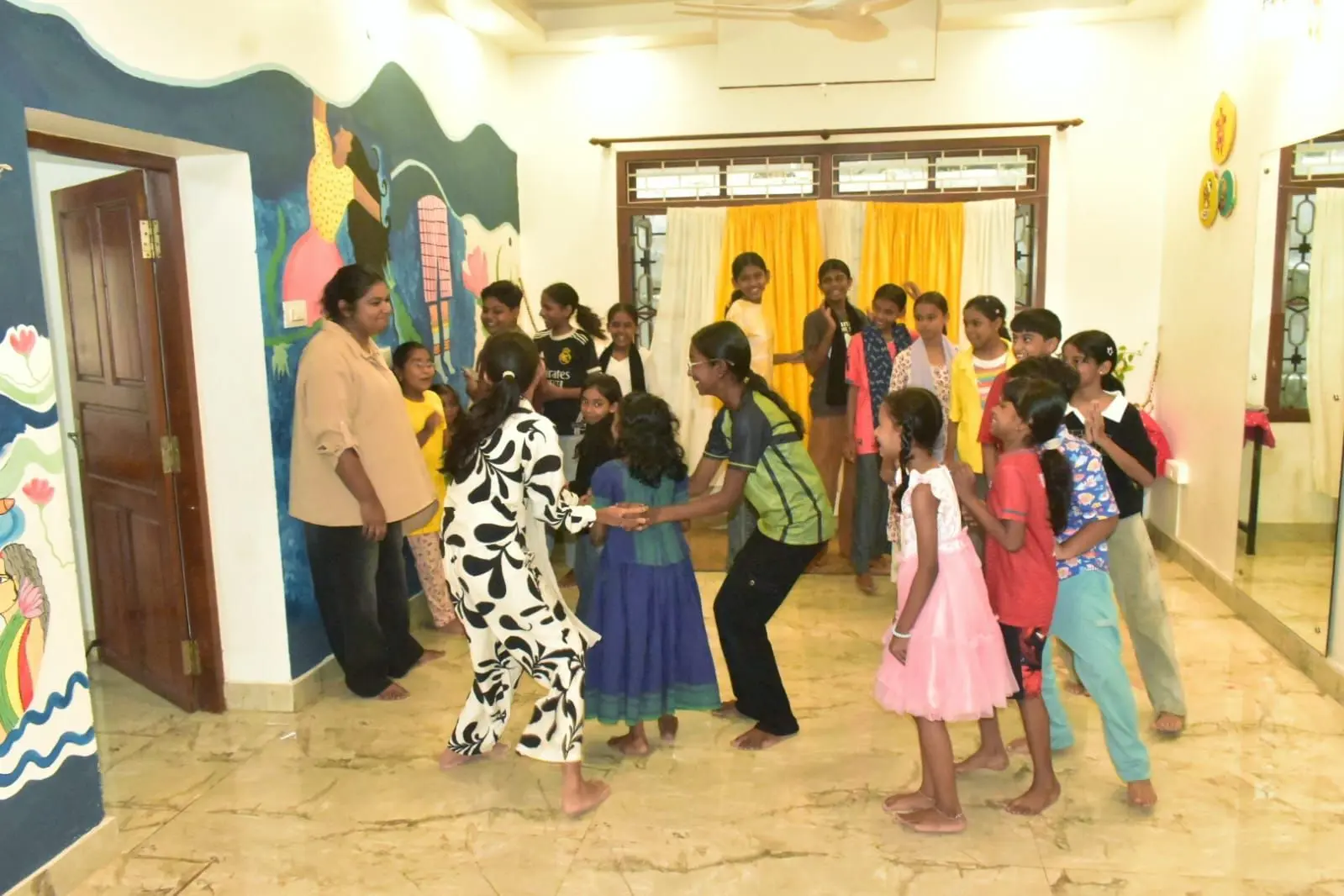
Students worked in groups. Each group explored happiness, sadness, anger, fear or disgust. Students used the worksheets to identify situations that might bring up their emotion. They wrote down accompanying thoughts and reactions and marked where the emotion might be felt in the body. This connected the discussion to everyday experiences.
The facilitator gave simple explanations in English and Malayalam. Students could write answers in either language. Then they discussed what emotions might tell us and what could help them pause before reacting. They filled in feedback slips. The slips noted whether their understanding had improved and one thing they could try before reacting.
Because of delays, we hope to go back to the original schedule. We want to prioritise the most important topics with our partners. George will join the next session. He will hear from the students and the facilitator and find out what support they need.
- 7 Group emotion worksheets
- 22 Feedback forms
Students connected emotions with everyday situations, thoughts, body sensations and reactions. Worksheets included examples such as a racing heart when afraid and happiness when spending time with friends.
Several feedback slips named something students could try before reacting, including breathing, walking or noticing five things around them. Most students reported that the session helped them understand their emotions better. A few said ‘Not really’.
(We observed it)
Language affected participation. Simple explanations and Malayalam responses helped students express their ideas. A worked example and brief checks of understanding would help identify who needs more support.
Time ran short, so students discussed the final worksheet questions rather than completing them in writing. Fewer questions would leave more time to explore helpful responses and understand the mixed feedback.
Repeated gaps have made continuity difficult. We need a realistic schedule that prioritises the most important topics. It should also allow students time to revisit and practise their learning.
Run this activity yourself. You are free to copy, change and share this write-up, as long as you credit aikyam space. Photos are not included. (Creative Commons licence CC BY 4.0)