Olimalar Foundation
Getting to know local birds through photos and bird calls
Activity sheet
- Start Date
Saturday 21 November 2026
- Online or Offline?
In person
- Place
- Host Organization
- Facilitators
Inputs
What the work needed: people, time, money, space and materials.
We used 12 of George's own photographs of local birds. We made a slide deck with each bird's Malayalam name and notes. The deck plays each bird's call. The calls came from xeno-canto, a free online library of bird sounds.
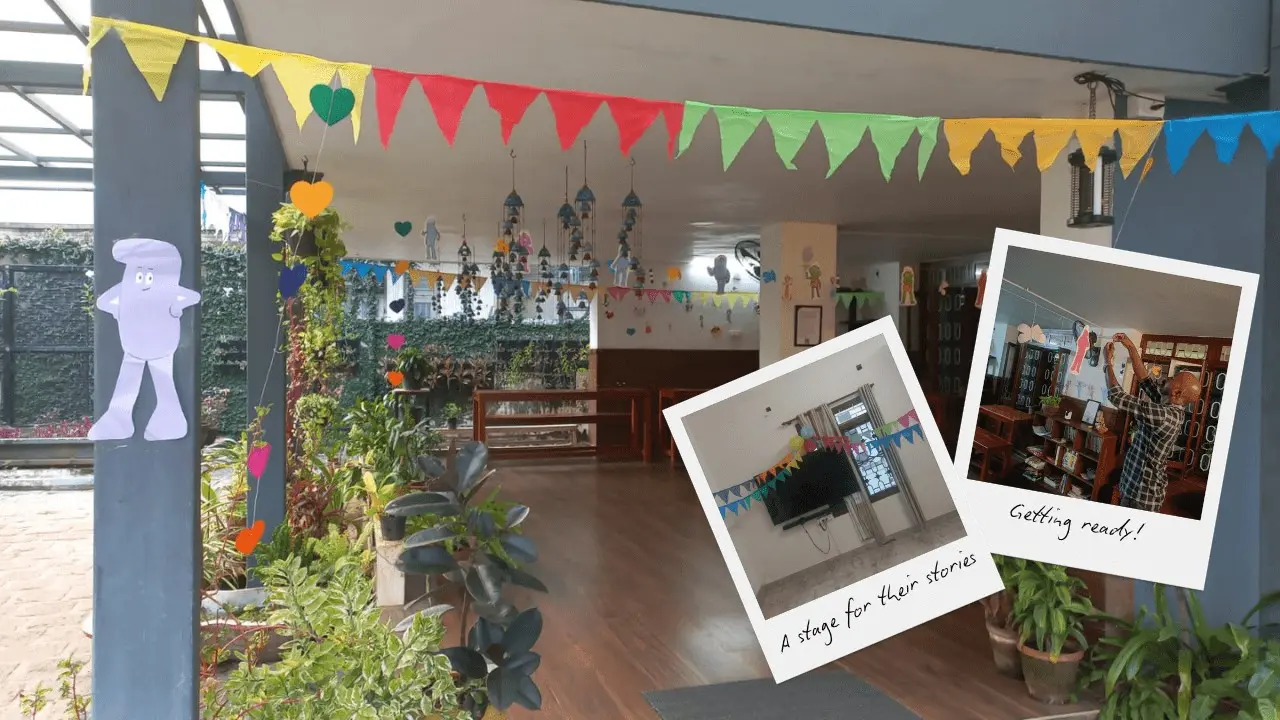
We photocopied the bird photos larger and cut around the outline of each bird. We clipped them onto artificial green leaves to decorate the space next to the screen.
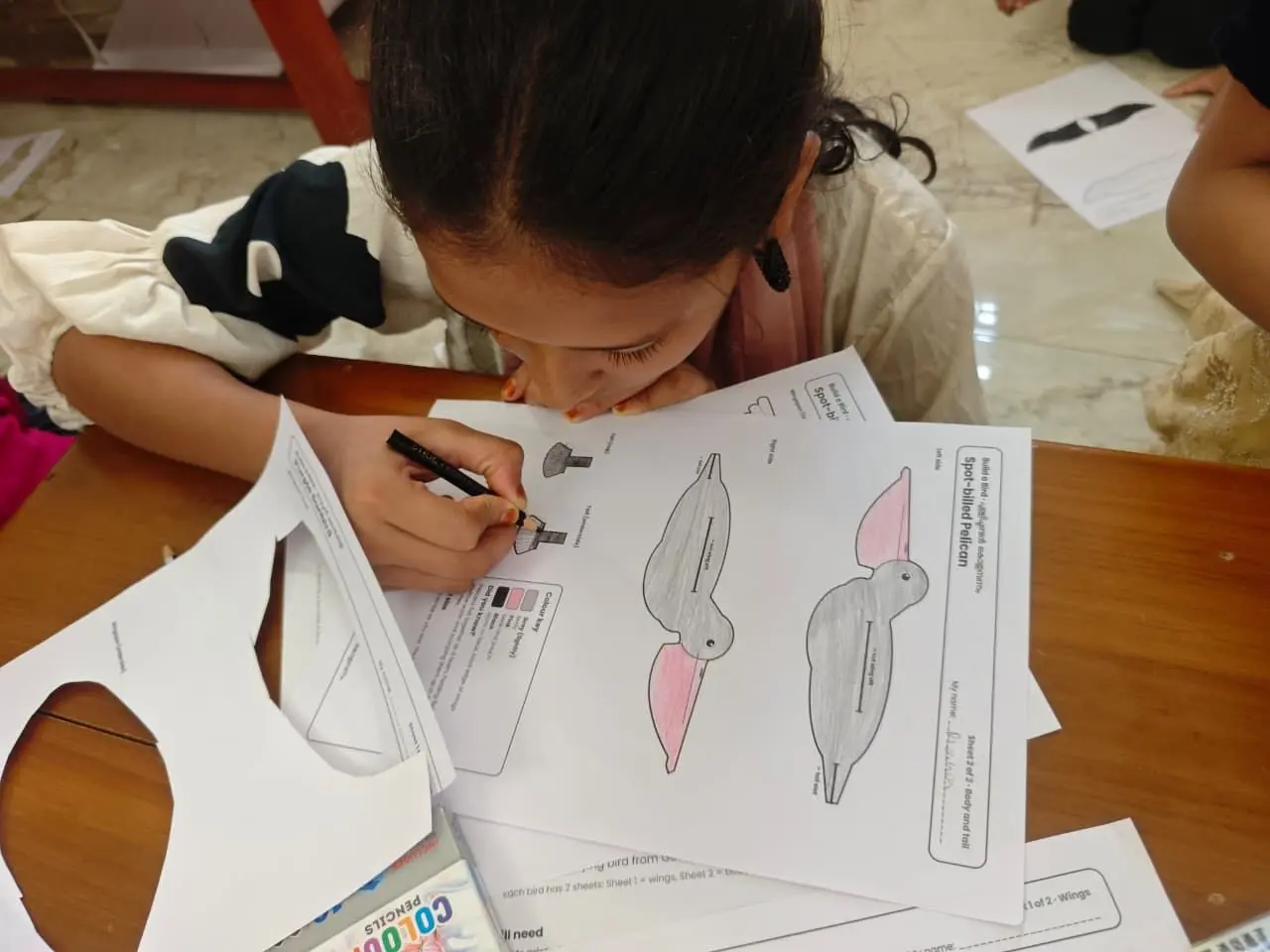
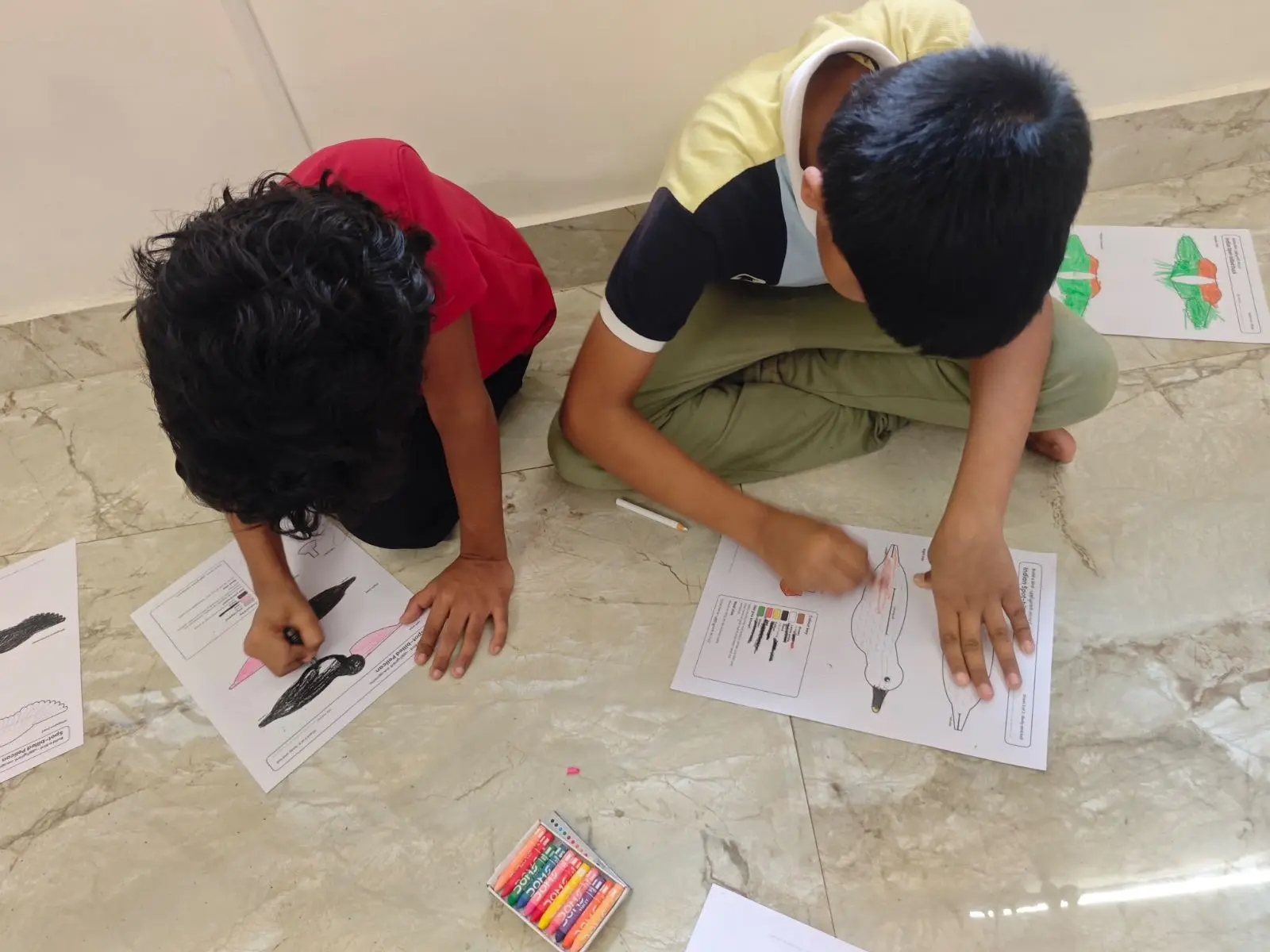
For the craft, we adapted the RSPB "Build a Bird" template for our 12 birds. We made 20 photocopies, one for each child expected. We gave children scissors, crayons, sketch pens, colour pencils, erasers, glue and paper clips.
Activity steps
What was done with those inputs, step by step.
- Participants
Curiosity Clubat aikyam space, children aged 9 to 14.
George set out the materials before 2 p.m.
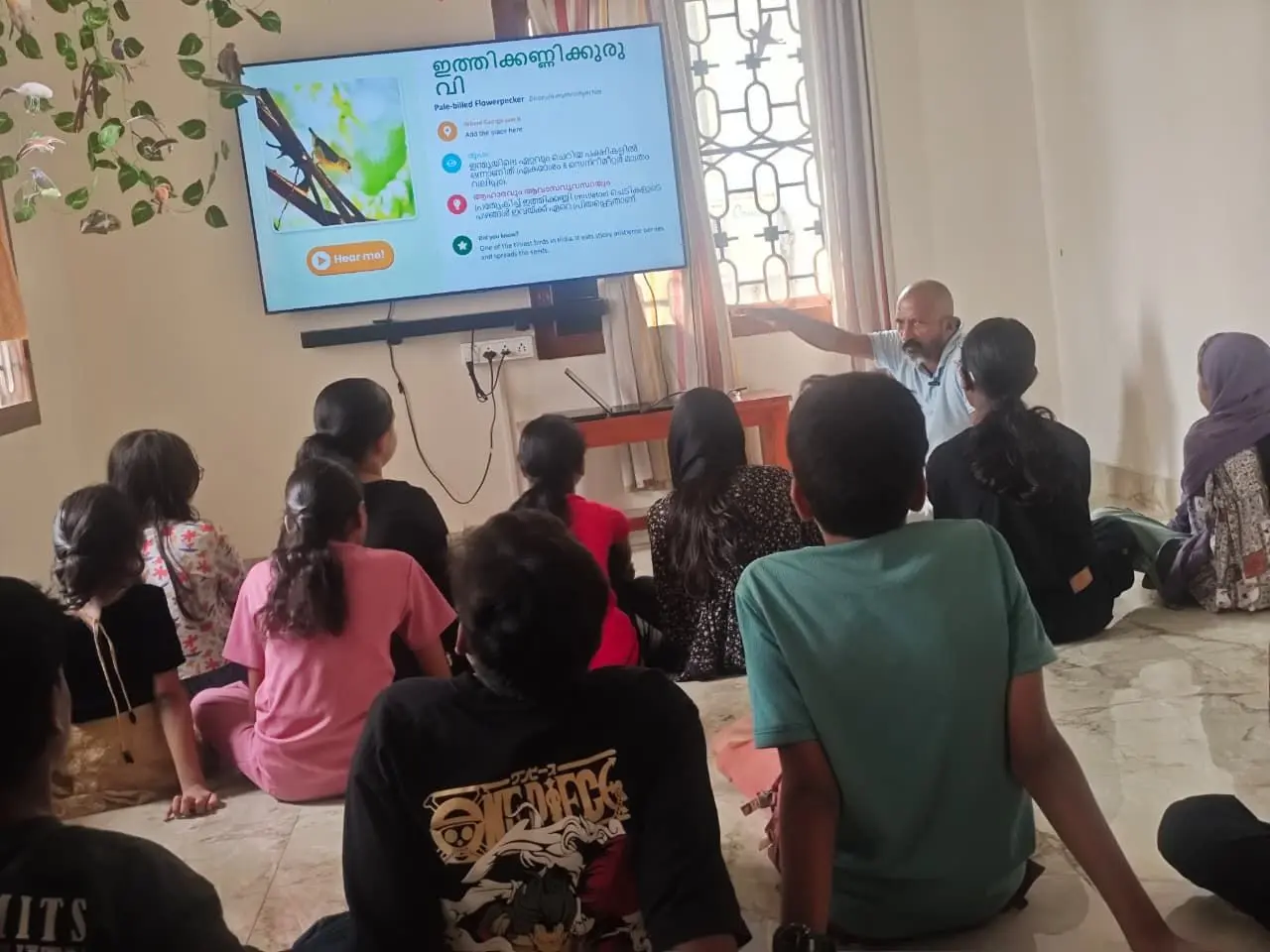
Children arrived at 2 p.m. George told them the afternoon was about the birds of Kochi.
Children talked about the birds they see near home, at school and around Kochi.
George went through the birds one at a time. He covered what each bird eats and how it catches its food. He also covered where it lays its eggs. He told them where he took each photo. He also told them how long he waited and why. Then he played the bird's call.
In a sound game, George showed four birds and played one call. Children named the bird it belonged to.
George talked about caring for birds, like leaving water out on hot days and picking up plastic.
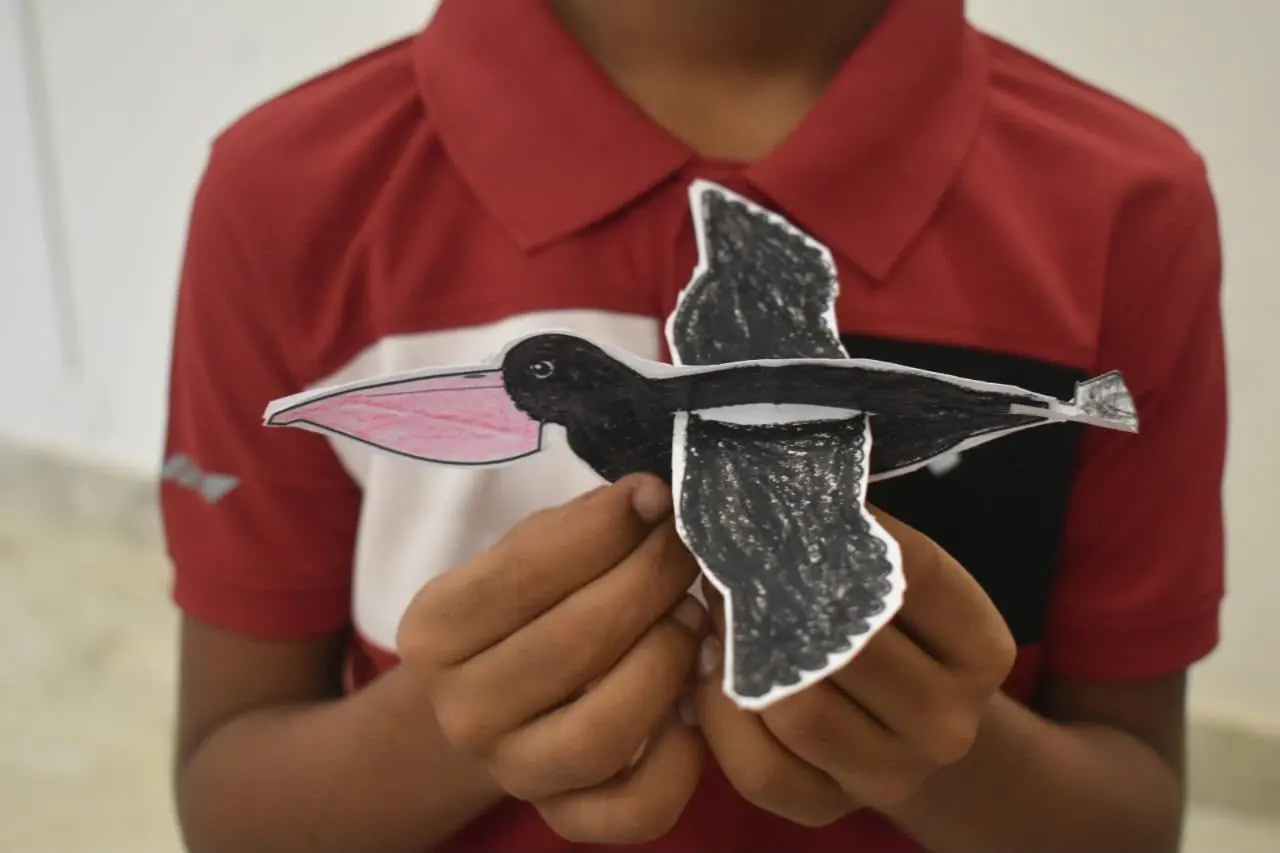
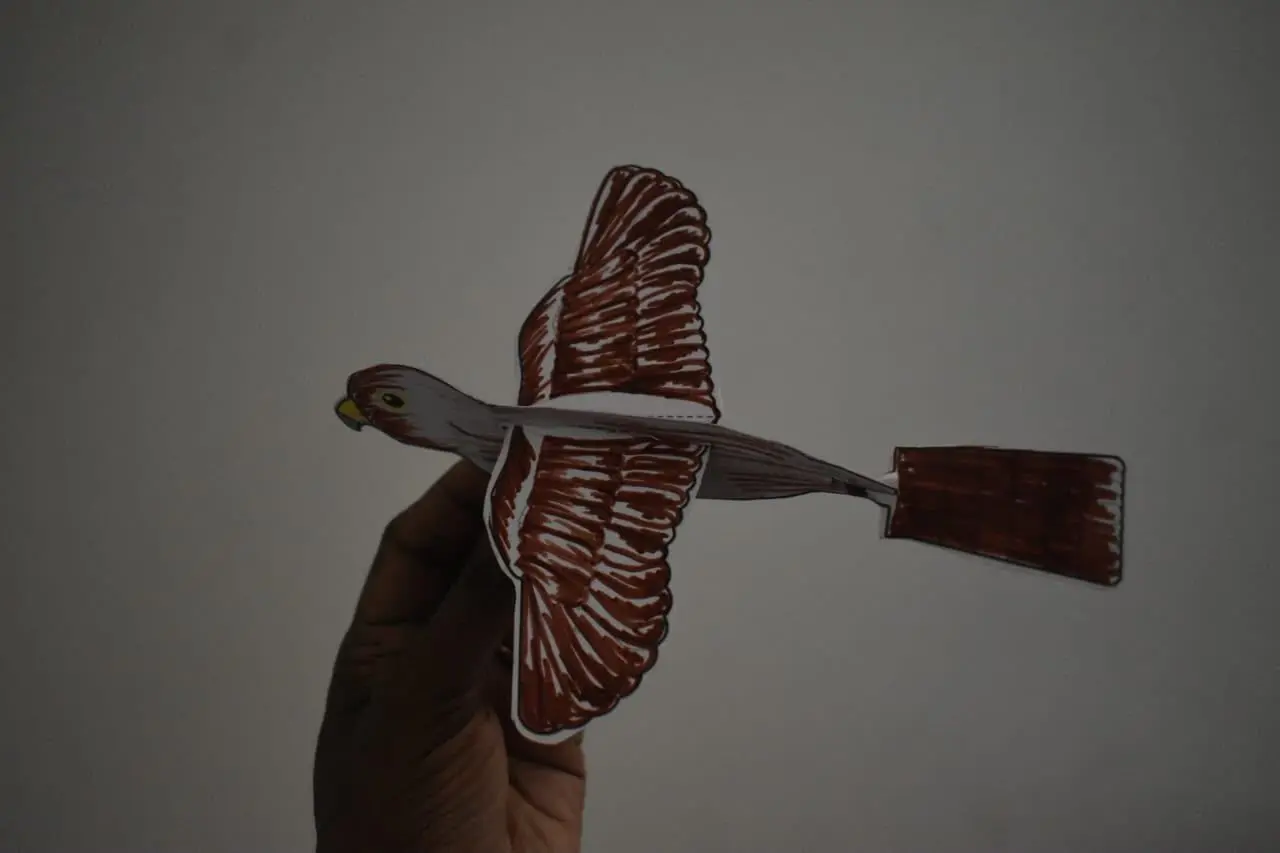
Children made their own paper flying birds. They cut out and coloured them.
Each child named one bird to look out for, or one way to help. George then asked what they thought of the session. We finished at 4:30 p.m.
- Participant Response
The children listened closely to each call. In the feedback round, they all said they liked the session a lot.
Output
What the activity directly produced: sessions held, people reached, things made.
- Participation
11 to 20
- Other
18 paper flying birds. We also made one slide deck with photos, Malayalam names and calls. We also made a set of Build a Bird templates for 12 local birds.
Outcome
- What changed for participants?
At the start, children said they had already seen 4 or 5 of George's birds. By the sound game, most could match a call to the right bird. One or two mixed up calls that sound alike. At the end, each child named a bird to look out for or a way to help. It is too early to say whether they will notice these birds more at home.
At the start, children said they had already seen 4 or 5 of George's birds. By the sound game, most could match a call to the right bird. One or two mixed up calls that sound alike. At the end, each child named a bird to look out for or a way to help. It is too early to say whether they will notice these birds more at home.
- How was this change noticed?
- We observed it
- We were told
Learnings for facilitators
What the team will keep or change next time.
Children paid attention to George's stories about how he photographed each bird. The sound game worked because children had heard each call while learning about the bird. Cutting out the birds took longer than planned. We also ran out of scissors. Children did not get to test-fly their birds.
Kind of learning: went well
- Do differently next time
Check all materials the day before, including enough scissors for every child.
Photos
- More photos
CSR and charitable purposes
Company funding (CSR) areas
Education, skills and livelihood
promoting education, including special education and employment enhancing vocation skills especially among children, women, elderly, and the differently abled and livelihood enhancement projects;
Environment, animal welfare, natural resources
ensuring environmental sustainability, ecological balance, protection of flora and fauna, animal welfare, agroforestry, conservation of natural resources and maintaining quality of soil, air and water including contribution to the Clean Ganga Fund set-up by the Central Government for rejuvenation of river Ganga;
Heritage, art, culture and libraries
protection of national heritage, art and culture including restoration of buildings and sites of historical importance and works of art; setting up public libraries; promotion and development of traditional arts and handicrafts;
Charitable purposes
Education and learning
education;
Preserving environment, forests, wildlife
preservation of environment (including watersheds, forests and wildlife);
Run this activity yourself. You are free to copy, change and share this activity sheet. Photos are not included. CC BY 4.0