
Devika Murali
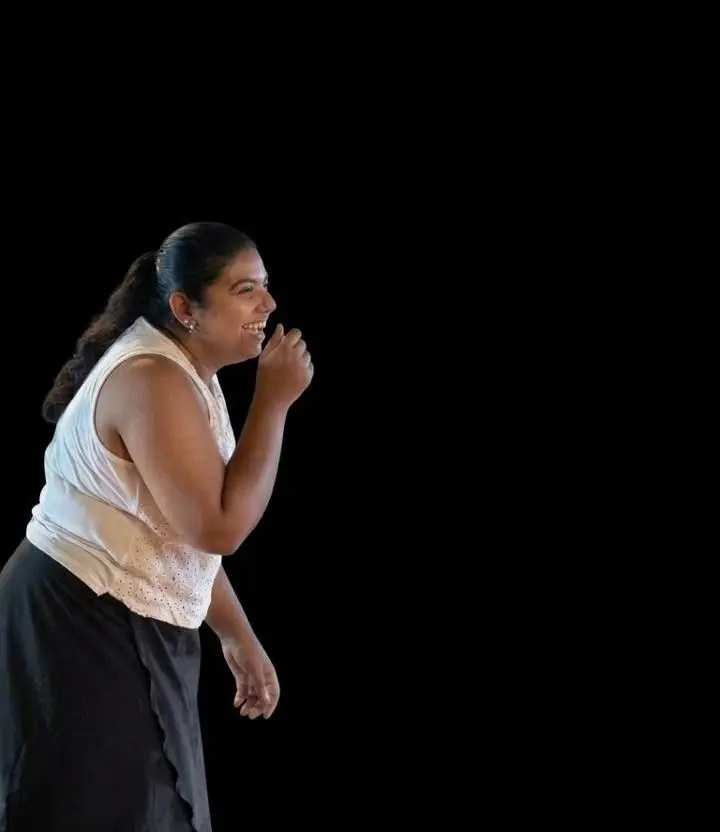
Devika Murali is a Psychologist, Dance Movement Therapy (DMT) Practitioner, and founder of MOVE, a movement-based initiative dedicated to promoting emotional wellbeing, self-awareness, and meaningful human connection through embodied practices. She holds a Master's degree in Clinical Psychology and a Postgraduate Diploma in Dance Movement Therapy from Artsphere, Pune. Associated with Thudippu for the past one and a half years, Devika will serve as the Lead Facilitator
What Devika Murali did here
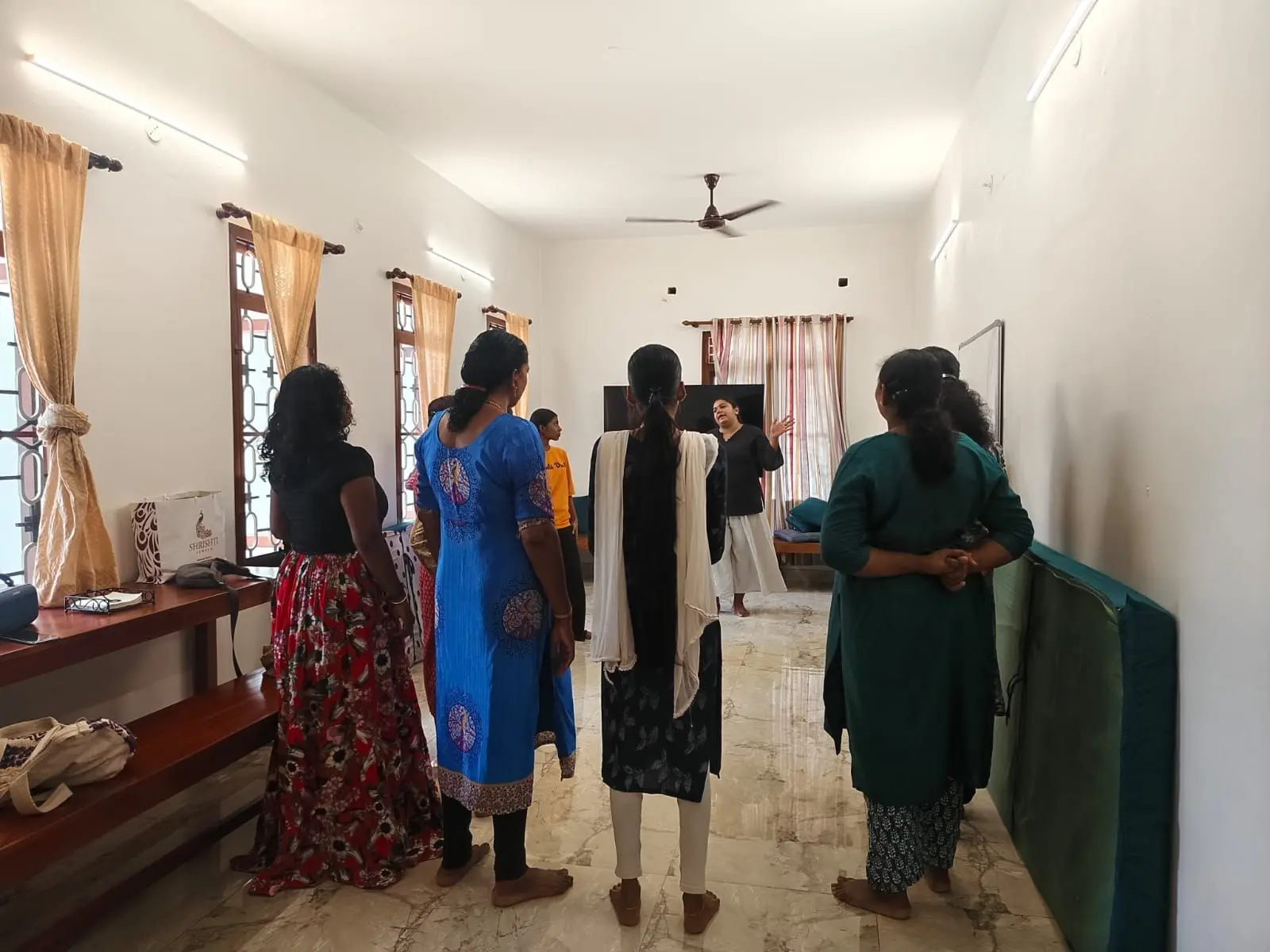
The many versions of me: exploring identity through movement
The adult session Sunday's adult session explored identity and self-expression through the theme "The Many Versions of Me." Participants tried different ways of walking and showing roles through the body. They also gave the body a voice. They explored movements they might usually hold back. They expressed the person they are becoming. An open movement activity gave each person space to choose and explore movements of their own. The session offered a chance for self-exploration, freedom of movement, and awareness of how we express ourselves.
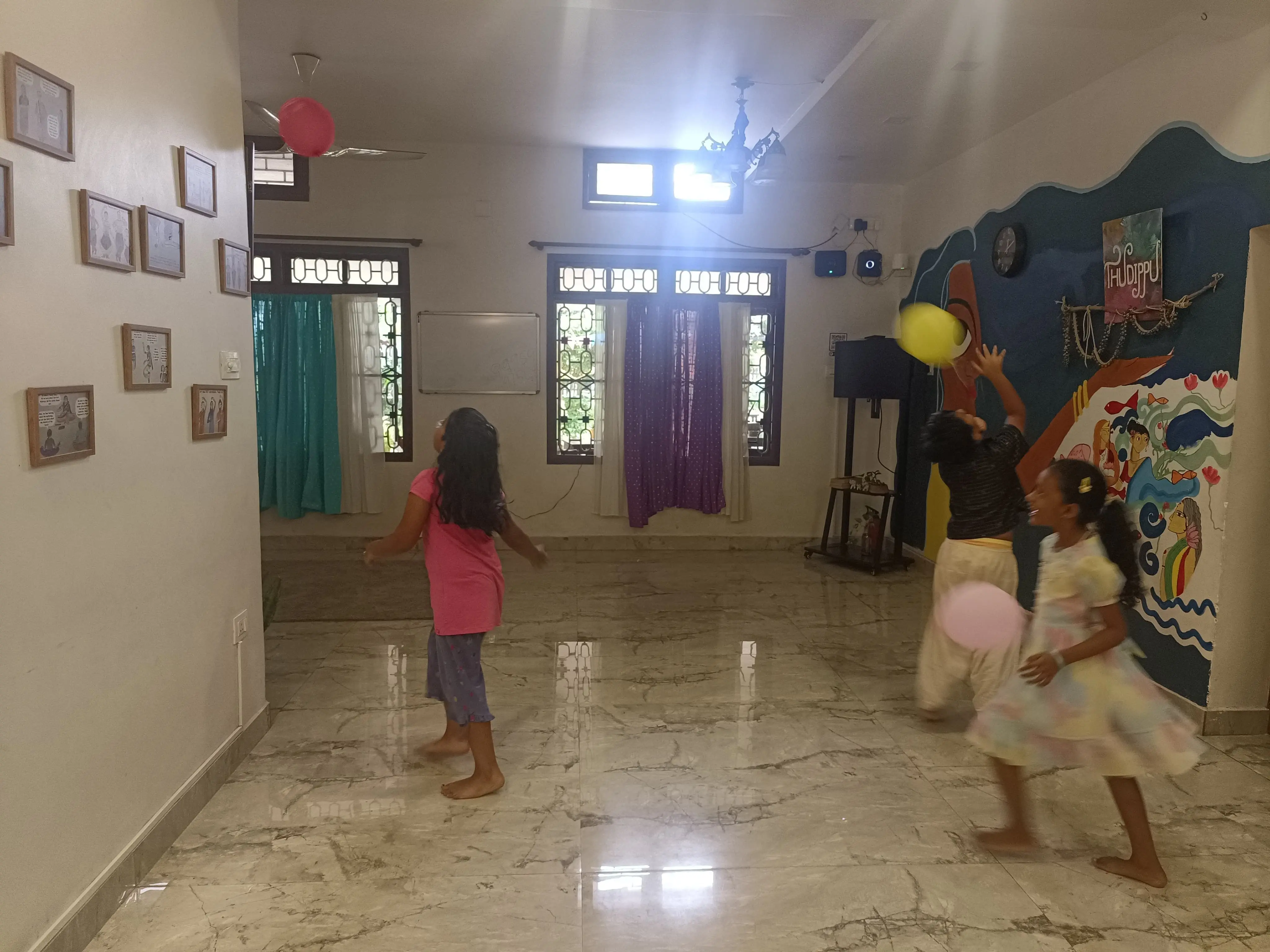
The world of imagination: movement, sound and rhythm
Today's children's session mixed imaginative movement, body rhythm and sound exploration. We started with basic body movements and tried animal- and nature-inspired ways of moving. Through storytelling, the children imagined being in different worlds. These included underwater, the jungle, outer space and a windy mountain. The children tried body drumming. They clapped, tapped different parts of their bodies and made rhythmic patterns. Balloon games gave them chances for playful movement and working together.
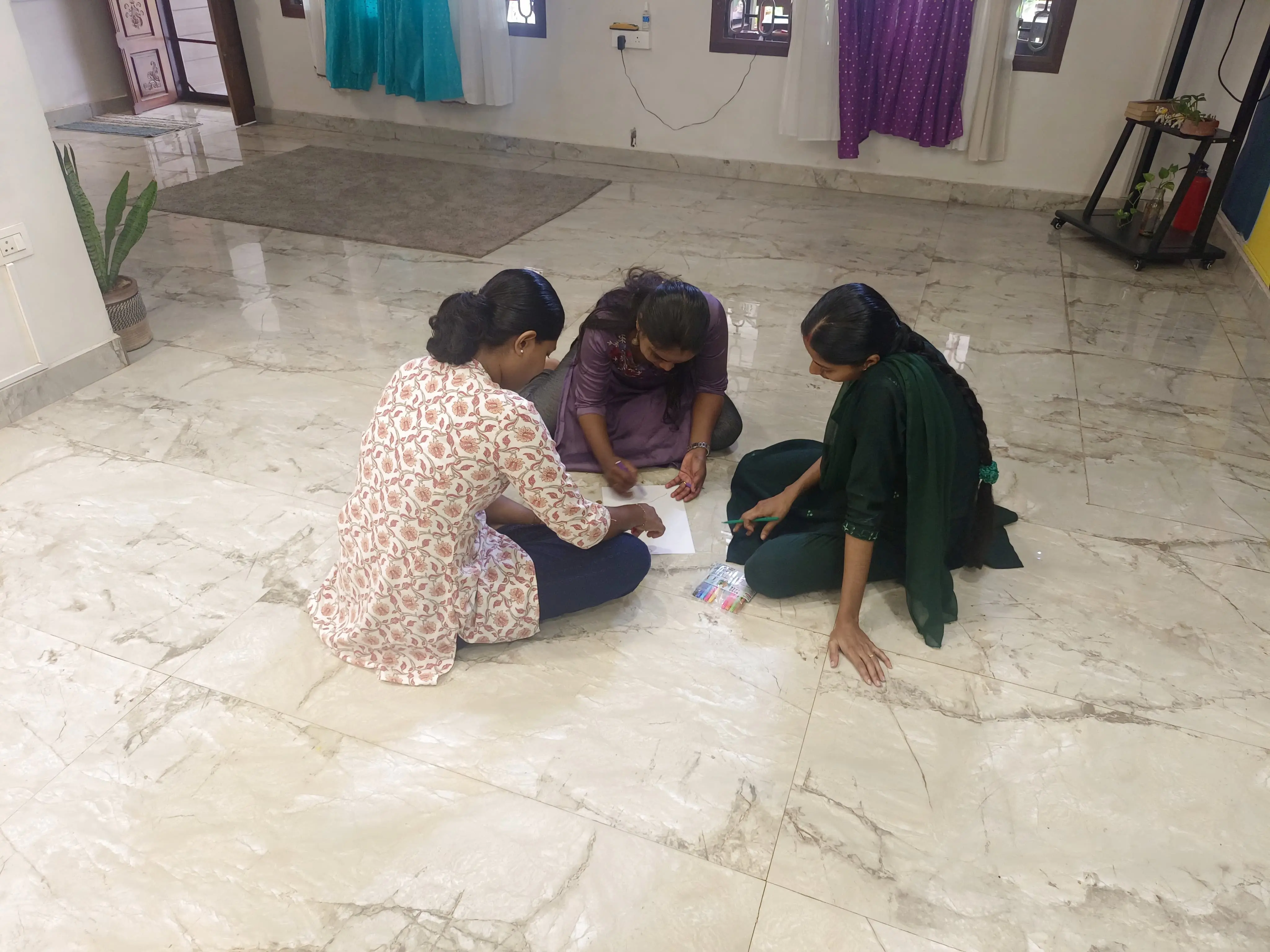
Exploring words, sounds and movement
Last Saturday, the adult session explored the connection between words, sounds and movement. Participants browsed different books and selected interesting English words and names. They practised saying them and created movements inspired by their sounds or meanings. The activity encouraged creativity, imagination and spontaneous movement exploration.
Show all 8 sessions
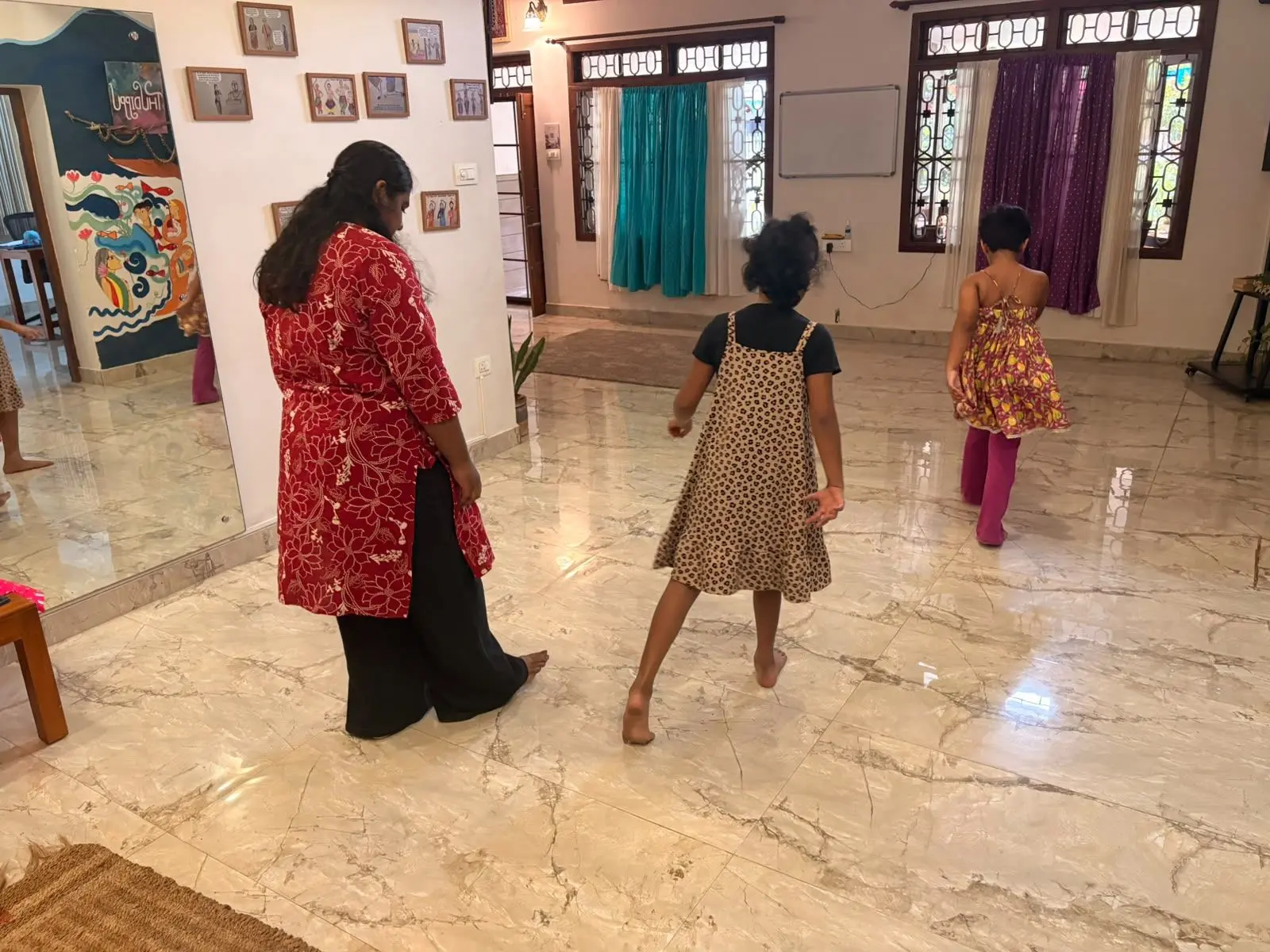
Exploring movement, art and storytelling
The children tried basic body movements, animal movements and open-and-close movements. They also practised eye-hand co-ordination. They also made art and told stories. This gave them ways to use their imagination and show their creativity.
A day of movement, laughter and little challenges at Ashwas Bhavan
On Sunday, Nov. 8, a movement session for girls took place at Ashwas Bhavan, Mattancherry. The children were aged four to ten. They brought different energy levels, attention spans and abilities. Finding activities everyone could enjoy took flexibility and improvisation. The session was full of excitement, playful mischief and laughter. Keeping the group engaged was a challenge and a joy. Each child could take part in her own way. Working with children means plans do not always go as expected. Sometimes, unexpected moments become opportunities for play and connection.
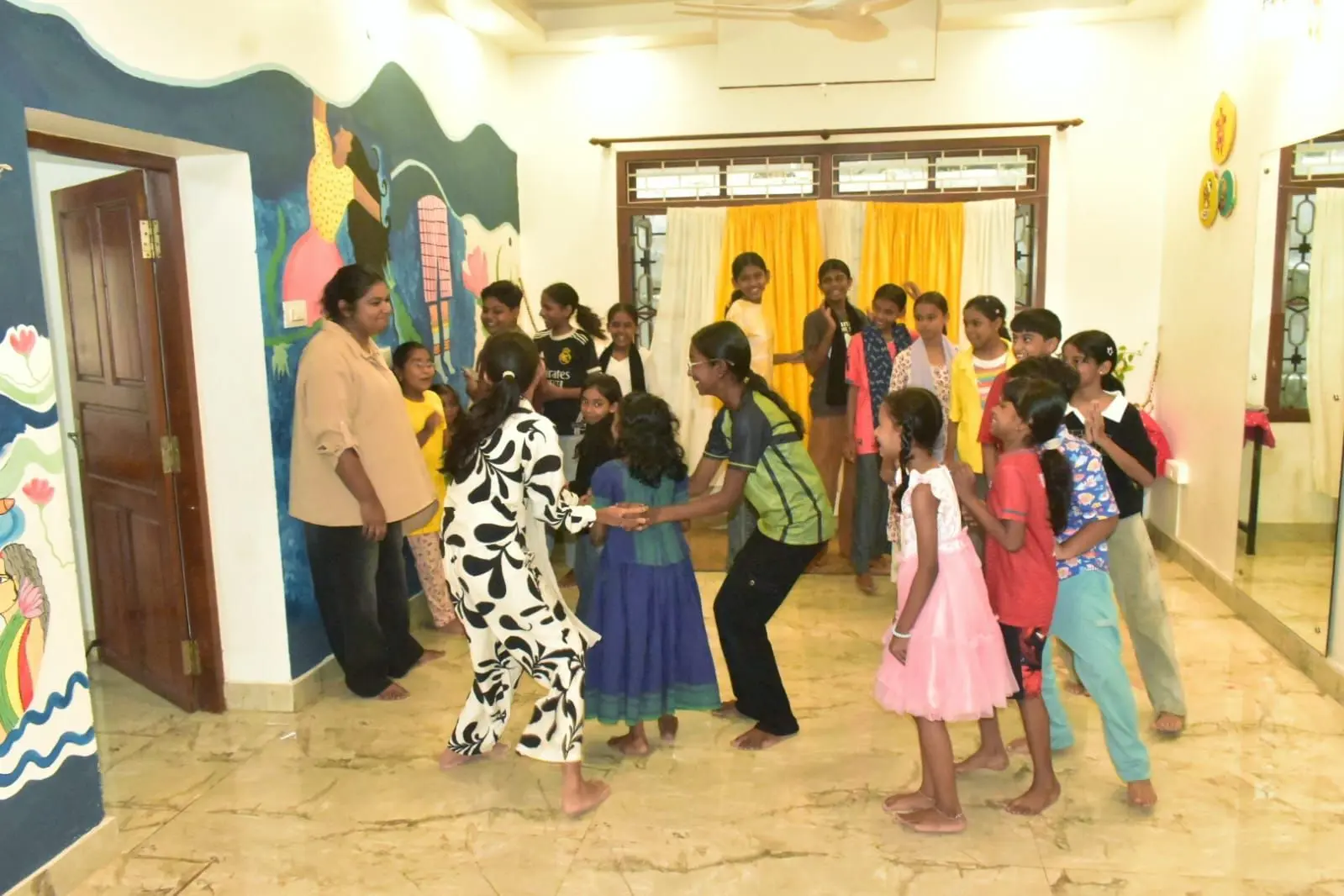
This week at Curiosity Club, psychologist and Dance Movement Therapy practitioner Devika Murali led a session on movement, body awareness and creativity. Children from Thudippu's Dance Club also took part. She kept the activities simple and adaptable so children of different ages could join in. There was no pressure to follow a dance style or get movements "right". Devika began with a jumping game and movements inspired by children's favorite things. She used familiar ideas to get them started. Opening and closing their bodies, followed by hand-brushing movements, encouraged children to notice how their bodies moved and felt. A grouping game invited children to find others who shared similarities with them. This gave them a way to meet and connect. They then explored making rhythms with their bodies. They also tried freestyle movement, choosing their own ways to express themselves. We plan to host a movement session once a month. This gives children regular opportunities to explore movement and connect through play with Devika.
Exploring self-expression through movement, music and art
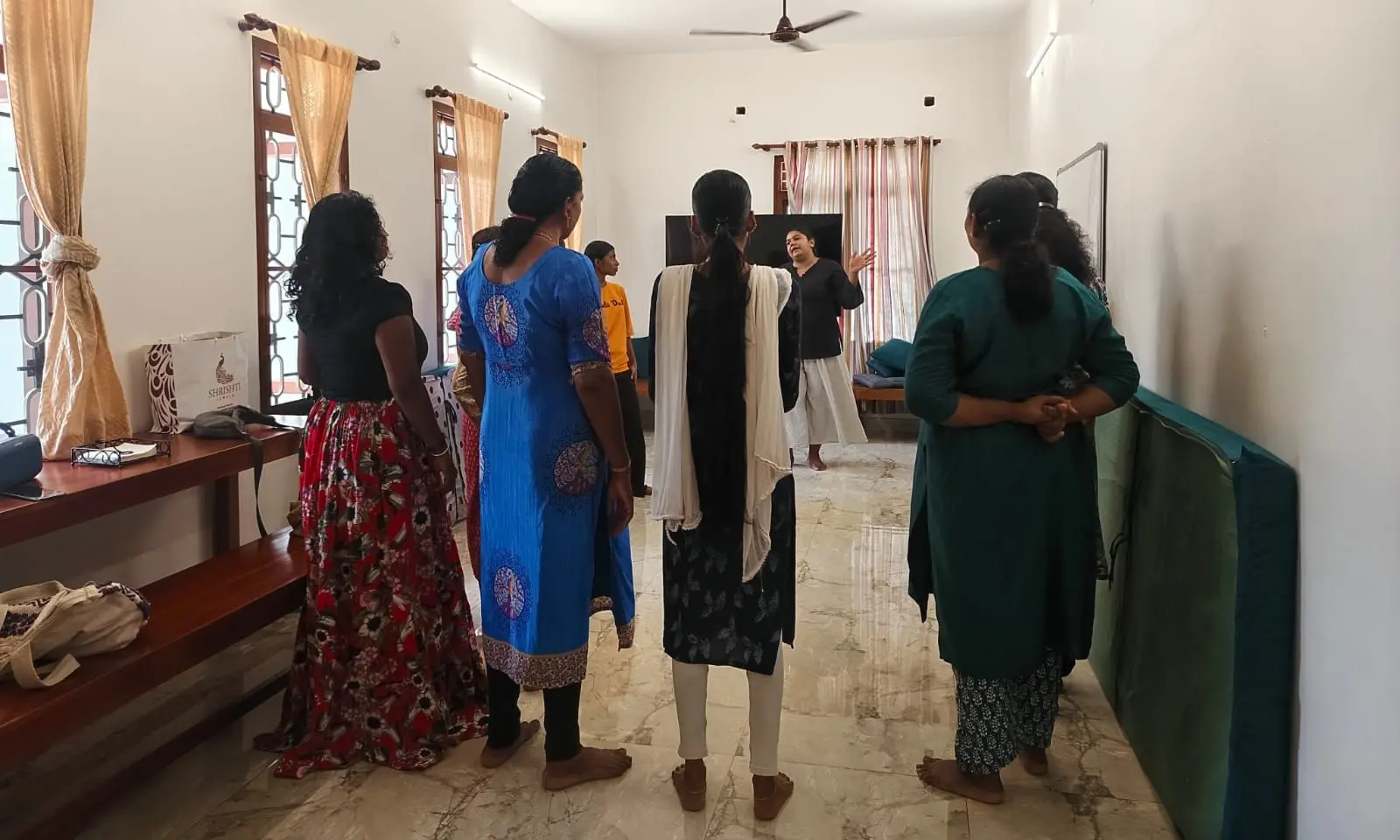
The session started with a name-and-movement activity. This encouraged introductions and group participation. Participants introduced themselves with simple movements. This helped create a comfortable and welcoming atmosphere. In the mood-sharing activity, participants said how they felt at that moment. This helped them recognise and express their current feelings. Next came guided movement exploration. This encouraged body awareness and creative expression. Participants explored different movements and connected with their bodies. They used movement to express themselves. The group then made music together. They explored sounds and rhythms together. They shared ideas and listened to one another. They showed their creation to the group. After that, participants did an individual art reflection. They used art to express their thoughts and feelings. They also shared their experiences from the session. This gave them a chance for personal reflection and creative expression. The session ended with a closing activity. This reflected on the session and brought the shared experience to an end. Participants responded positively throughout the session. They showed interest and engagement.
Finding connection through movement
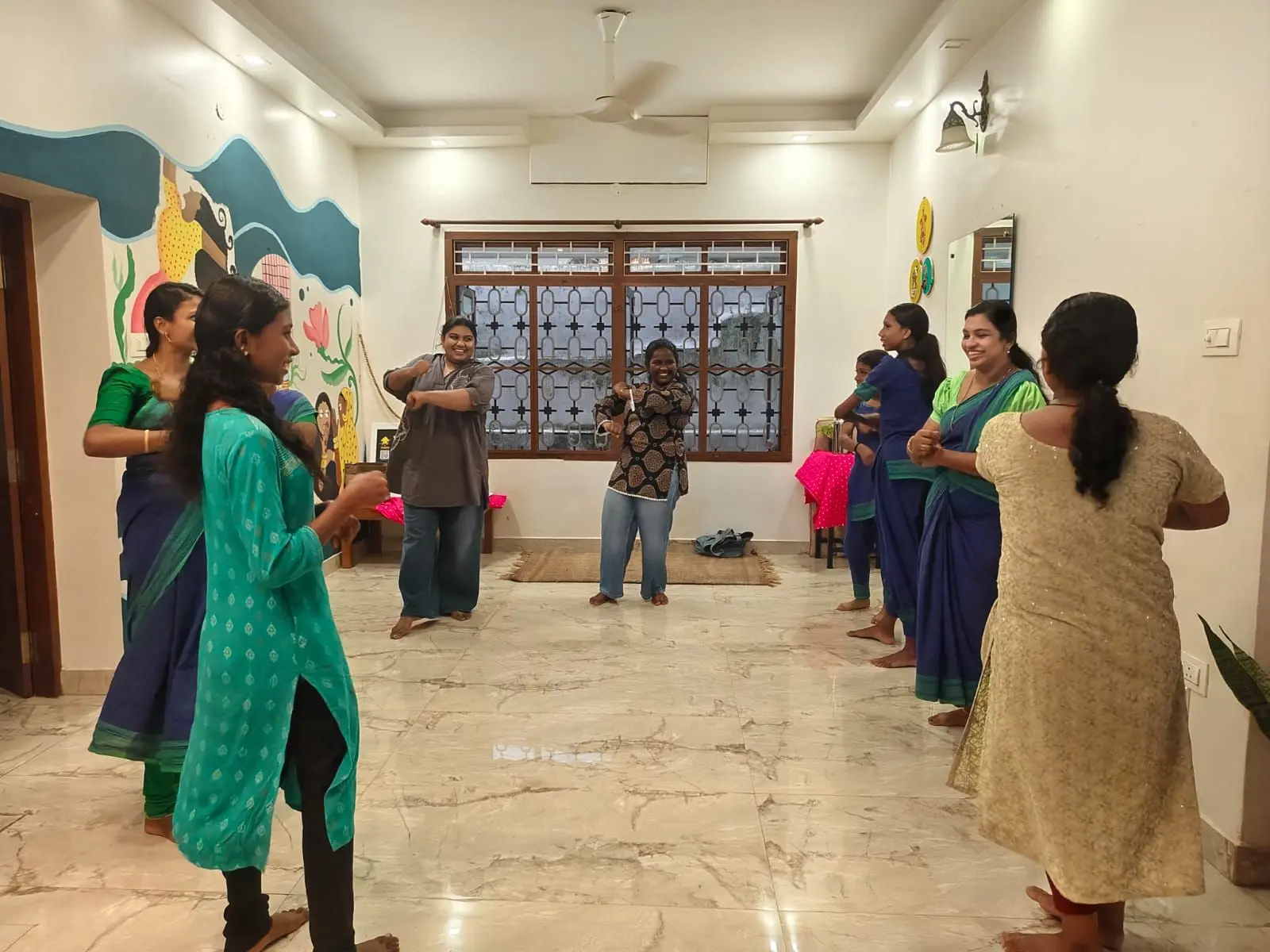
Today's session was different for me. Anjali and Aparna, who are also dance facilitators at Thudippu, joined the session, which had seven participants. The group's energy was quite active and engaging. A few participants needed a little more attention and support. I tried to create a space where everyone could take part in their own way, without putting too much pressure on anyone. As the session went on, I noticed different emotions and experiences slowly coming up through movement. Some participants were more expressive, while some needed more time to connect with the process. I tried to stay present with the group and respond to what was happening in the moment. Since this was our first session, I consciously did not go deeper into the emotional layers that were emerging. Instead, I stayed more on the surface and focused on helping everyone feel comfortable, engaged, and connected with the movement and with each other. Even at that outer level, I could feel that there were many different emotions and personal experiences present in the group. It was interesting for me to notice how movement can bring these things out without directly asking people to talk about them. The session gave me a lot to watch and think about as a facilitator. It was a new experience for me to work with this particular group and in this setting. I feel that today's session gave me a better understanding of the participants. I know more about what they may need in the sessions ahead.