
Reading Club
Mon–Sat, 2–6 PM
Free
In Malayalam, English
Inspired by PRATHAM
About the Sessions: The Reading Club follows the Teaching at the Right Level (TaRL) approach developed by Pratham. Instead of grouping children by age or grade, we first understand each child's reading level and then support them with activities that match their current ability. The goal is simple: help every child enjoy reading, build confidence, and develop a lifelong reading habit.
What happened at Reading Club
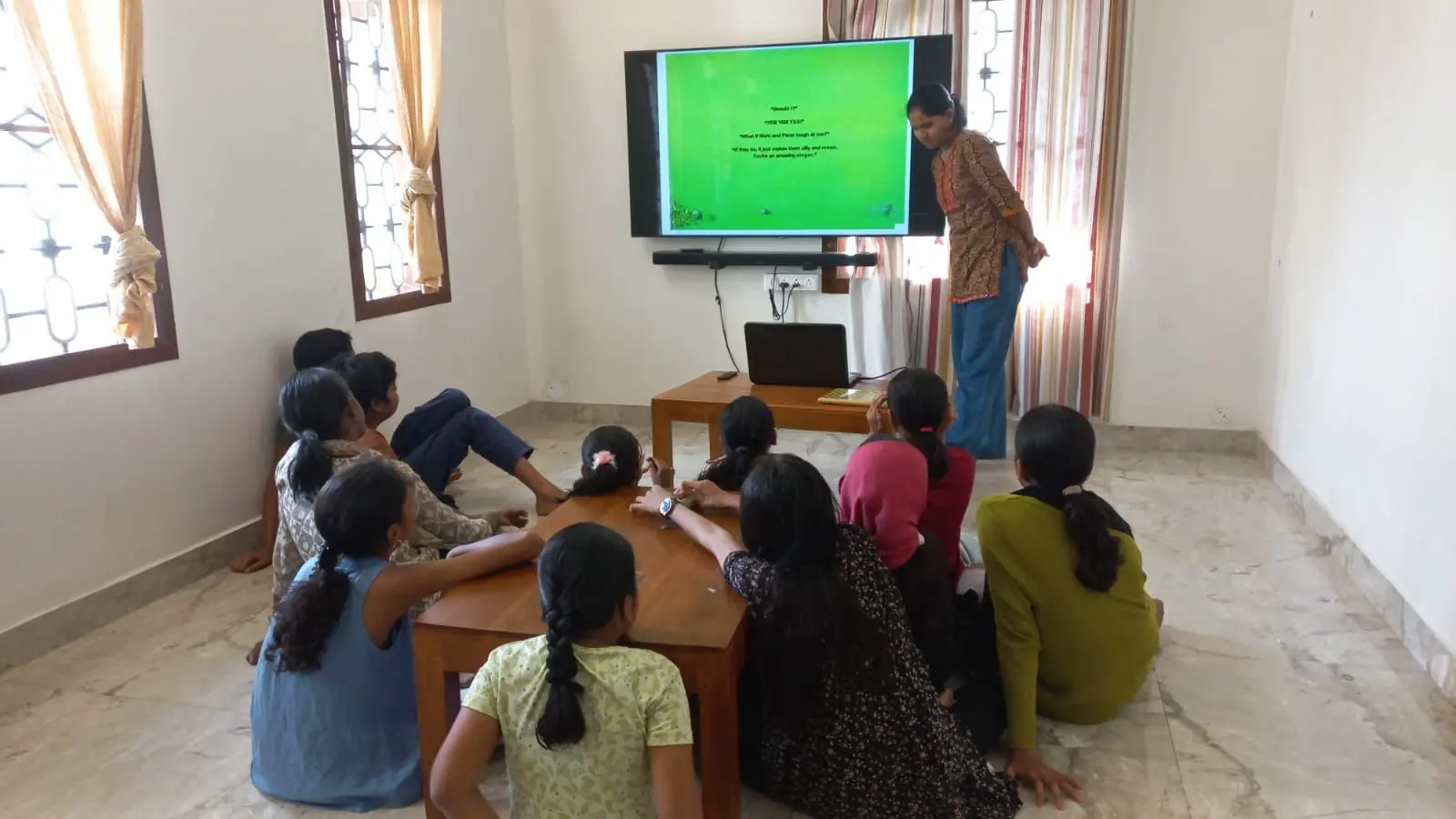
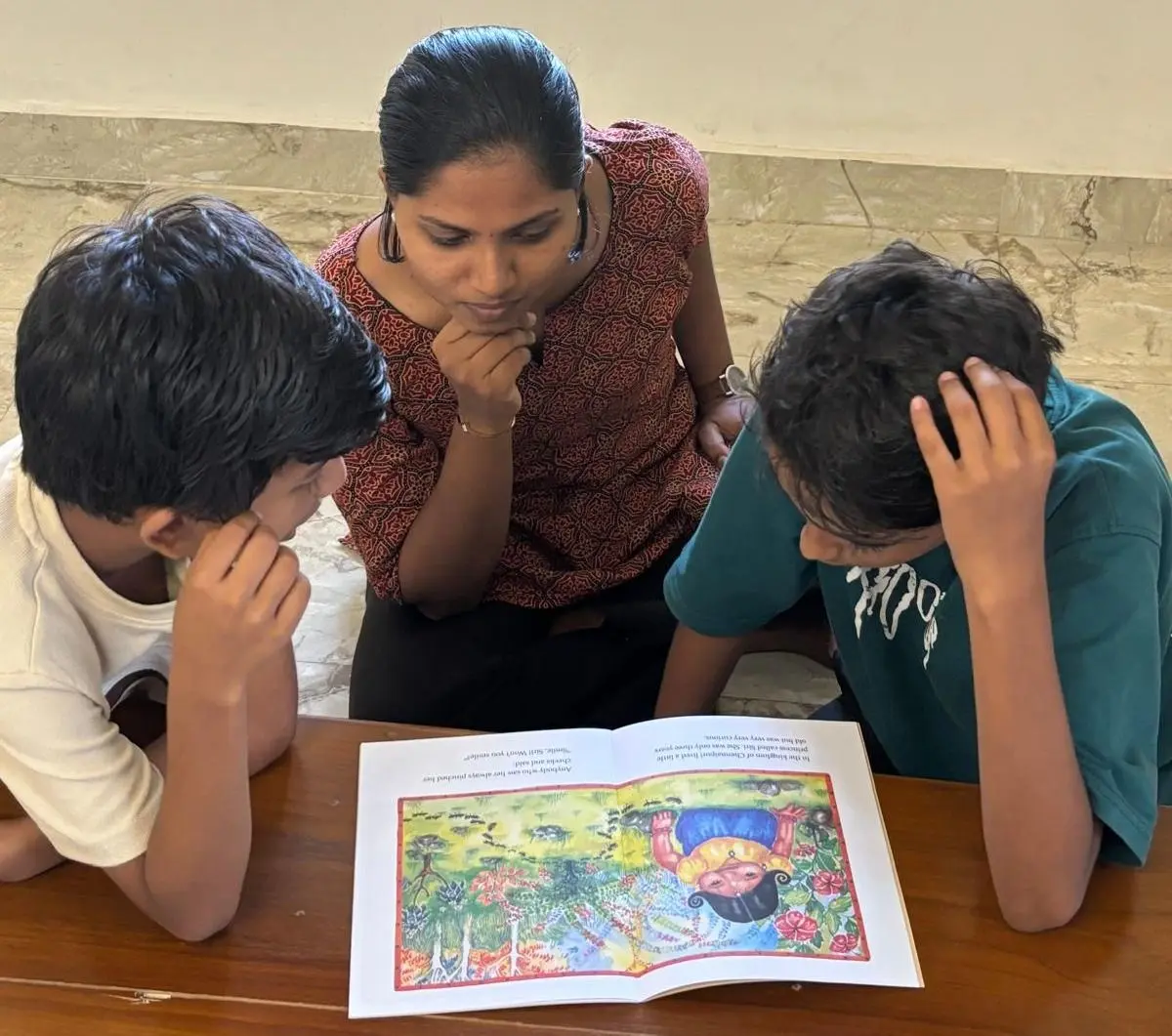
In earlier sessions, we noticed that some children could read words aloud without fully understanding them. This week, we changed from paired reading to reading aloud together, pausing to explore unfamiliar words and discuss the story’s meaning. We chose Stage Fright, a Pratham Books story about Champa, who loves singing but is afraid to perform on stage. We prepared slides with selected tricky words, inviting children to guess their meanings from the story before revealing the Malayalam explanations. We discussed why Champa felt scared and asked who had felt like her before. Children shared their own experiences of nervousness, connecting the story to their lives and exploring the feelings behind the words.
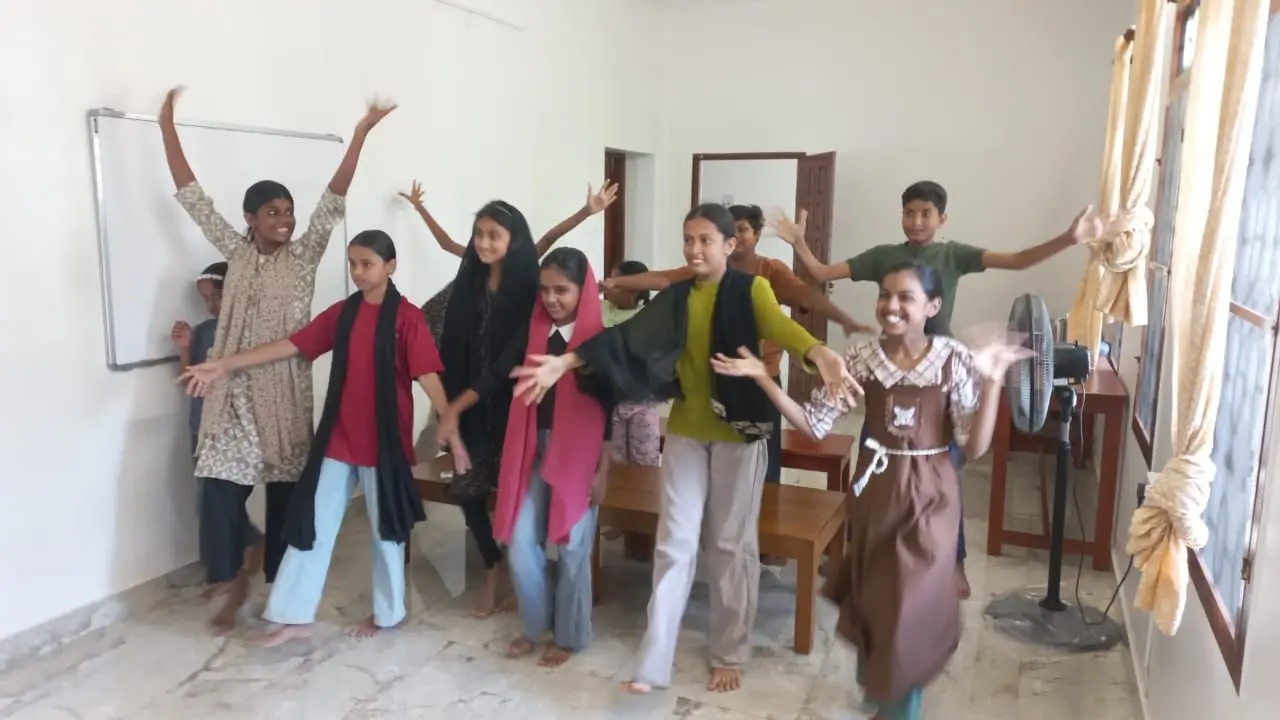
This week at Curiosity Club, we explored a question: What helps us share our ideas when we feel nervous? We began with Champa from Stage Fright, a story about a child who loves singing but is afraid to perform. Her worries helped children talk about their own feelings when facing an audience. We prepared slides with prompts and examples, and set up a microphone for practice. We started by inviting each child to introduce themselves with an action. Afterwards, we asked how it felt to stand up and speak. Children described shaking hands, trembling legs and sweaty palms, connecting their experience to Champa’s. This led us to practise breathing to calm our bodies and shaking out our arms and legs to release tension. We then warmed up our voices with tongue twisters and tried changing our volume and expressing different emotions. A facilitator demonstrated different speaking styles, and children noticed the difference posture, voice and energy made. They then chose topics for short talks in Malayalam or English. We introduced PREP — point, reason, example, point — to help organise their thoughts, with paper available for notes. They then came to the front and used the microphone to share their ideas with the group. We closed by reflecting on how it felt to speak and what had changed after trying.
Stories, Voices & Confidence: Reading for Meaning
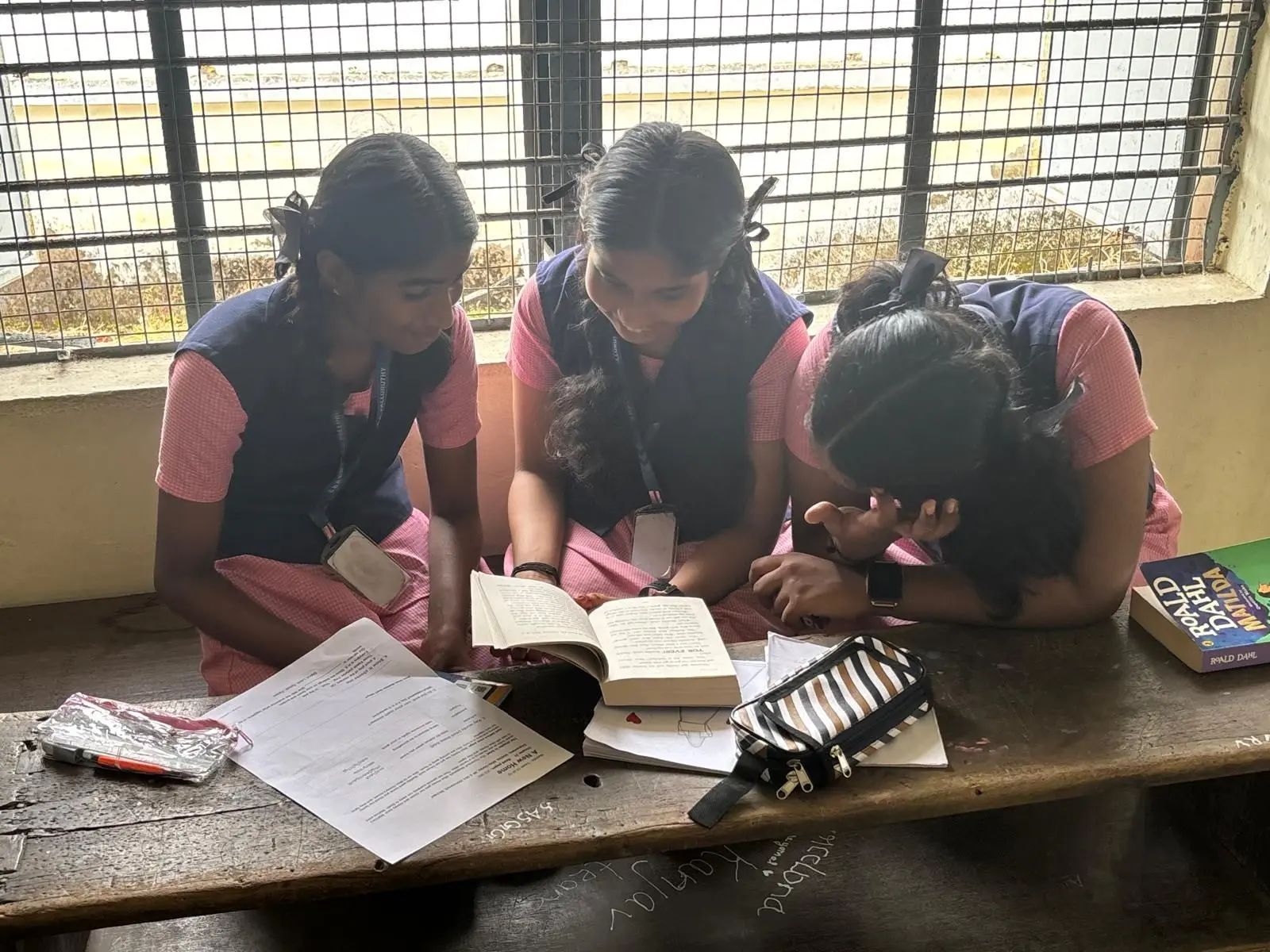
Stories, Voices & Confidence began on 10 July with Standard 7 girls at SDPY Girls High School. We raised funds to buy 50 copies of Roald Dahl's Matilda, with Penguin India giving us a discount. The books will be used with future groups too. Through the story, we are helping the girls understand what they read and share their ideas. Between monsoon rains, Onam, exams and the youth festival, it had been some time since we last met. During the break, we encouraged the girls to read for 15 minutes a day and note difficult words. In our first session back, the girls were at different points in the book; some had finished it. We planned for 37 girls to read short extracts in groups and then act out scenes or show them through still pictures. Many could read the English words but struggled to understand the passages. Olimalar facilitators and the school teacher moved between groups to help them work through the meaning. With support, the girls understood their extracts, but we did not move on to the performances. The session showed us where to focus next: helping the girls pause, ask questions and understand the story before presenting it.
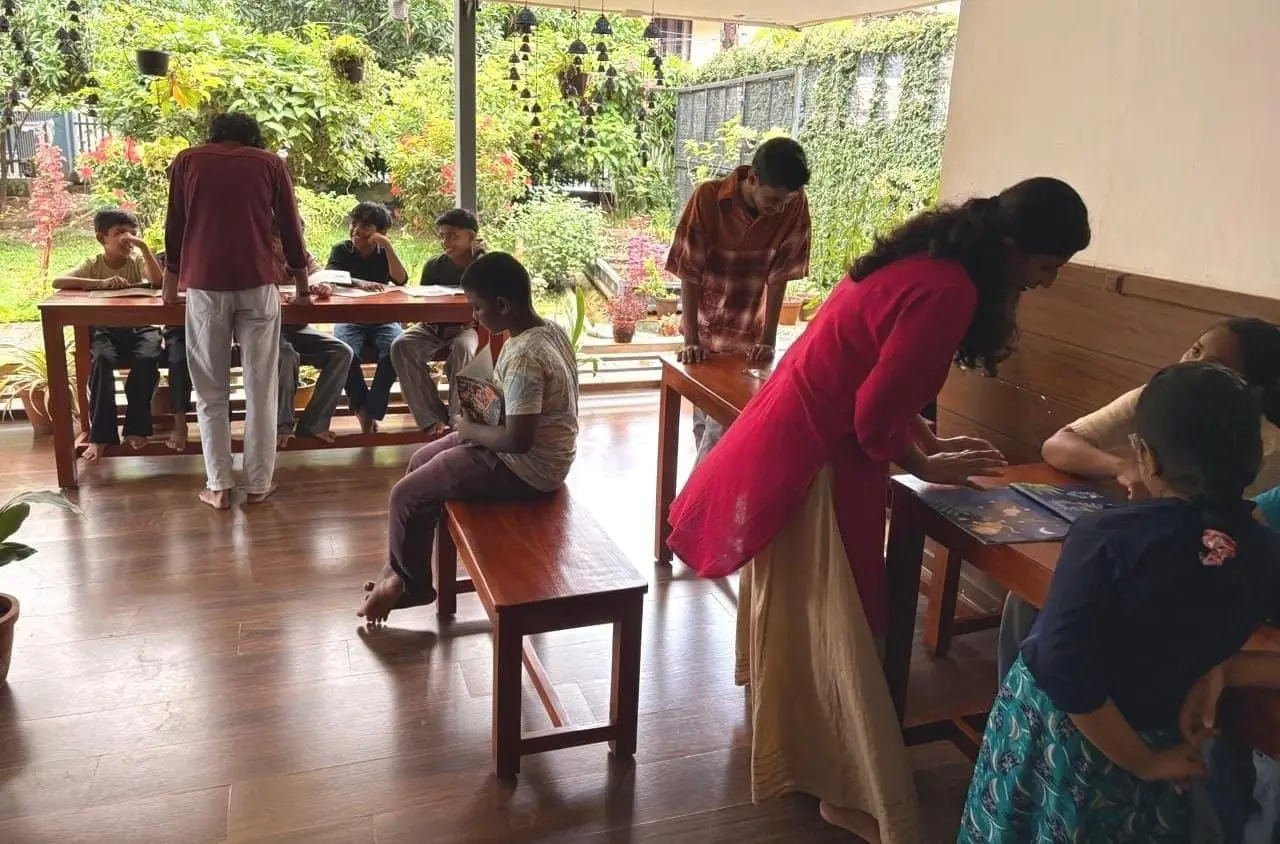
This week’s Reading Club was smaller than usual, with 10 children attending, but the quieter group gave us more time to support each reader. The children began with some informal play downstairs before moving upstairs for the reading session. We had also recently received a donation of books, which gave us a much wider selection to work with. We organised the books across three reading levels, but this time, instead of giving every child the same book, the children were able to choose what they wanted to read from the books available at their level. Our emerging readers worked closely with Sreena, reading together and stopping to talk through unfamiliar words and meaning. The other groups worked more independently or alongside a buddy. At the end, we asked each child to tell us what they had understood from their story so far. Almost everyone was able to share something, which gave us a clearer sense of comprehension than simply knowing they had read the page. One of our main learnings was that children read at different levels, but they can still have a choice. Giving them a few books to choose from at their level helped them stay interested while still reading something suitable for them. Attendance is still something we need to understand better. Numbers have reduced over the past few weeks, so we want to speak with children and families to understand what may be making regular attendance difficult. For those who came, though, it was a calm and positive session — time to play, choose a book, read together and talk about what they had understood.
Books, buddies and growing confidence
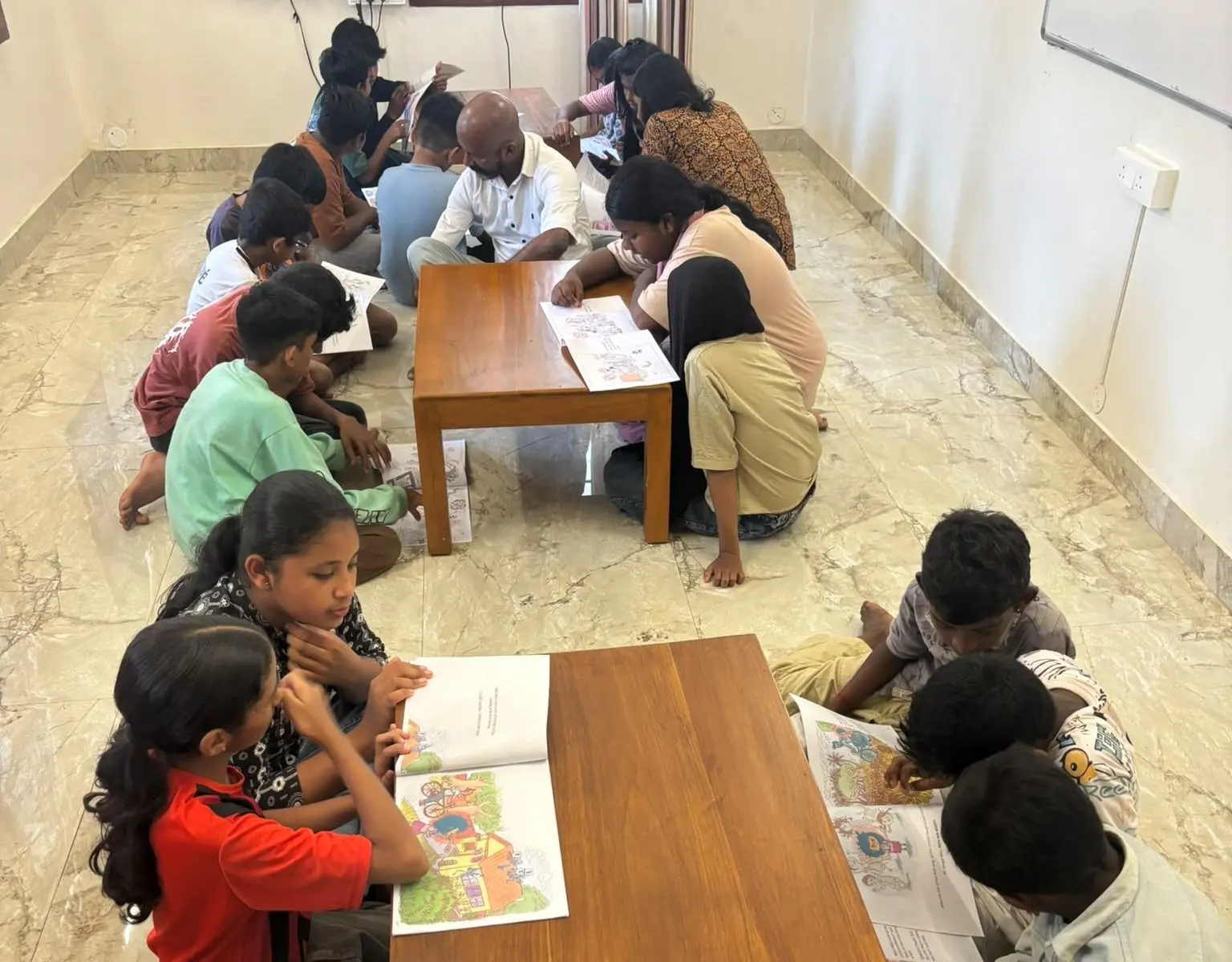
This Saturday, 21 children joined us for our first structured, level-based reading session. Before the session, we reviewed the available reading assessments, completed using the Teaching at the Right Level (TaRL) approach developed by Pratham. We selected three storybooks from Pratham Books that were broadly suited to the children’s different reading needs, printed several copies and arranged the room into three small reading areas, with a facilitator supporting each group. We deliberately removed the visible level labels from the books before giving them to the children. The levels remained useful for facilitators in planning the right support, but they were not presented as fixed identities for the children. For around 15–20 minutes, the children read together. Some needed more assistance to work through the text, while others read with a buddy. The buddy-reading approach worked particularly well. When one child struggled with a word, another would often step in to help. It was also encouraging to see how comfortable the children were asking for support. Several raised their hands when they could not read or understand a word rather than remaining silent or disengaging. One unexpected challenge was discovering that a handful of children attending that day had not completed the earlier reading assessment. We placed them provisionally using our previous interactions and observations. At the end of the activity, the children completed a short reflection to tell us how manageable they found their book. Our main learning was that assessment records need to be checked against the children who actually attend each session. Next time, we will confirm everyone’s assessment status, assess anyone who was missed and adjust the groups where necessary. A positive first session, with books and buddies helping children participate at their own pace, support one another and grow more confident about asking for help.
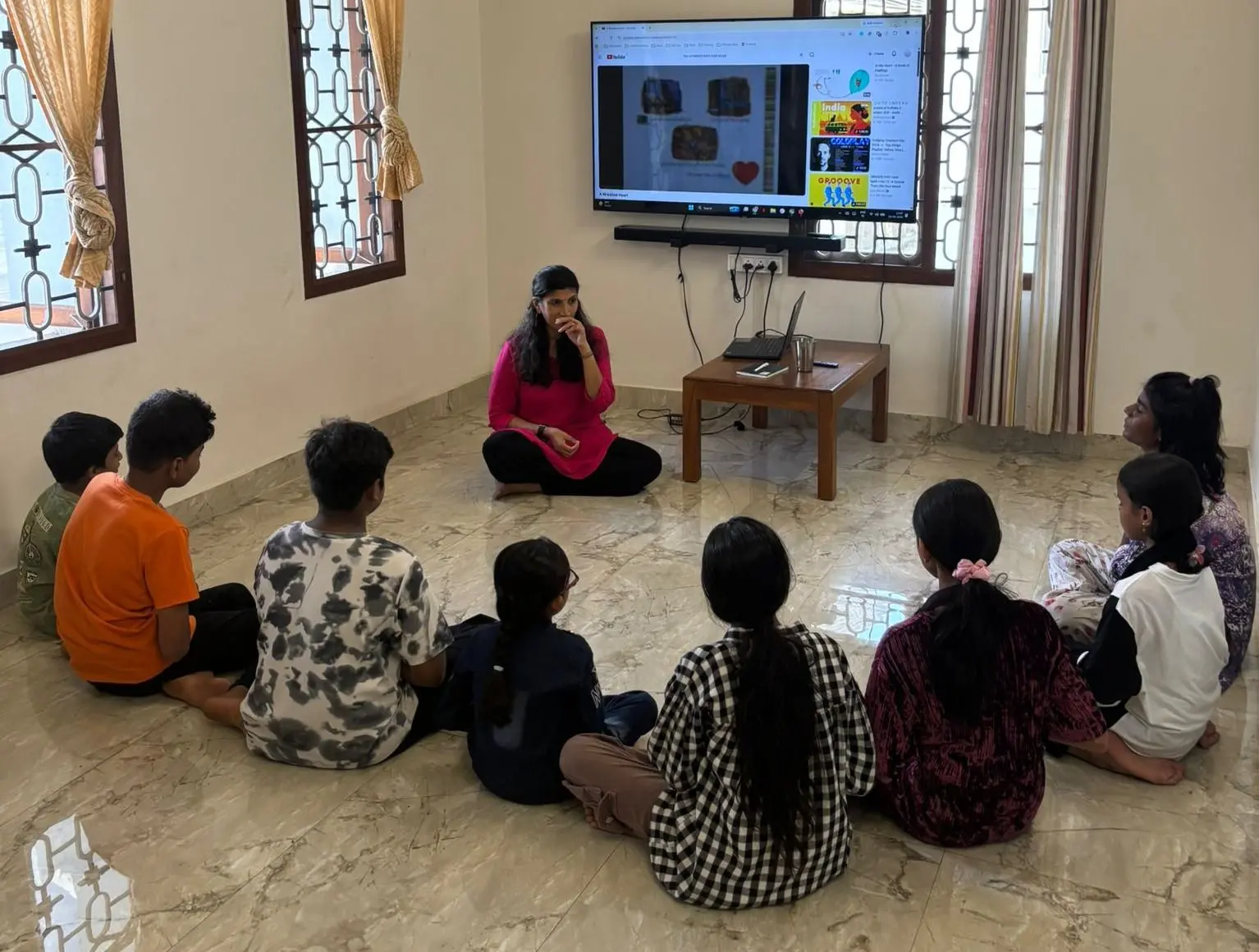
A Wrinkled Heart opens a conversation about kindness
The children read A Wrinkled Heart by Tracy Hoexter and we talked about how words and actions can affect other people. The story helped them think about kindness, feelings, and the importance of speaking to others with care.
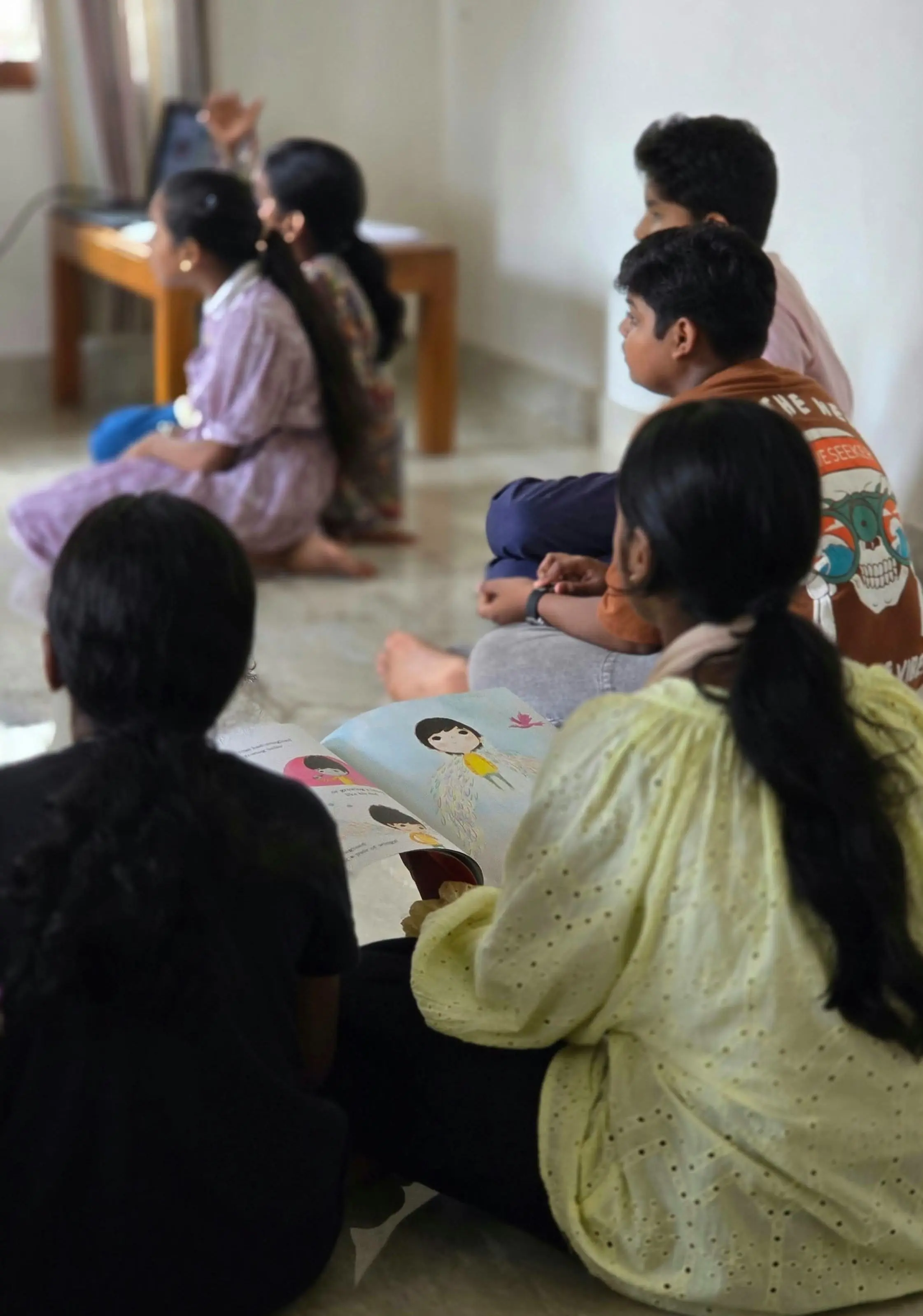
Perfectly Norman opens a conversation about being different
The children read Perfectly Norman by Tom Percival, a story about a boy who suddenly grows wings and learns to accept what makes him different. We opened up a simple conversation about being yourself, accepting differences, and feeling comfortable with who you are.
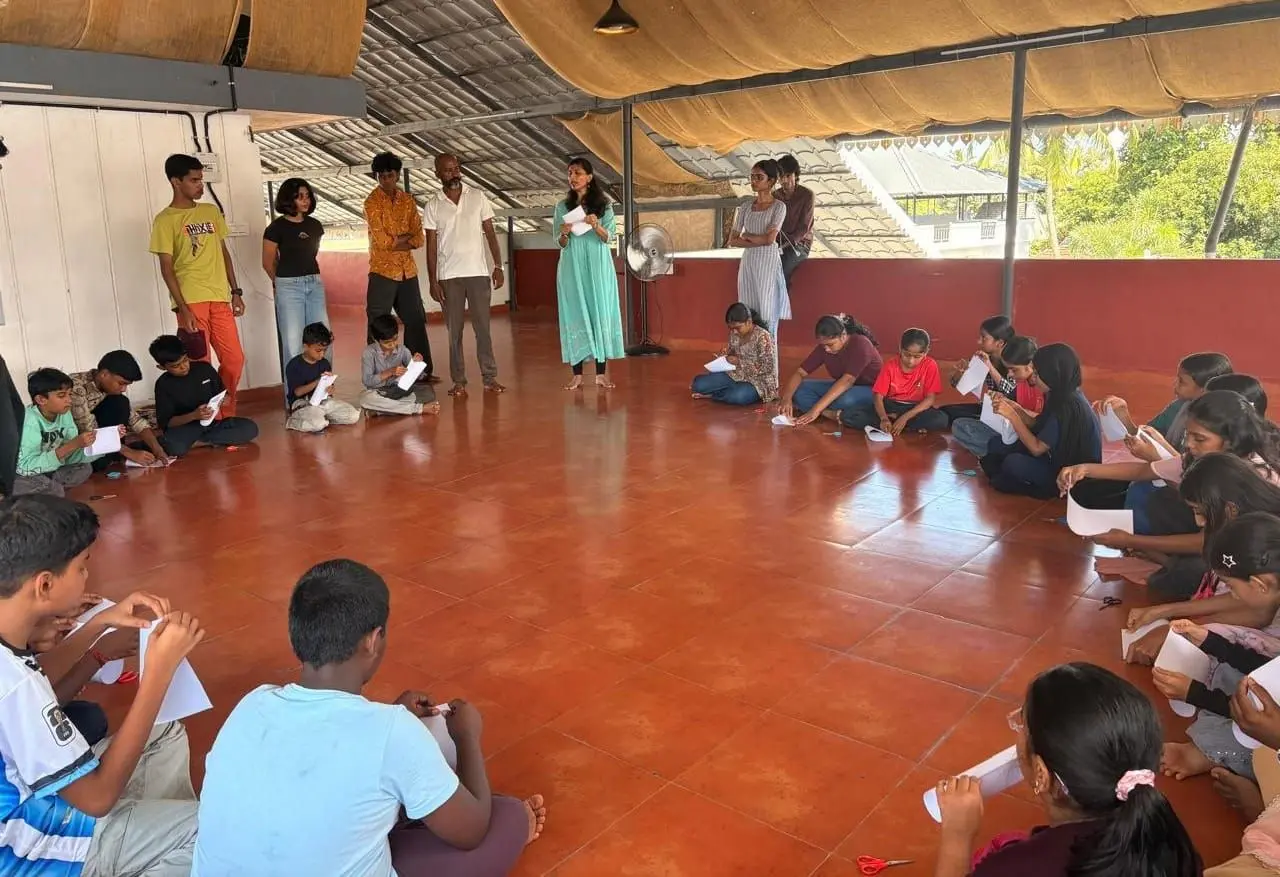
The reading club began testing each child's reading level
We began assessing the reading levels of children using the Teaching at the Right Level (TaRL) approach developed by Pratham. The assessment helped us understand each child’s current reading ability so that future sessions could be planned according to their learning needs, allowing every child to learn at a pace that was right for them.
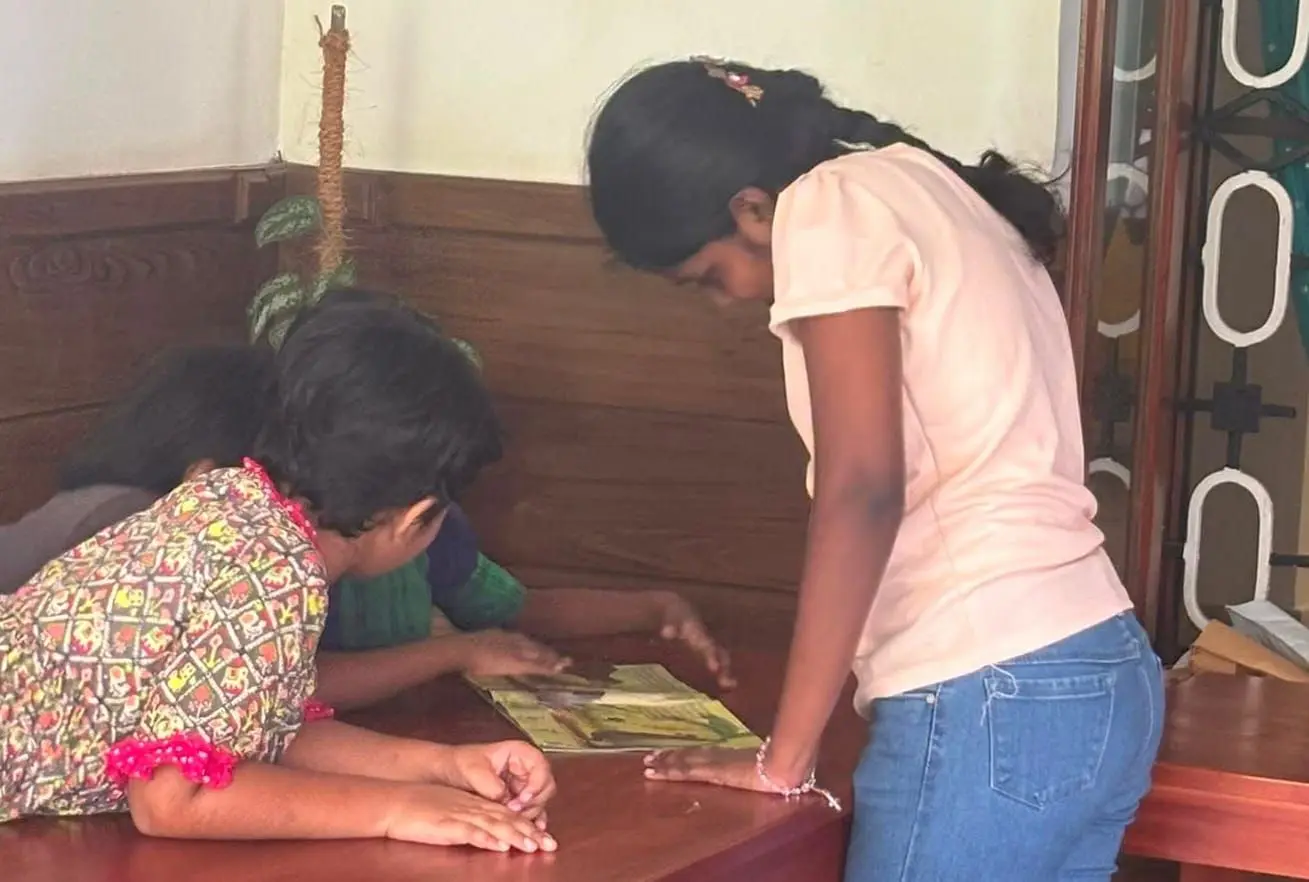
The Reading Club split into small reading groups
The Reading Club continued with small-group activities that encouraged children to read, discuss stories, and support one another in their learning.
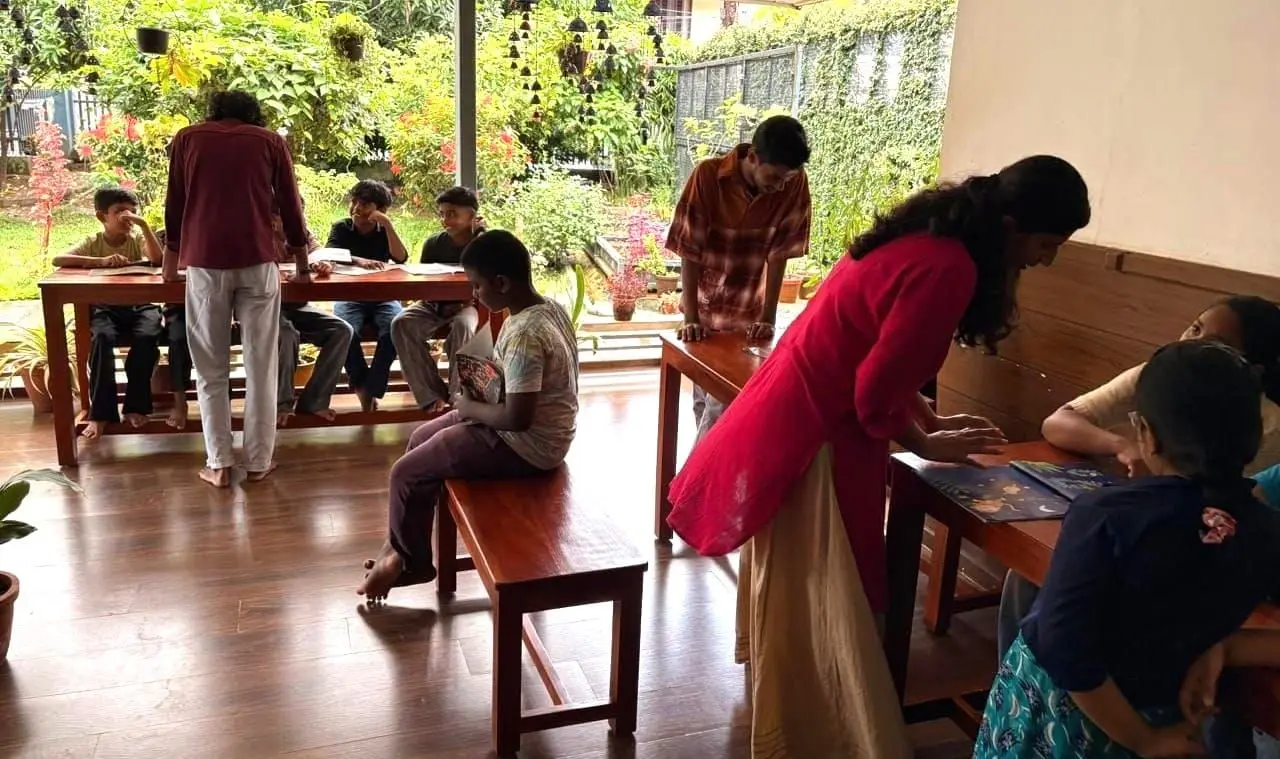
Children read together with volunteers at the Reading Club
On 14 March 2024, children attended the Reading Club. We read books together and with volunteers. The session encouraged regular reading and helped children become more comfortable with books.
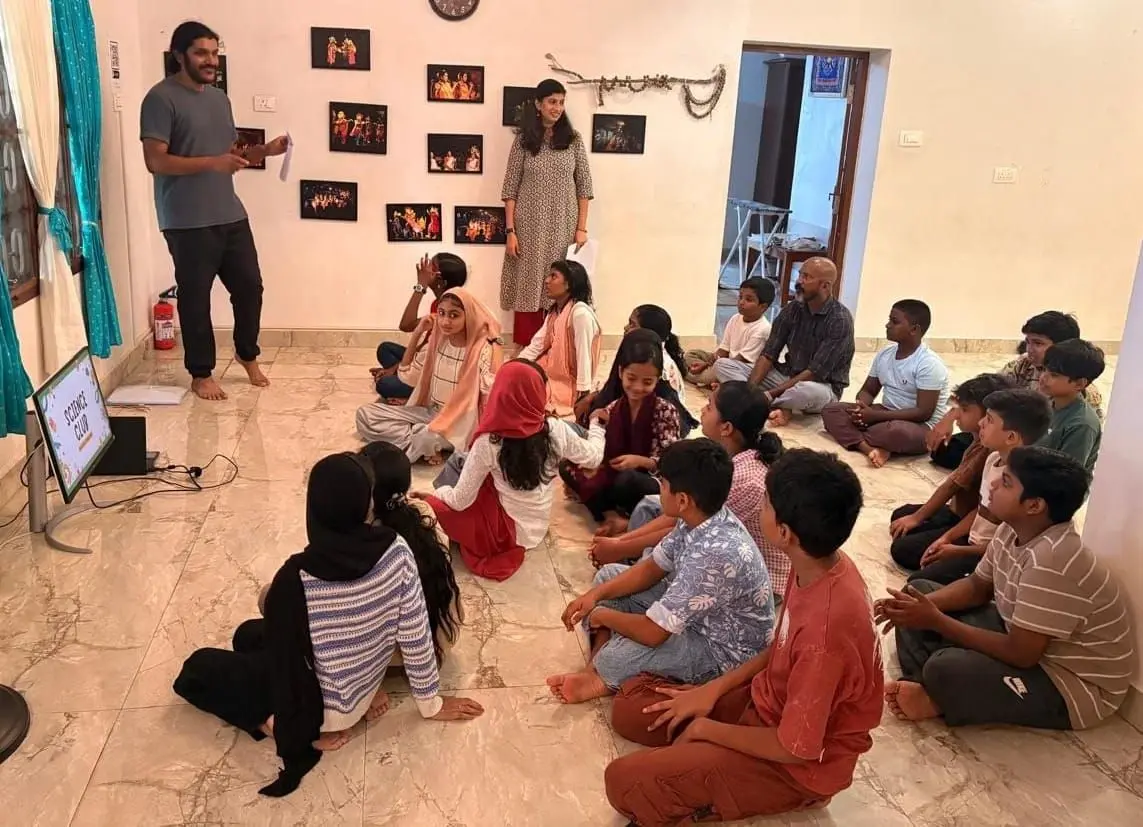
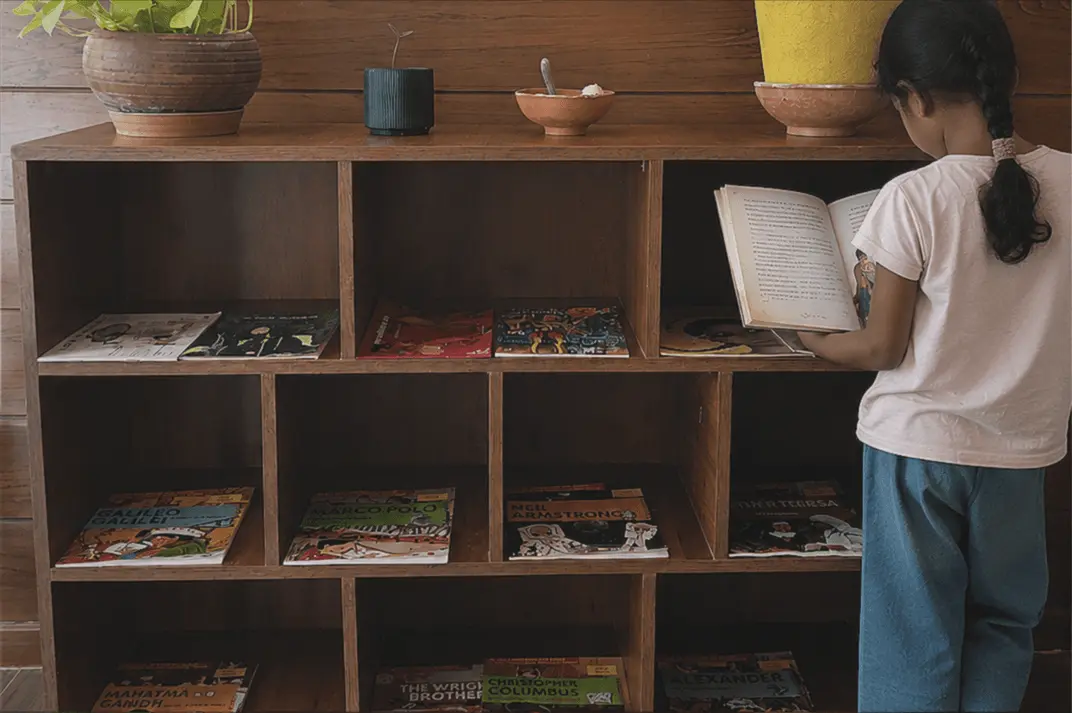
Children began using the new Reading Corner
The science class continued with hands-on learning. Children also began using the new Reading Corner. The reading programme follows a research-based approach adapted from proven models such as ASER and Teaching at the Right Level (TaRL), helping children build a regular reading habit based on their current reading ability rather than their age or grade. The goal is not just to provide books, but to help children enjoy reading and build confidence over time.
Young readers picked up their first books
The children’s reading corner came to life as young readers picked up their first books and spent time exploring stories. This small beginning reminded us that creating a reading habit starts with giving children a welcoming space and the freedom to discover books at their own pace.
What people said
Aarthi Veerupillai, founder of the Olimalar Foundation
“I realised how much I would have benefited from these lessons growing up.”