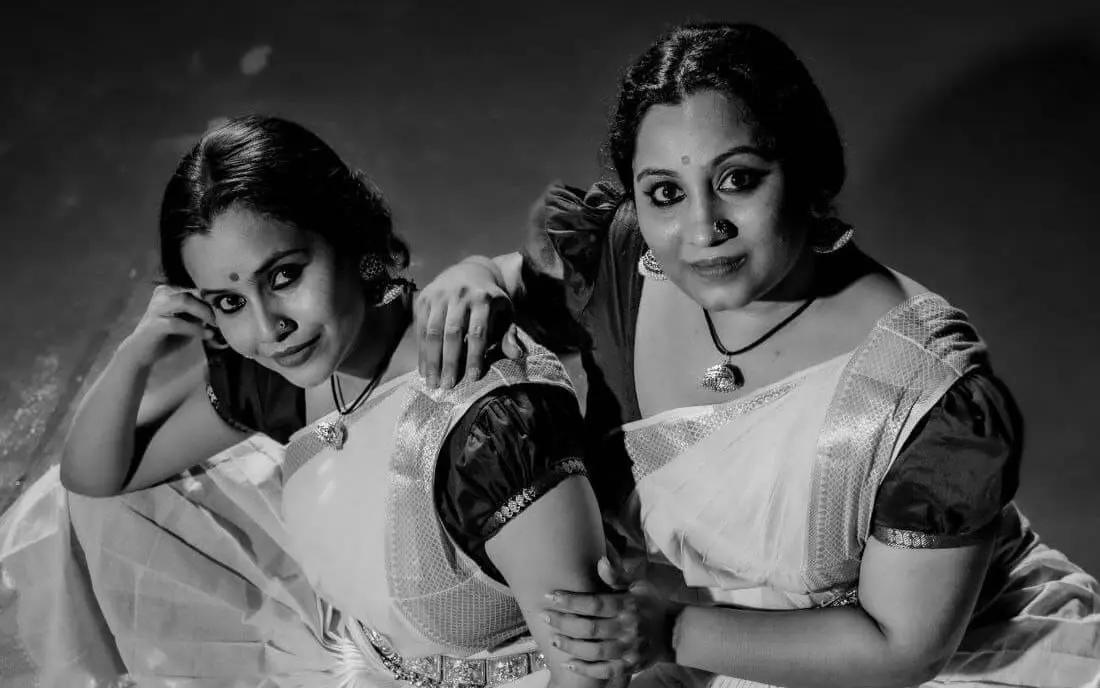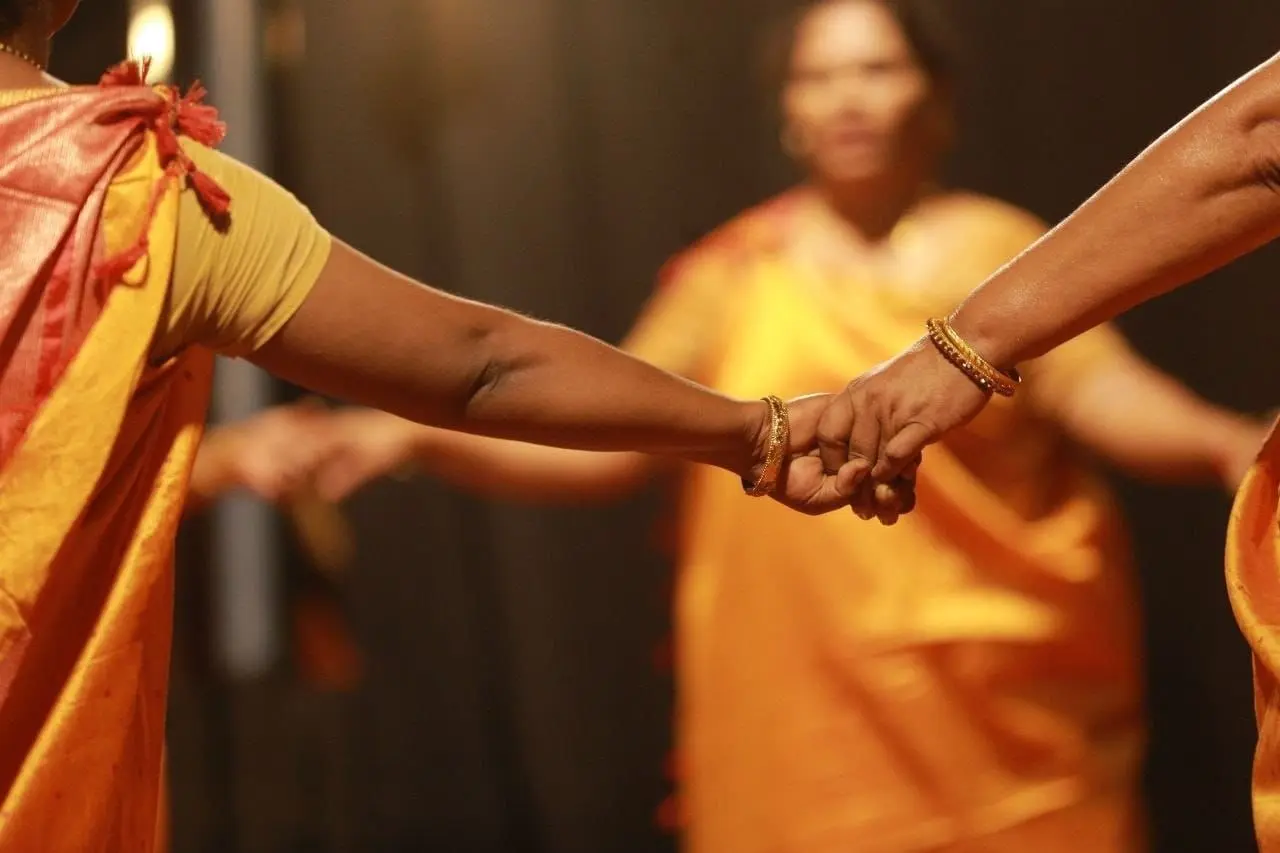
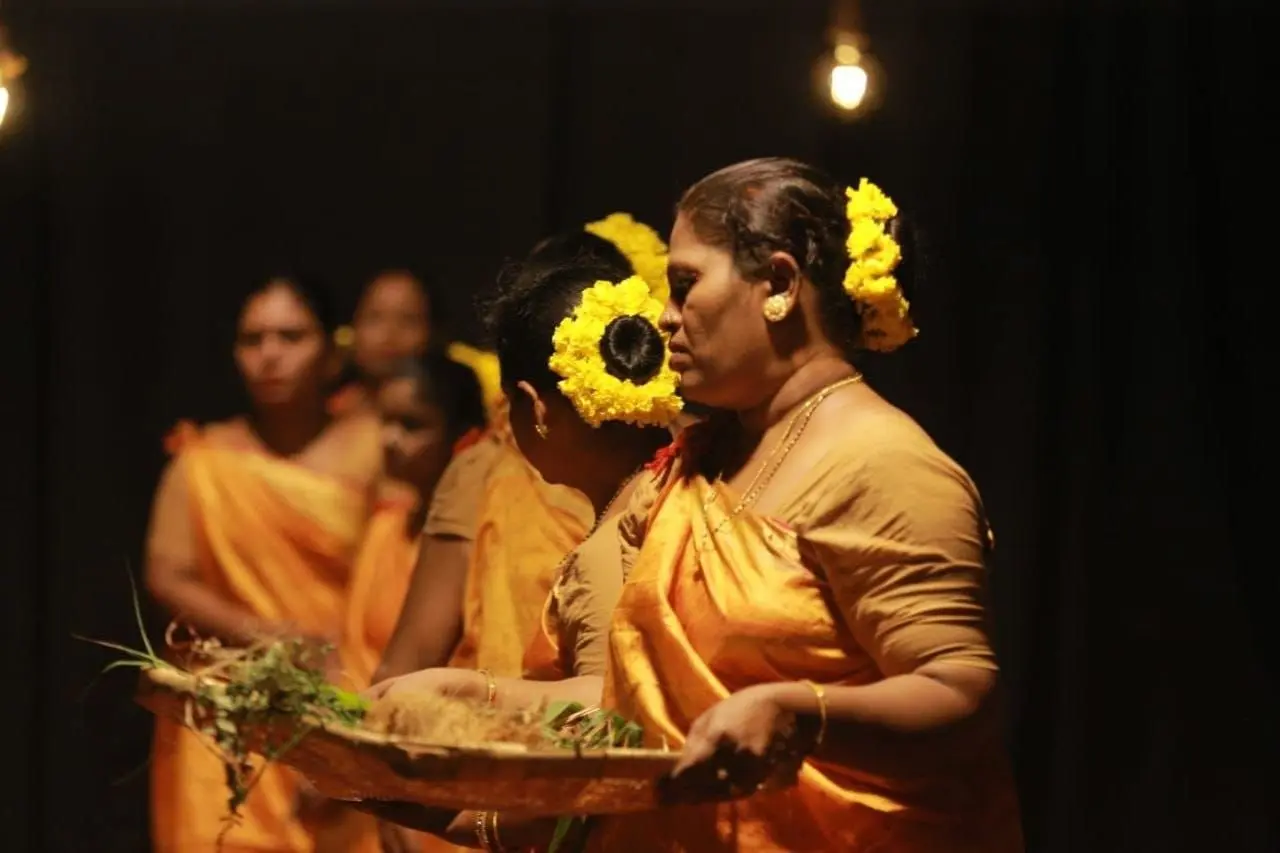
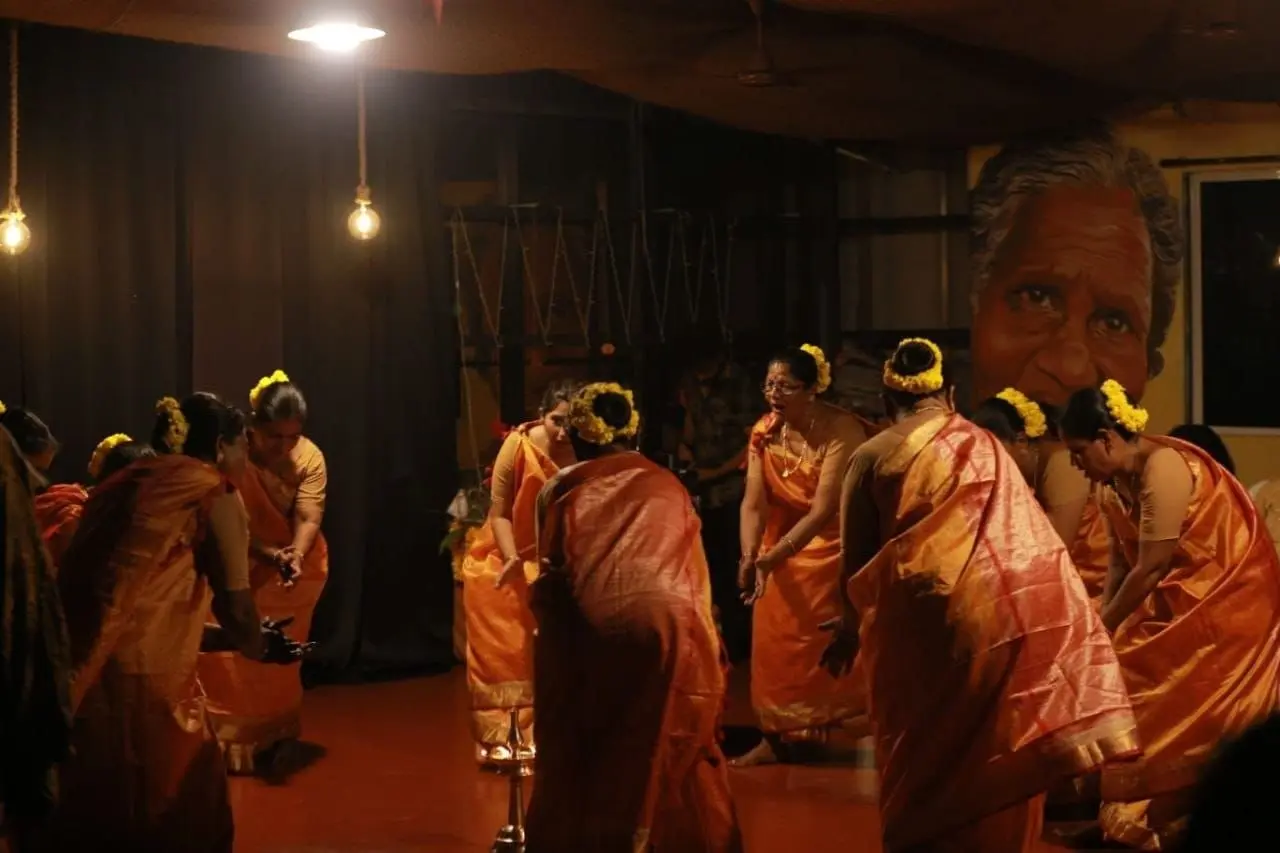
Fugdo does not unfold like a polished stage performance. It erupts. The dancers clap, stamp, chant, and whirl with a physical force rooted in centuries of agricultural labour. Sung in an ancient form of Konkani, the songs move between devotion, humour, romance, and hardship. Passed down through generations of the Kudumbi community, Fugdo remains one of Kerala’s most powerful yet lesser-known ritual traditions.
Fugdo feels older than the theatre. It feels like a ritual. Practised by Kerala’s Kudumbi community centred around Fort Kochi, descendants of migrants who fled Goa centuries ago, Fugdo is more than a dance tradition. It is a living archive of migration, labour, spirituality, memory, and resistance.
The story of Fugdo begins with exile. Around 400 years ago, Kudumbi ancestors fled Goa during Portuguese colonial rule and forced religious conversions. Families travelled by sea in traditional vessels known as 'pathemaris', eventually reaching the Kodungallur coast of Kerala. They brought little material wealth with them. But they carried something far more enduring: songs, rituals, seeds, language, and dance. Among these inheritances was Fugdo.
The Kudumbi community settled mainly in Kerala’s coastal regions, where they became known for their expertise in cultivating Pokkali rice, a unique saline-resistant variety suited to flooded coastal fields.
Farming shaped every aspect of Kudumbi life, and Fugdo evolved alongside that agricultural existence. After long days of physical labour, people gathered in courtyards to sing and dance. Fugdo became both release and ritual.
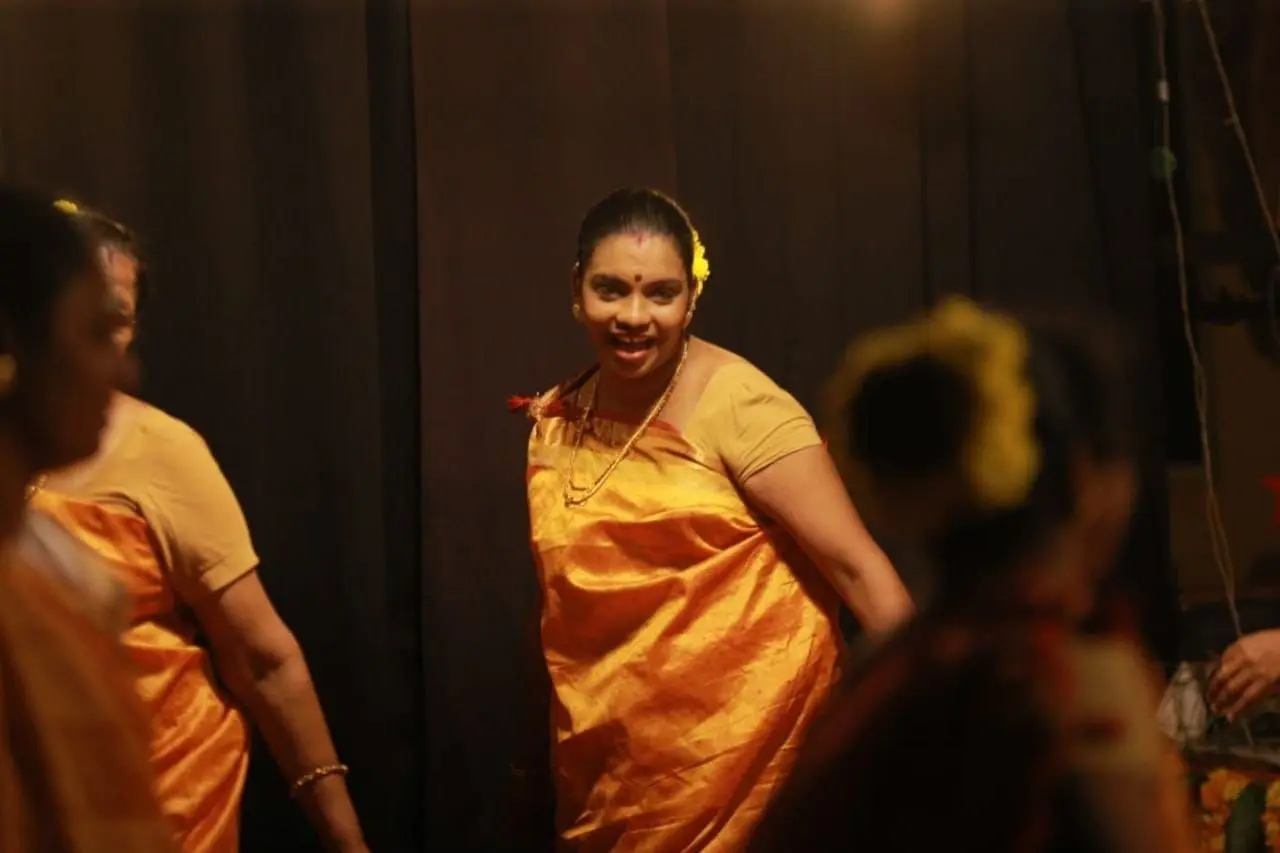
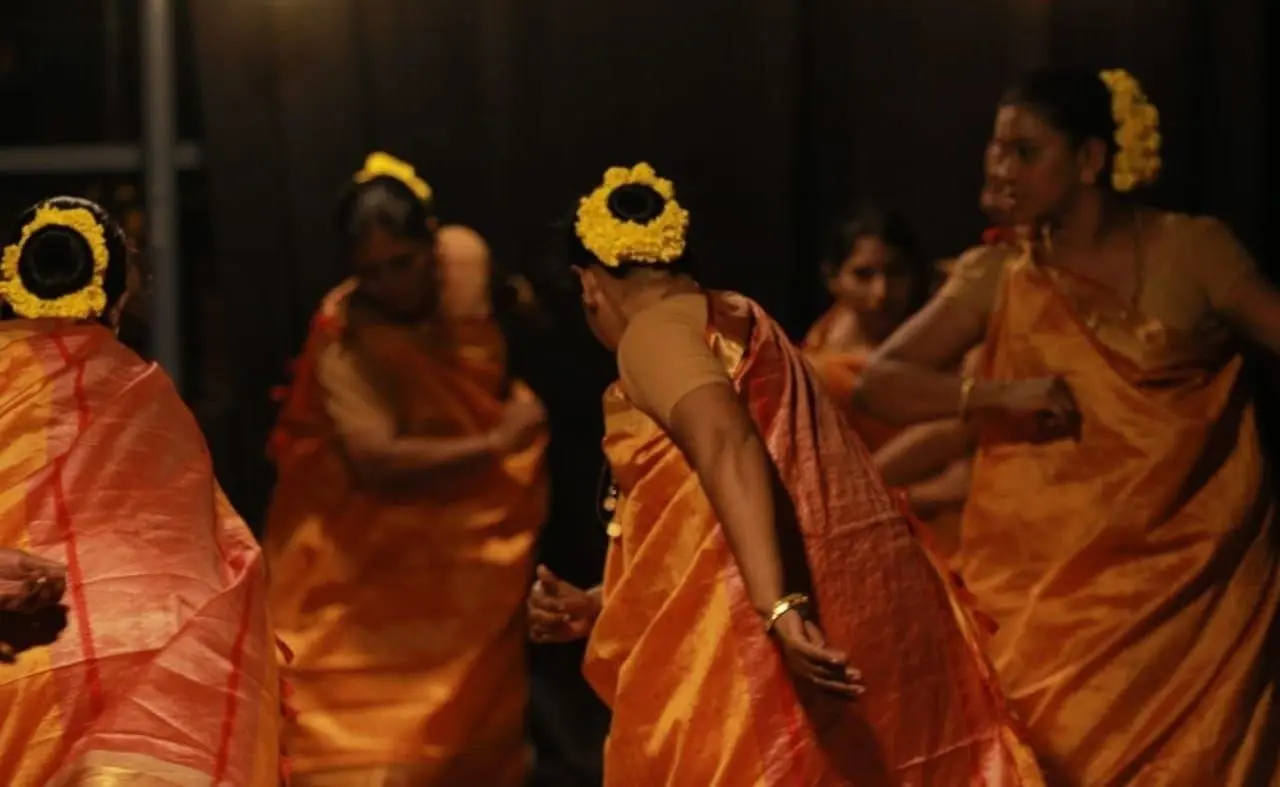
Unlike many formalised stage traditions, Fugdo carries the imprint of labouring bodies. Its movements are vigorous, forceful, almost explosive. Dancers leap, stamp, crouch, and surge forward with immense physical intensity. Community members insist these steps are unique and unrelated to other Kerala dance forms.
The physicality reflects the lives of the performers themselves. The Kudumbis were farmers, seed sowers, rice processors, fish workers, and manual labourers. Their bodies knew repetitive toil, mud fields, and coastal labour. Fugdo transformed that muscular energy into collective expression. Even today, performers consciously imitate ancestral steps once danced in open courtyards under the night sky until the break of dawn.
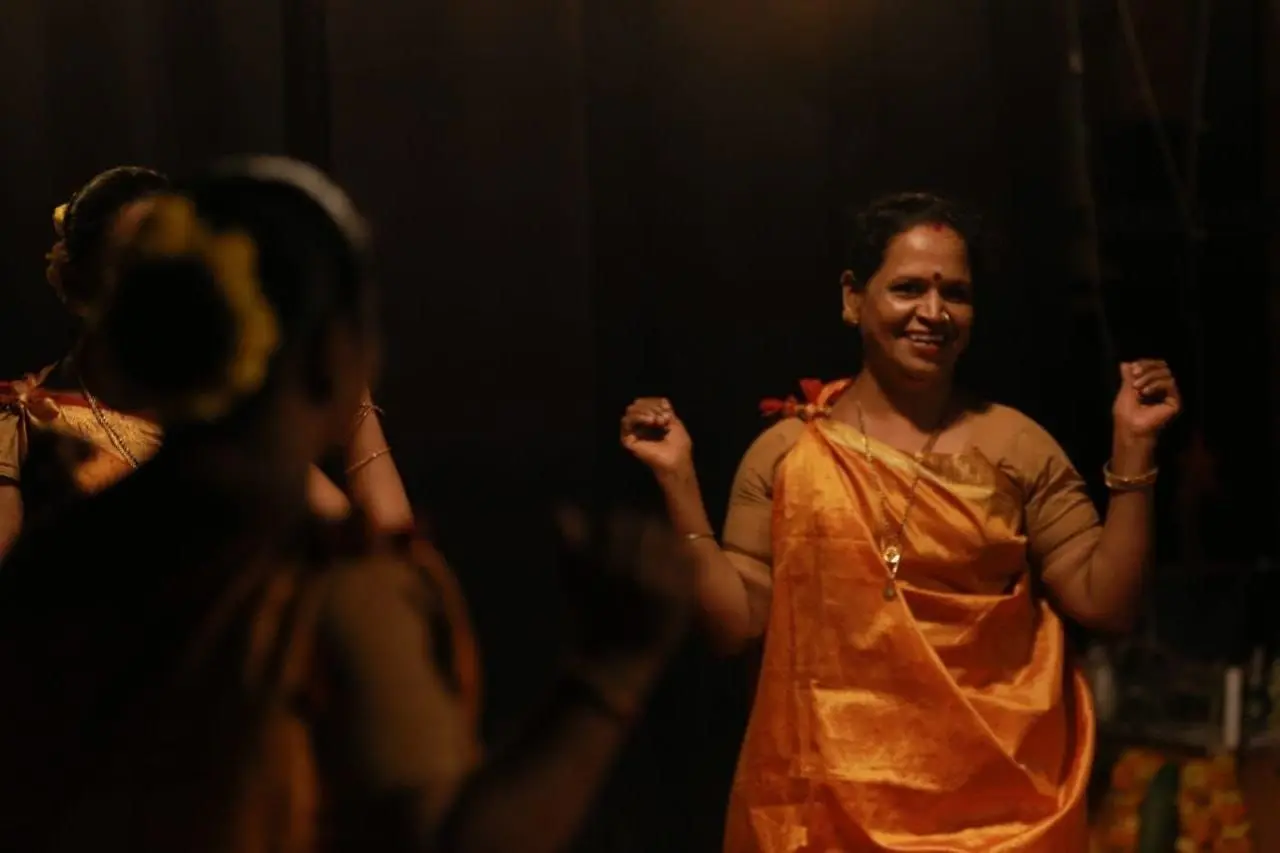
Memory in Motion
Fugdo is not merely entertainment. The community regards it as an “anushthana kala”, which translates to a “ritual art”. Traditionally, dancers observed strict purity before performances. Certain foods were avoided. Performances often began late at night around oil lamps and continued until dawn. The energy generated by synchronised movement, chanting, and collective rhythm can become overwhelming.
At the height of the dance, dancers describe entering intense emotional and spiritual states, where they lose control of themselves. The community believes Bhagavathi, the Goddess, may manifest within dancers during such powerful performances. Stories circulate of dancers running uncontrollably toward cremation grounds or cemeteries in trance-like states. To remain grounded, performers traditionally kept tobacco in their mouths during the dance. The practice was believed to prevent loss of mental control during moments of spiritual intensity. In Fugdo, the line between body and spirit grows thin.
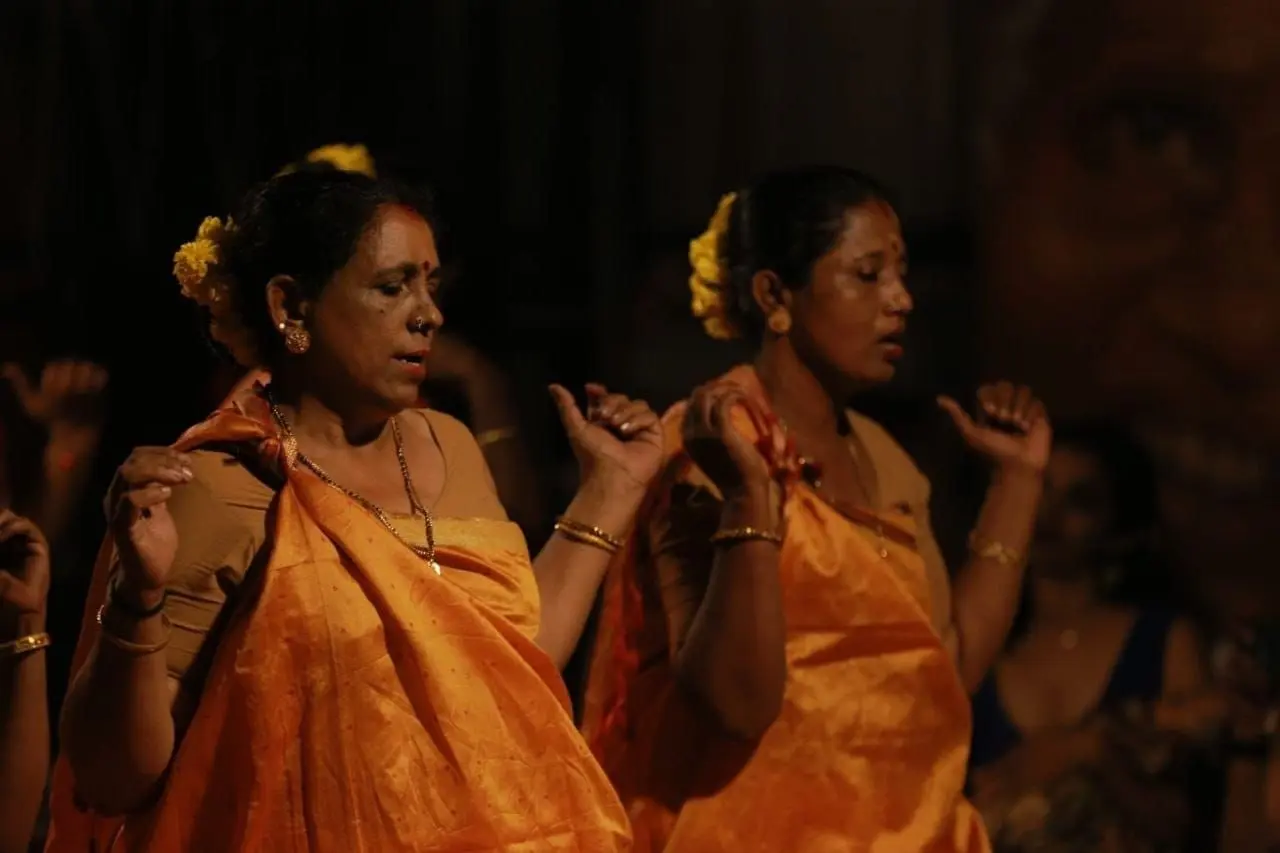
The songs of Fugdo are among its most remarkable features. They are sung in an ancient form of Konkani so old that many younger community members no longer fully understand the words. Elders sometimes struggle to explain the meanings of archaic phrases. Yet the songs survive.
Their themes move fluidly between devotion, agriculture, humour, sensuality, grief, and everyday life. Some praise nature and Bhagavathi. Others describe hardship, migration, romance, or village incidents.

Many contain double meanings and erotic imagery. Older generations often considered certain songs too explicit for children. This complexity gives Fugdo its emotional depth. The songs are neither sanitised nor idealised. They carry the rough edges of lived life. They are oral histories set to rhythm.
The Peacock Dance
Every Fugdo performance culminates in a dramatic finale known as Maroli. Here, narrative enters the dance. Two performers become peacocks: male and female. The male pursues the female while the other women form a protective circle around her. Eventually, the peacocks unite in an "aananda nritham", or dance of joy.
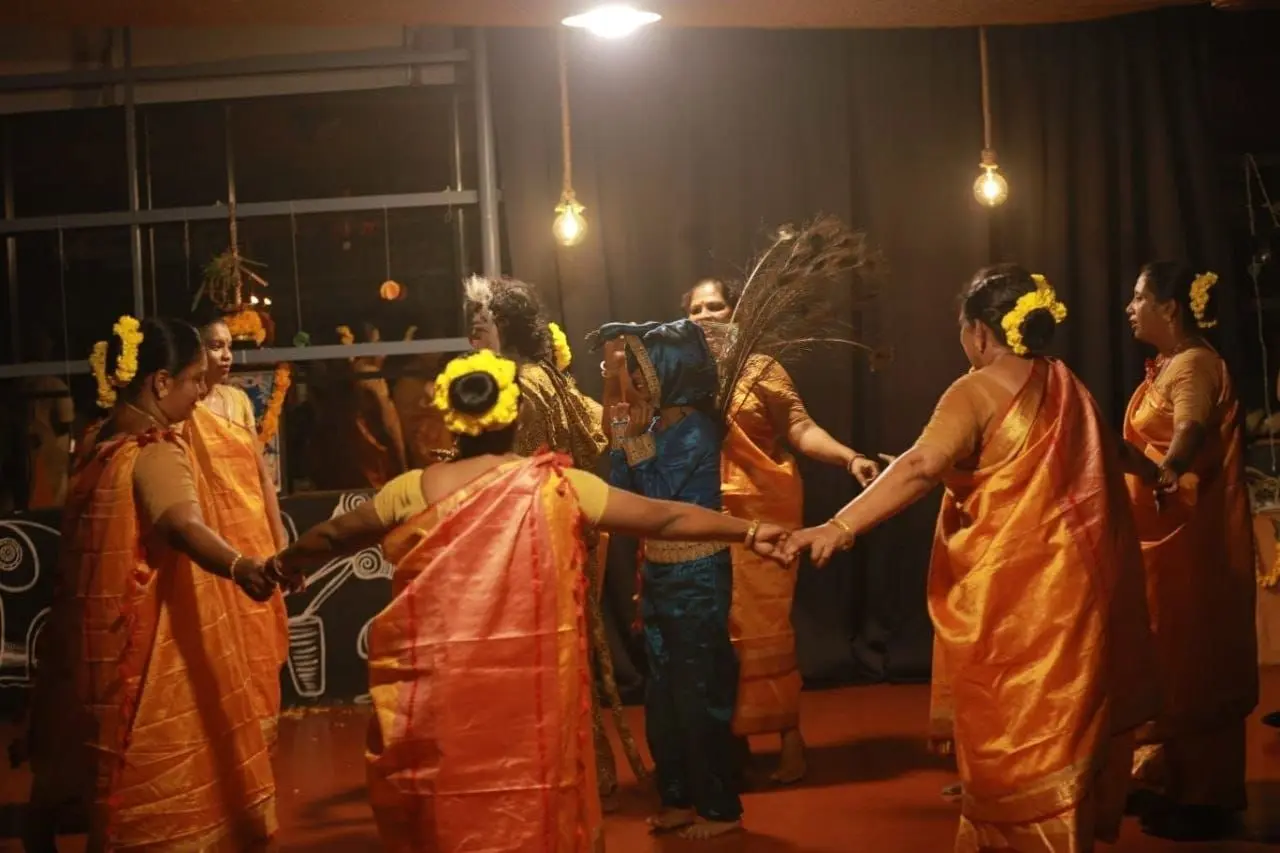
In some ritual variations, a tiger enters the story, attempting to attack the peacock while the community struggles to protect it. The imagery reflects Fugdo’s deep relationship with nature. Birds, animals, seeds, rain, fertility, and harvest all flow through the community’s imagination.
Pokkali Seeds and Cultural Survival
For the Kudumbis, agriculture is not only a background context. It is their very identity. The very word “Kudumbi” refers to farming communities, while “Kunbi” specifically means those who sow seeds. When the community fled Goa, Pokkali rice seeds were among their greatest treasures. These saltwater-resistant grains allowed them to cultivate Kerala’s coastal wetlands, transforming previously unused land into productive fields.
Their farming system operated in ecological harmony. Shrimp farming and rice cultivation sustained one another naturally. This relationship with land deeply shaped Fugdo’s worldview. The songs celebrate germination, harvest cycles, rain, fertility, and collective labour. Even the physical force of the dance mirrors agricultural rhythms such as pounding, pressing, planting, and threshing.
Why Fugdo Must Survive
Today, Fugdo stands at a fragile crossroads. Modernisation, migration, language loss, and economic hardship threaten many oral traditions within the community. Younger generations increasingly speak the dominant languages rather than ancestral Konkani. Many traditional songs remain undocumented.
At the same time, Fugdo has recently gained visibility through cultural festivals, media coverage, and online platforms. Performances in Goa brought extraordinary recognition, especially when audiences realised the Kerala-based Kudumbis had preserved centuries-old Konkani lyrics almost unchanged.
But visibility also creates danger. Community members, including Maya PS, worry about appropriation and dilution, about outsiders stripping Fugdo of its ritual roots and presenting it merely as generic folklore.
For the Kudumbis, preservation is not nostalgia. It is survival.
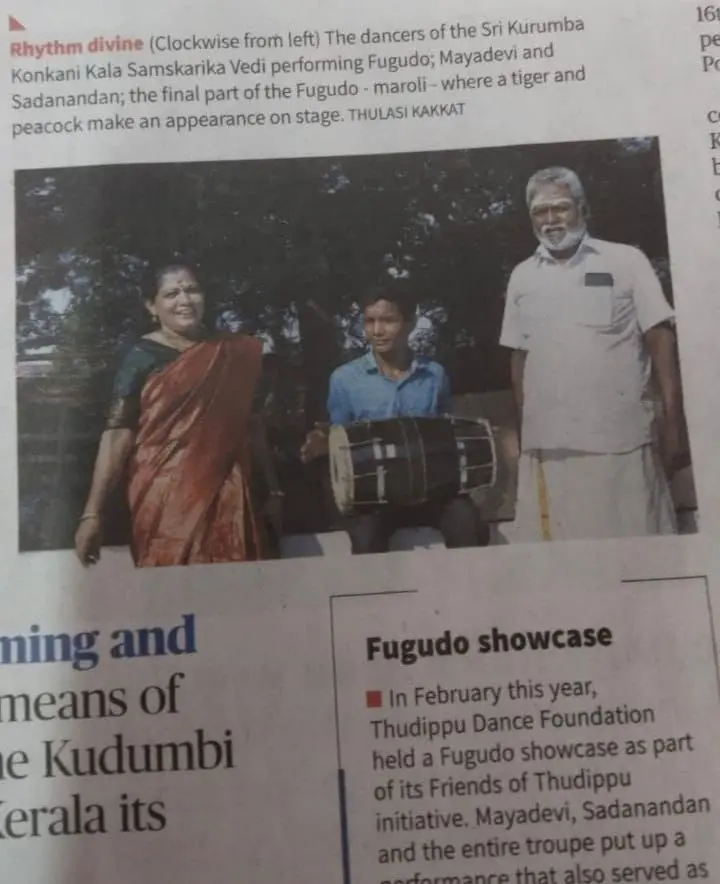
Fugdo carries the memory of migration, exile, labour, caste marginalisation, ecological knowledge, women’s oral traditions, and spiritual life. To lose the dance would mean losing an entire way of understanding history.
This is why the women continue to gather after work. Why their elders still teach forgotten lyrics. Why their dancers still stamp the earth with uncompromising force. Because inside Fugdo lives a community’s centuries-old declaration: we are still here.