
Olimalar's founder realised how much she'd have benefited from these lessons growing up
“I realised how much I would have benefited from these lessons growing up.”Aarthi Veerupillai, founder of the Olimalar Foundation
“I realised how much I would have benefited from these lessons growing up.”Aarthi Veerupillai, founder of the Olimalar Foundation

“At first, I didn't know how to stitch. Today, I made this bag on my own.”One of
“I never thought I'd be able to dance at this age. I have great fun learning a new
A spectacular blend of theatre, music, dance, and powerful rhythmic footwork, Chavittu Nadakam is one of Kerala’s most distinctive performing arts traditions. Here is the tale of how it reflects the rich cultural heritage and collective memory of Kerala’s coastal communities.


Along the coastal belt of Kerala, particularly in Fort Kochi and the Latin Catholic settlements stretching south towards Chellanam and Alappuzha, echoes of a unique theatrical tradition continue to resonate. Chavittu Nadakam, one of Kerala’s most distinctive performing arts, is a vibrant blend of theatre, music, dance, martial movement, and storytelling. Rooted in the cultural exchanges that accompanied Portuguese influence on the Malabar Coast, the art form has survived centuries of social change, adapting to new realities while striving to preserve its traditional essence.
The name Chavittu Nadakam literally translates to “stamping drama,” referring to the forceful footwork that characterises the performance. The rhythmic stamping of actors on stage creates a powerful auditory effect, adding energy and grandeur to the narrative. Historically, the art form flourished in the coastal Latin Catholic communities of Kerala, where it became an important medium for storytelling, entertainment, and religious instruction.
A Theatre of Heroes and Legends
Traditionally, Chavittu Nadakam drew inspiration from Biblical narratives, the lives of saints, and European legends. One of the earliest and most celebrated stories performed in the genre revolves around Emperor Charlemagne, known locally as Carlesman. Heroic figures such as Roland, alongside formidable villains, were portrayed as larger-than-life characters possessing extraordinary strength, courage, and moral conviction.
Unlike many modern theatrical forms, Chavittu Nadakam demanded a remarkable range of skills from its performers. Actors were required not only to act but also to sing, dance, deliver lengthy dialogues, and execute vigorous footwork. The performances were often elaborate and physically demanding, lasting several hours and, in earlier times, even spanning multiple days.
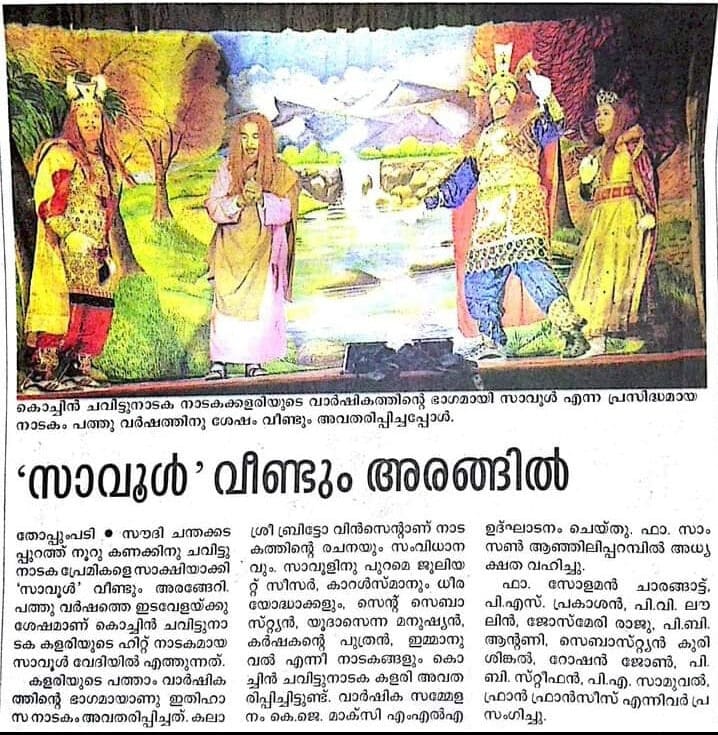
What distinguished traditional Chavittu Nadakam was its live nature. Actors sang their own songs while performing, adjusting their delivery according to the energy of the audience and the atmosphere of the stage. This spontaneity gave each performance a unique character and made the art form deeply immersive.
The Enduring Legacy of Chavittu Nadakam
During its peak, Fort Kochi was a major centre of Chavittu Nadakam. Numerous local groups and theatre troupes operated within small geographical areas, conducting rehearsals in courtyards, beaches, and open community spaces. Performances were eagerly anticipated social events, drawing large audiences and earning performers immense respect within their communities.
However, the latter half of the twentieth century brought significant changes. The rise of cinema, television, and other forms of mass entertainment reduced the popularity of traditional theatre. Many veteran performers passed away, and younger generations increasingly pursued other interests. By the 1990s, Chavittu Nadakam was facing a period of decline, with only occasional performances keeping the tradition alive.
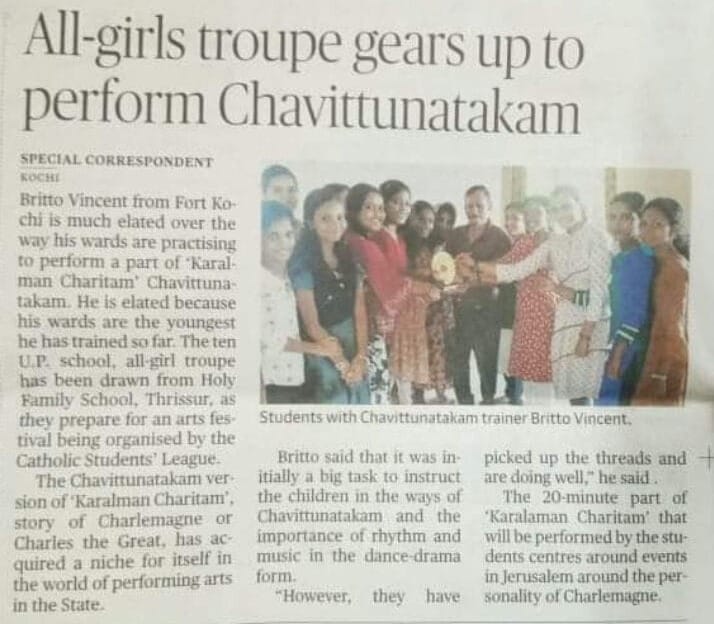
The revival of interest began in the late 1990s, particularly after the Kerala Sangeetha Nataka Akademi organised a major Chavittu Nadakam festival in 1999. Extensive media coverage introduced the art form to wider audiences across Kerala, generating renewed curiosity and appreciation. This period marked a turning point in the recognition of Chavittu Nadakam as an important component of Kerala’s cultural heritage.
Debates Around Adaptation
As Chavittu Nadakam entered the twenty-first century, it adapted to changing social and economic conditions. One of the most significant transformations has been the introduction of recorded music and pre-recorded vocals. In many contemporary productions, actors perform to audio tracks rather than singing live.
This shift has made performances easier to organise and more accessible to smaller groups. It has also enabled the art form to reach schools, youth festivals, and new audiences. However, traditional practitioners argue that such adaptations diminish a defining feature of Chavittu Nadakam: the inseparable connection between singing, acting, and movement.
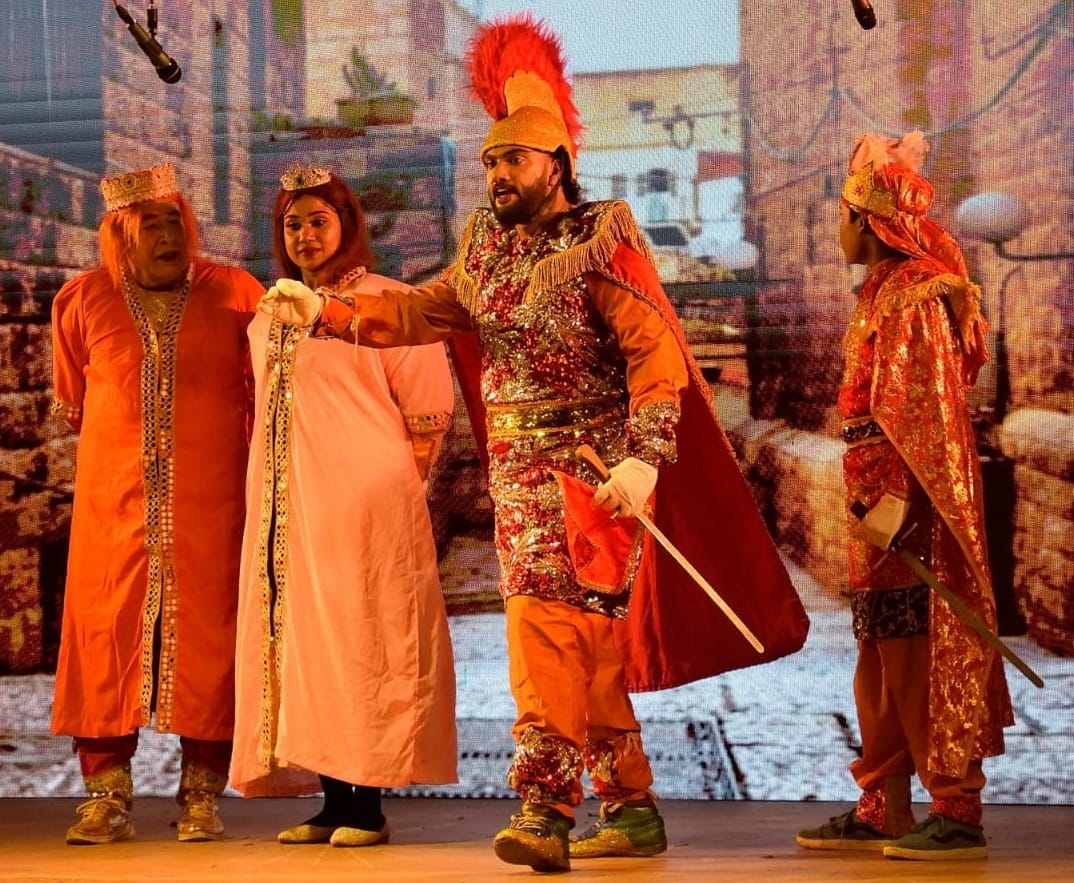
For traditional artists, the ability of performers to respond spontaneously to the energy of a live performance remains central to the art form’s identity. The debate between preservation and adaptation continues to shape discussions about the future of Chavittu Nadakam.
At the same time, the thematic scope of the art form has expanded. While Biblical and saintly narratives remain important, contemporary playwrights like Britto Vincent have introduced historical subjects, literary adaptations, and more nuanced character studies. This evolution has allowed Chavittu Nadakam to remain relevant without abandoning its distinctive style.
Preserving a Living Tradition
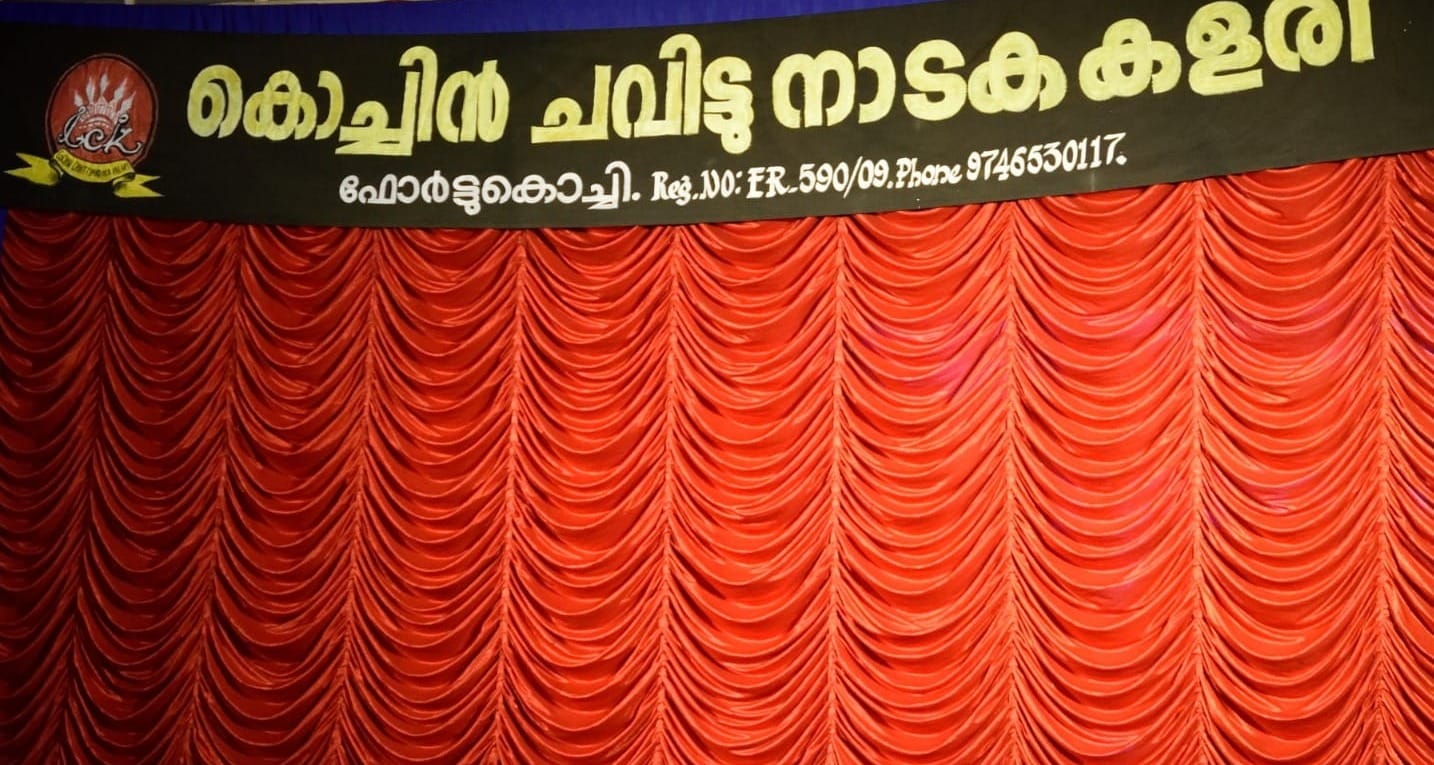
Efforts to preserve traditional Chavittu Nadakam have led to the formation of cultural organisations dedicated to its promotion and protection. Among the most significant is the Cochin Chavittu Nadaka Kalari, established in 2007. The organisation works to safeguard the traditional form in which actors sing and perform live, while also supporting artists through training programmes, government recognition, scholarships, pensions, and cultural initiatives.
Such efforts are particularly important because Chavittu Nadakam remains largely a labour of passion. Most performers do not earn a livelihood from the art form and balance rehearsals and performances alongside other occupations. Despite these challenges, artists continue to dedicate considerable time and resources to sustaining the tradition.
A dedicated member of the organisation, Britto Vincent has written numerous Chavittu Nadakam scripts, including works such as Julius Caesar, St. Paul (Saul), Judas, and Pontius Pilate. His scripts expanded the thematic possibilities of the genre by incorporating literary and historical subjects alongside traditional religious narratives.
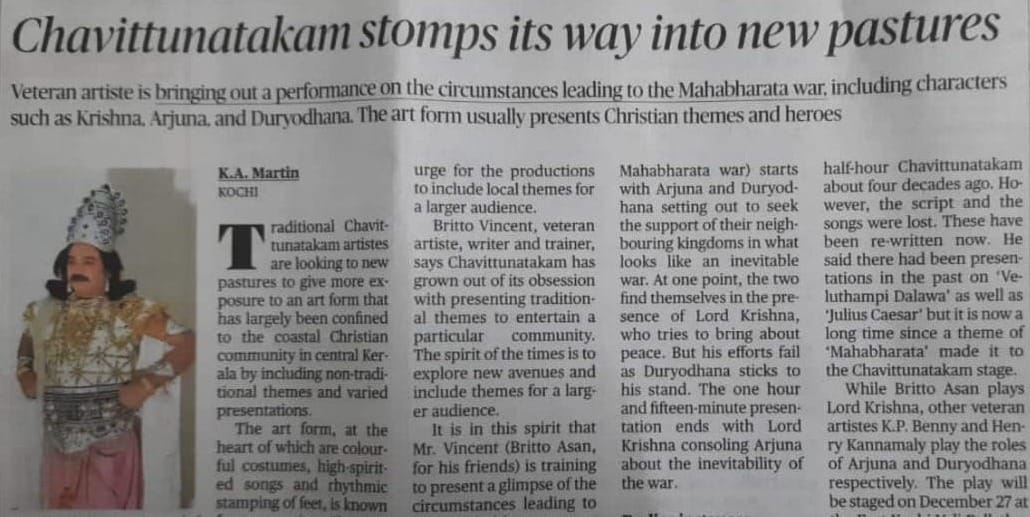
Britto’s adaptation of Shakespeare’s Julius Caesar in 1988 was particularly significant, marking one of the first major departures from the customary Biblical and saintly themes. His works have been recognised for their literary quality, emotional depth, and innovative storytelling.
Looking Ahead
Today, Chavittu Nadakam stands at a crossroads between preservation and transformation. While modern adaptations have enabled the art form to survive in changing cultural environments, traditional practitioners continue to emphasise the importance of retaining its core features: live singing, dynamic performance, and communal participation.
Its survival over centuries demonstrates its resilience and cultural significance. More than a theatrical tradition, Chavittu Nadakam represents the history, faith, creativity, and collective memory of Kerala’s coastal communities. As new audiences are reached and new performers take the stage, this remarkable art form continues to stamp its presence firmly into Kerala’s cultural landscape.

Like a flower reaching for light, every child deserves the chance to bloom. Through Olimalar Foundation, a small team in Kochi is empowering children with the confidence, emotional strength, and life skills to shine both in school and beyond.

Born during the isolation of the pandemic, Mind Empowered became a safe space for people struggling silently with stress, anxiety, and loneliness. Here's more about the Kochi-based organisation.

Carried across the sea from Goa and preserved through generations, Fugdo continues to echo with the rhythms of exile, resistance, and belonging. Here is how the Kudumbi community in Fortkochi strive to preserve the artform.

Read on, to know more about the seven-year journey of Thudippu. In this conversation, Anjali reflects on the social, financial, and emotional realities of building a small arts organisation in Kerala, and why creating a safe space can itself become a quiet act of resistance.
Join 700+ Friends! Sign up, become a friend of aikyam and get updates.