
Olimalar's founder realised how much she'd have benefited from these lessons growing up
“I realised how much I would have benefited from these lessons growing up.”Aarthi Veerupillai, founder of the Olimalar Foundation
“I realised how much I would have benefited from these lessons growing up.”Aarthi Veerupillai, founder of the Olimalar Foundation

“At first, I didn't know how to stitch. Today, I made this bag on my own.”One of
“I never thought I'd be able to dance at this age. I have great fun learning a new
Here is a story of materials rescued from landfill, skills passed between women, and a community slowly stitching together its own sustainable future — one bag at a time.


The tote bag looked unlike anything found in a regular store. It stood out immediately, not because it looked expensive, but because it looked thoughtfully made. Made from layered pieces of leftover fabric, it carried the uneven beauty of something handmade: colourful, durable, and full of character. The fabric was a patchwork of different colours and textures stitched together with surprising precision, and the bag itself felt sturdy enough for everyday use. Someone told me it had been stitched locally by women in Fort Kochi using fabric scraps that would otherwise have ended up in landfills. That single detail was enough to make me curious.
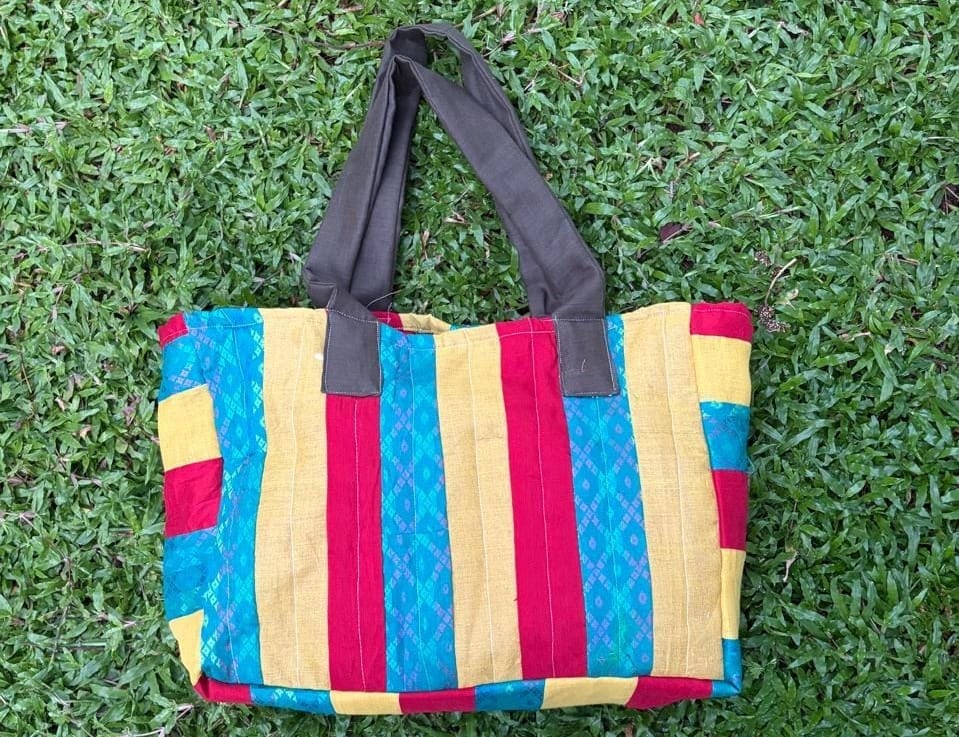
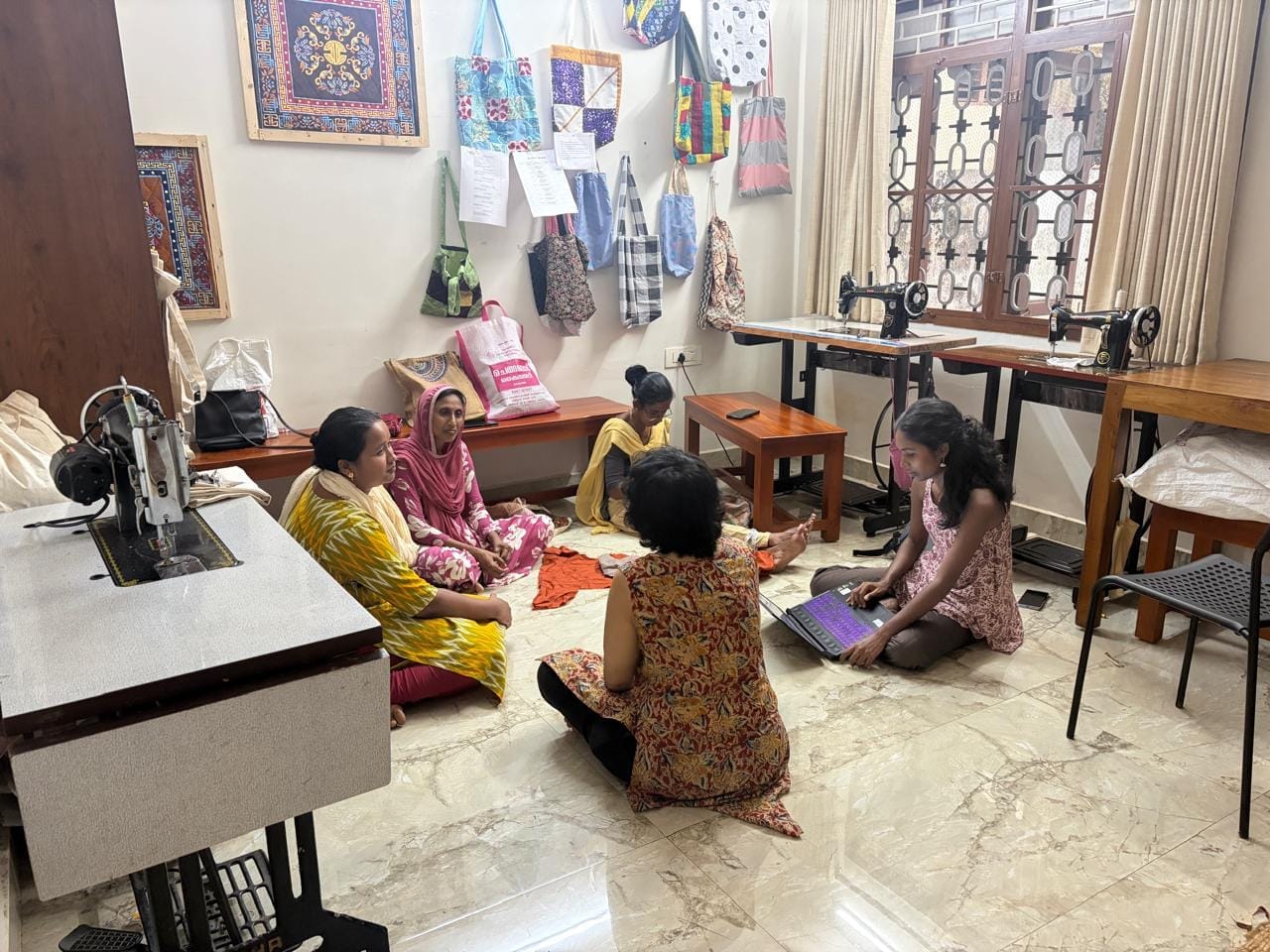
A few days later, I walked into the Stitching Club at aikyam space. Inside, the room was buzzing with activity. Sewing machines hummed steadily as women measured fabric, stitched handles onto tote bags, and experimented with screen printing designs. Piles of discarded cut pieces had been carefully sorted into colours and textures, waiting to become something useful again. What I had assumed was just a beautiful handmade bag turned out to be part of something much larger — a community-led effort around repair, sustainability, livelihoods, and shared learning.
Repair, Reuse, Rebuild
Every afternoon at aikyam space, sewing machines begin to hum softly as women gather around long tables layered with colourful pieces of fabric. Some sort through neatly stacked cut pieces collected from local boutiques. Others trim loose threads from finished tote bags. Nearby, someone carefully checks the strength of bag handles before the products are packed away. There was conversation, concentration, and an unmistakable sense of collective purpose.
The Stitching Club at aikyam space, facilitated by Mary Gracy, is a community-led initiative where members learn repair, upcycling, stitching, and bag-making skills. Open to people from Fort Kochi, Mattancherry, and nearby areas, the club gives preference to women and underserved households. Participation is free, and the space provides sewing machines, tools, materials, mentoring, and peer learning support.
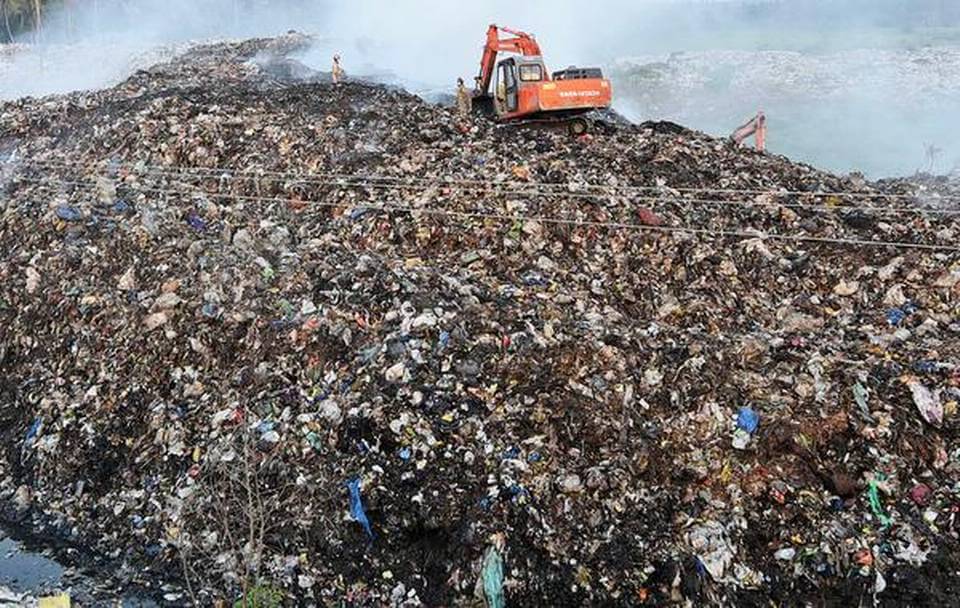
One of the club’s most visible creations is its handmade tote bags and pouches, products made almost entirely from leftover fabric pieces that would otherwise have been discarded. In tailoring shops and boutiques across the city, small fabric scraps are often treated as waste because they are too irregular to use in large garments. Most eventually end up in landfills or mixed waste streams.
At aikyam space, these discarded materials are collected, cleaned, sorted by colour and texture, and transformed into durable, carefully designed bags.
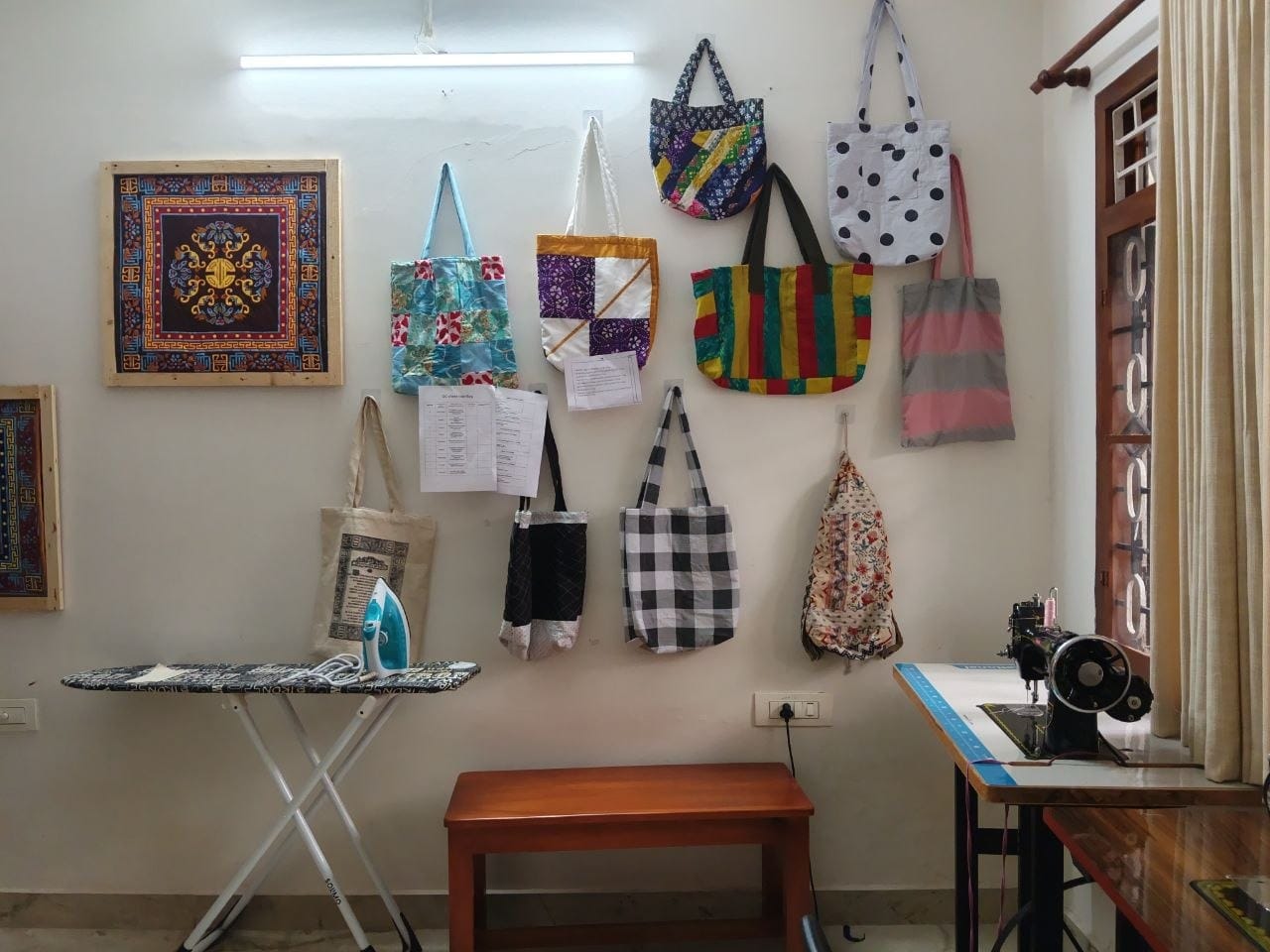
These women learn not only stitching but also measuring and cutting the pieces, colour matching, fabric arrangement, finishing techniques, and screen printing. They experiment with combining leftover materials in ways that are both practical and visually appealing. What begins as a pile of discarded cut pieces slowly becomes something functional, sturdy, and beautiful. As he eagerly describes the entire process, aikyam space coordinator Vivek assures that quality check of these bags is an integral part of their process. The members learn not just how to make a product, but how to make it well.
Sewing a Sustainable Future
Today’s fashion industry largely follows a “take, make, throw away” model. Huge amounts of natural resources are used to produce clothes that are often worn only a few times before being discarded. Fast fashion and mass production have made clothes cheaper, quicker to buy, and easier to discard, with garments now travelling across countries and continents before reaching store shelves. As wardrobes grow, so do landfills filled with barely used clothes and textile waste.
According to the Ellen MacArthur Foundation, this wasteful system costs the global economy billions of dollars every year while also creating serious environmental damage. Textile production now produces more greenhouse gas emissions annually than international flights and maritime shipping combined. Synthetic fabrics release tiny plastic fibres into rivers and oceans during washing, and harmful chemicals used in production affect both workers and the environment. As clothing consumption continues to rise, so does the scale of the problem. This is why small acts like repairing clothes, reusing fabric scraps, and making durable handmade products are becoming increasingly important—not just as creative practices, but as ways of rethinking how we live with the things we own.
The stitching club at aikyam space is a good example of a small community-based circular economy, where the fabric keeps moving through the community instead of becoming garbage. Rather than following the usual pattern of “make, use, discard,” the stitching club focuses on repair, reuse, repurposing, and upcycling. Every upcycled tote bag represents fabric diverted from waste streams, fewer new materials consumed, and one more example of sustainable production rooted in community effort.
Where Old Fabric Finds New Life
Sustainability, however, is only one part of the story. The stitching club also functions as a space for skill-building and entrepreneurship. Saneera and Lijo, frequenters of the club, chatter excitedly about the kindness and patience of their teacher, Mary. Neither of them have prior stitching experience; however, they are very eager to learn the art. "It is their genuine interest in learning that drives me forward everyday", Mary responds. Revathy, on the other hand, has a machine at home. But she's never felt the motivation to use it by herself. "It's the coming together of so many women, the making of mistakes and sharing of knowledge that helped me gain confidence to start stitching bags", she says. Many women who join the programme begin with little or no formal stitching experience. The club’s learning model moves gradually from repair and basic stitching to product-making and income generation.
Members learn how to create bags professionally, right from cutting and stitching to quality checking and finishing. Every tote bag goes through careful inspection before it is considered complete. Seams are checked for strength and neatness. Handles are reinforced to ensure durability. Fabric quality, alignment, shape, and finishing are reviewed closely.
For many women involved in the programme, the bags also represent a possible source of income. Since the raw material is inexpensive or freely available, members can begin making products without large investments. More importantly, they begin developing confidence in their own abilities. The experience of creating a finished product, pricing it, and selling it introduces women to entrepreneurship in a low-risk and supportive environment.
Over time, the stitching space becomes more than a workshop. It becomes a community.Women who may have spent much of their time isolated within domestic routines find opportunities for social interaction, creative expression, and shared purpose. Skills circulate through peer learning. Resources are shared collectively. Relationships are built slowly through everyday acts of making.
In a fast-moving culture driven by mass production and disposability, the bags made at aikyam space offer another way of thinking. They show that sustainability can be local, handmade, and community-led. They demonstrate that repair and reuse are not only environmental practices but also social ones.
Each of these tote bags carries more than groceries or books. It carries hours of shared labour, creativity, conversation, and care. It carries the story of materials rescued from landfill, skills passed between women, and a community slowly stitching together its own sustainable future — one bag at a time.
Looking to place a bulk order for events, gifting, retail, or corporate use? Our handmade tote bags are crafted by women from our community, creating sustainable income and meaningful opportunities with every order.
“At first, I didn't know how to stitch. Today, I made this bag on my own.”One of

Local communities coming together to learn, practice & share their skills. Stitching, Science, Reading, Dance, Cooking, Up-cycling, Gardening and more.


Local communities coming together to learn, practice & share their skills. Stitching, Science, Reading, Dance, Cooking, Up-cycling, Gardening and more.

Local communities coming together to learn, practice & share their skills. Stitching, Science, Reading, Dance, Cooking, Up-cycling, Gardening and more.
Join 700+ Friends! Sign up, become a friend of aikyam and get updates.