- What went in
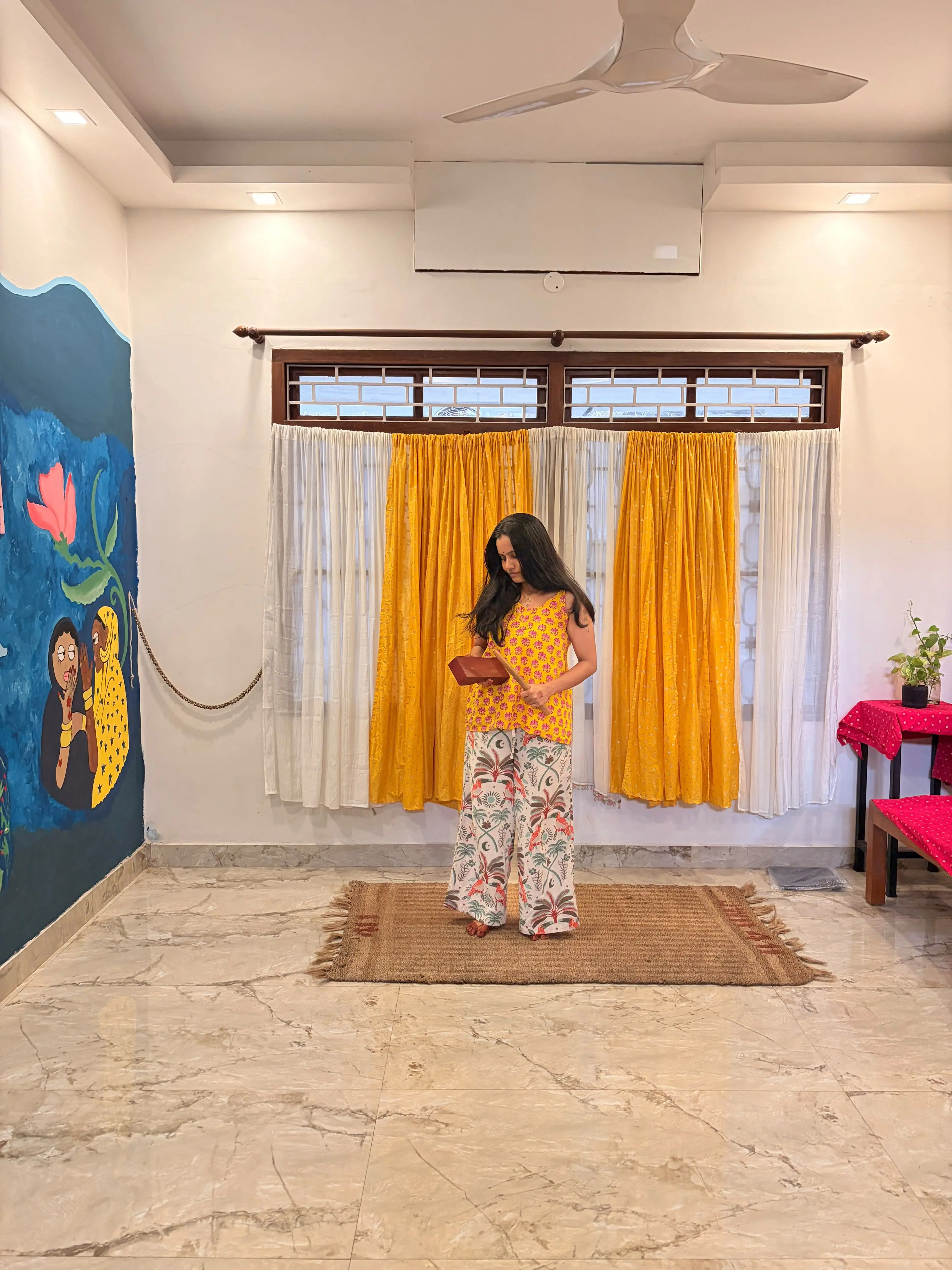
- Teacher's time and a dance space.
- Time
- 2 hours
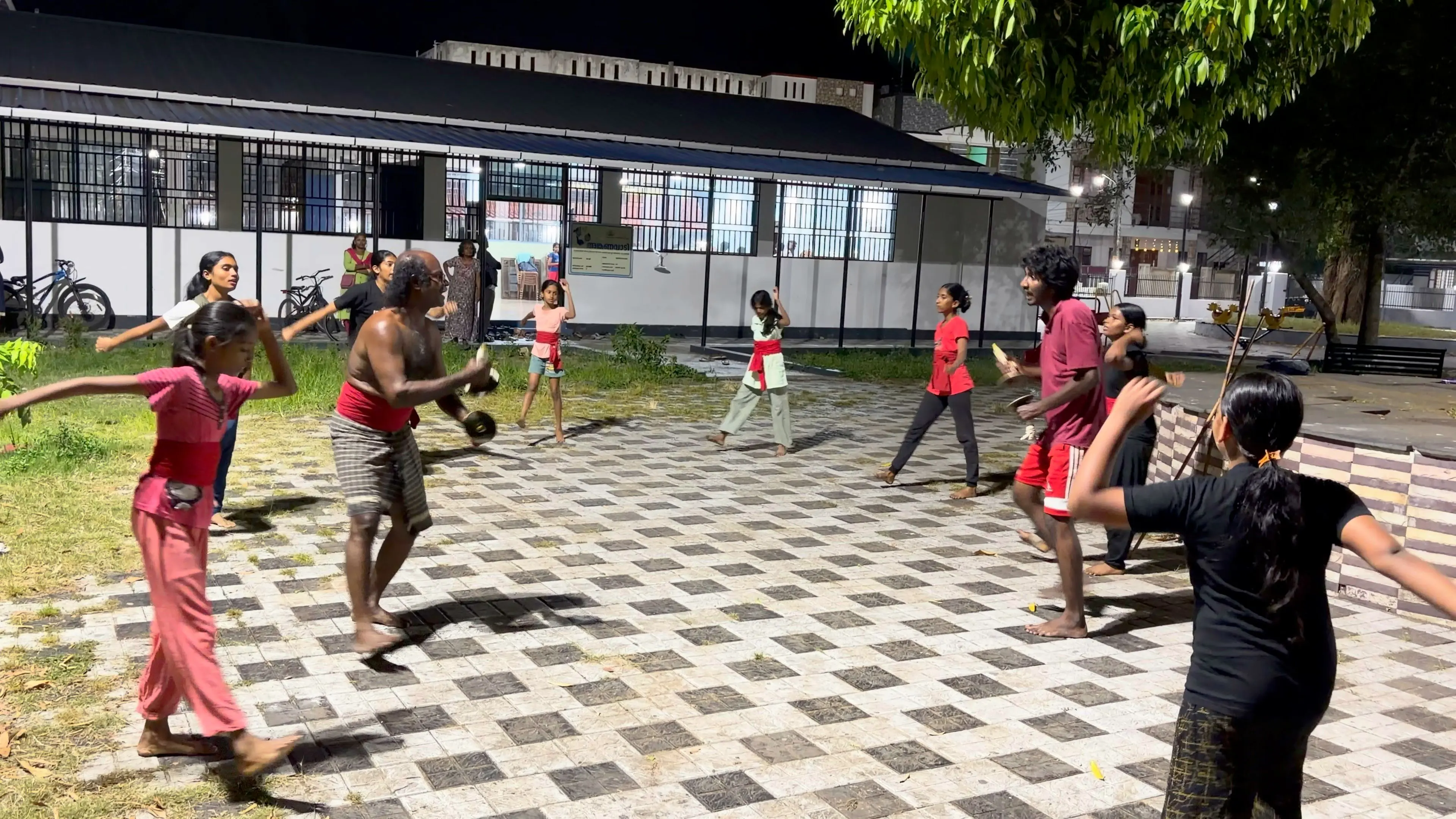
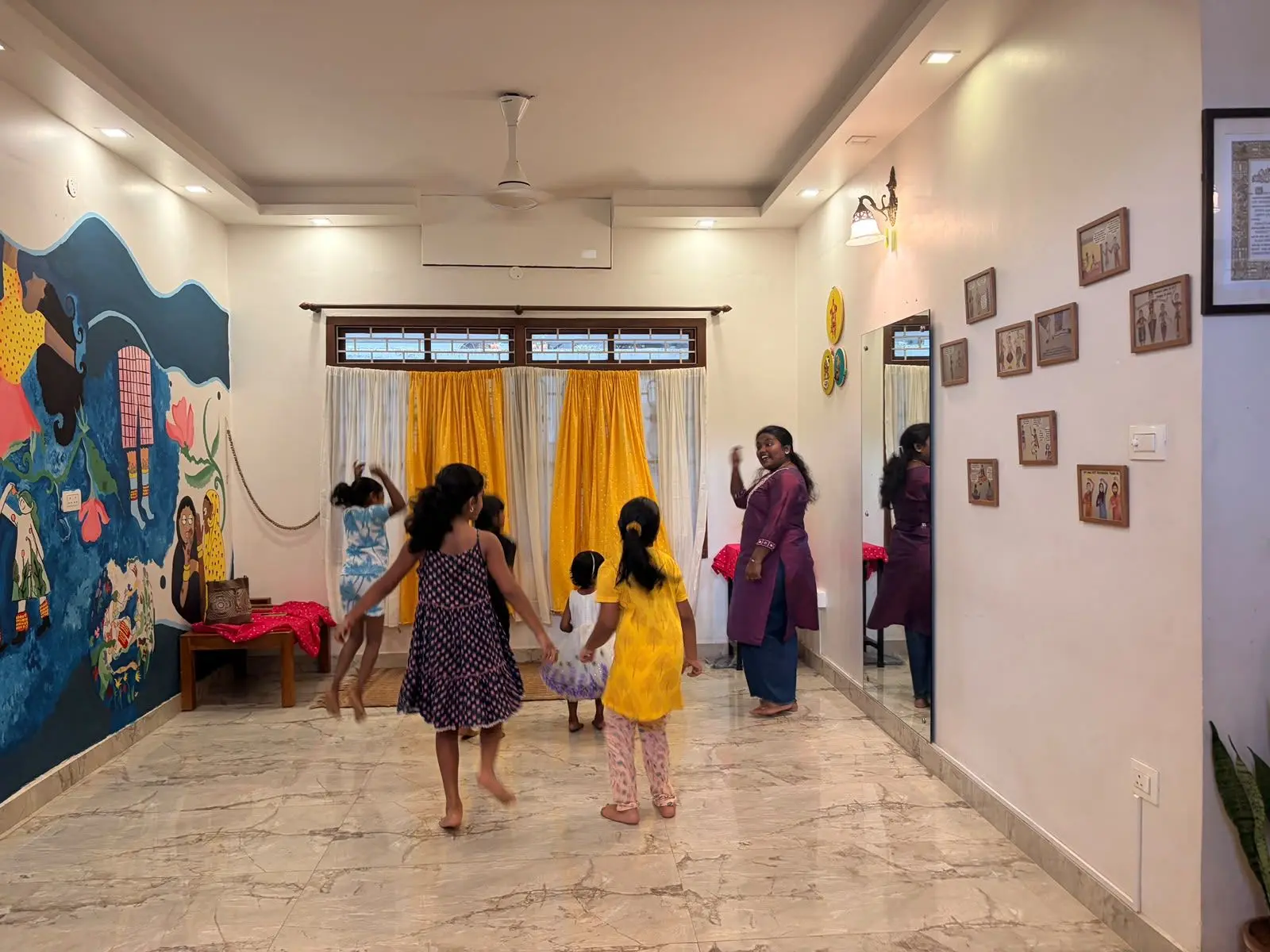
Today was the second class for students with hearing difficulties. The class also welcomed three new children this time. They came with the first student's mother, who had watched the first class and told other families about it.
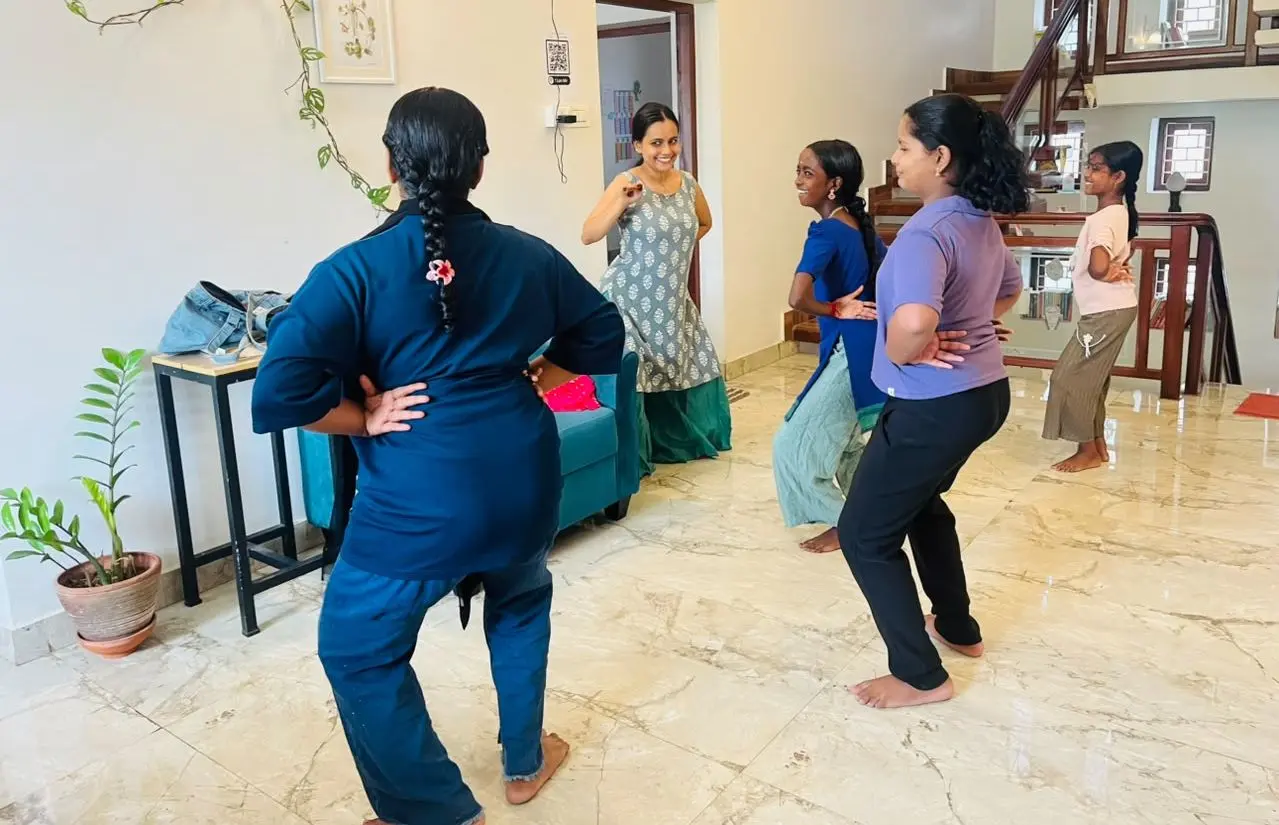
During practice, the children tended to look at the teacher and follow the Adavus by watching. We wanted to help them perform the movements on their own, without having to watch the teacher. The teacher worked with each child one at a time and guided them through repeated practice while looking straight ahead. This was hard at first, but the children kept trying.
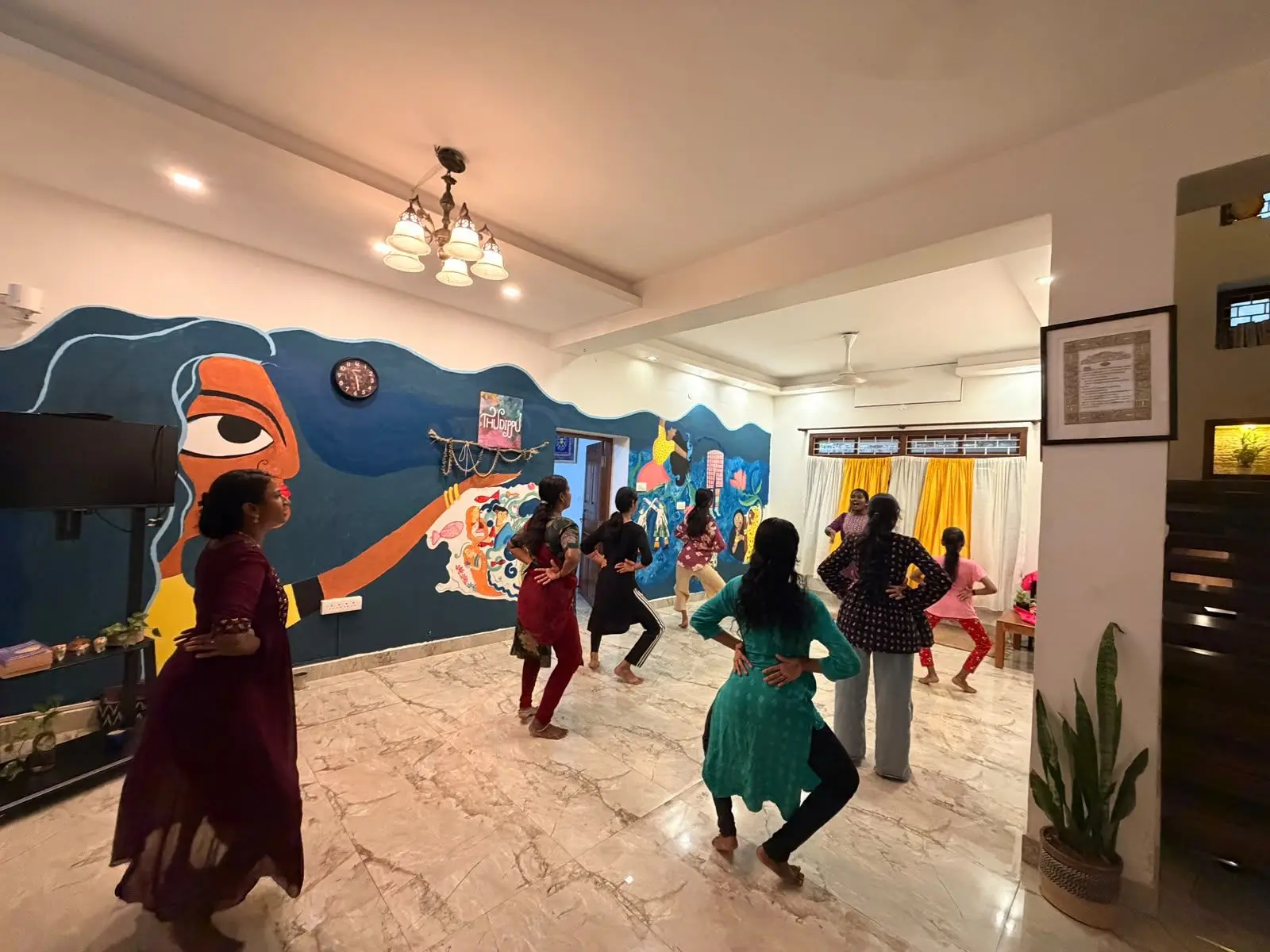
The teacher then moved behind the students and asked them to perform the third Nattadavu in three speeds. Before that we did hand clapping. It helped them feel and remember the rhythm. By the end of the practice, all the children were performing the Adavu while looking straight ahead.
- All the children performing the third Nattadavu in three speeds while looking straight ahead.
The children moved from relying on the teacher's movements to trying the Adavu on their own. After repeated practice and hand clapping, all of them performed while looking straight ahead. A family's recommendation also brought three new students to the class.
(We observed it)
Practice and one-to-one help can make children feel more sure of themselves. Hand clapping can help them dance on their own. Sharing a good class experience can help more families find the space.
Run this activity yourself. You are free to copy, change and share this write-up, as long as you credit aikyam space. Photos are not included. (Creative Commons licence CC BY 4.0)