- What went in
- The printed materials were A5 paper with eyes and everyday object cards. For building, each team had 30 ice cream sticks and 5 rubber bands. They also had masking tape and scissors. Students used their own stationery. They also used crayons and sketch pens from their LifSkool packs. The ice cream sticks were the only new thing we bought. Olimalar already had all other materials in its inventory.
- Time
- 1 hour
- Cost
- ₹120
Today's LifSkool session explored creative thinking. We revisited last week's question "How do you know?" and tried a new one, "What else?"
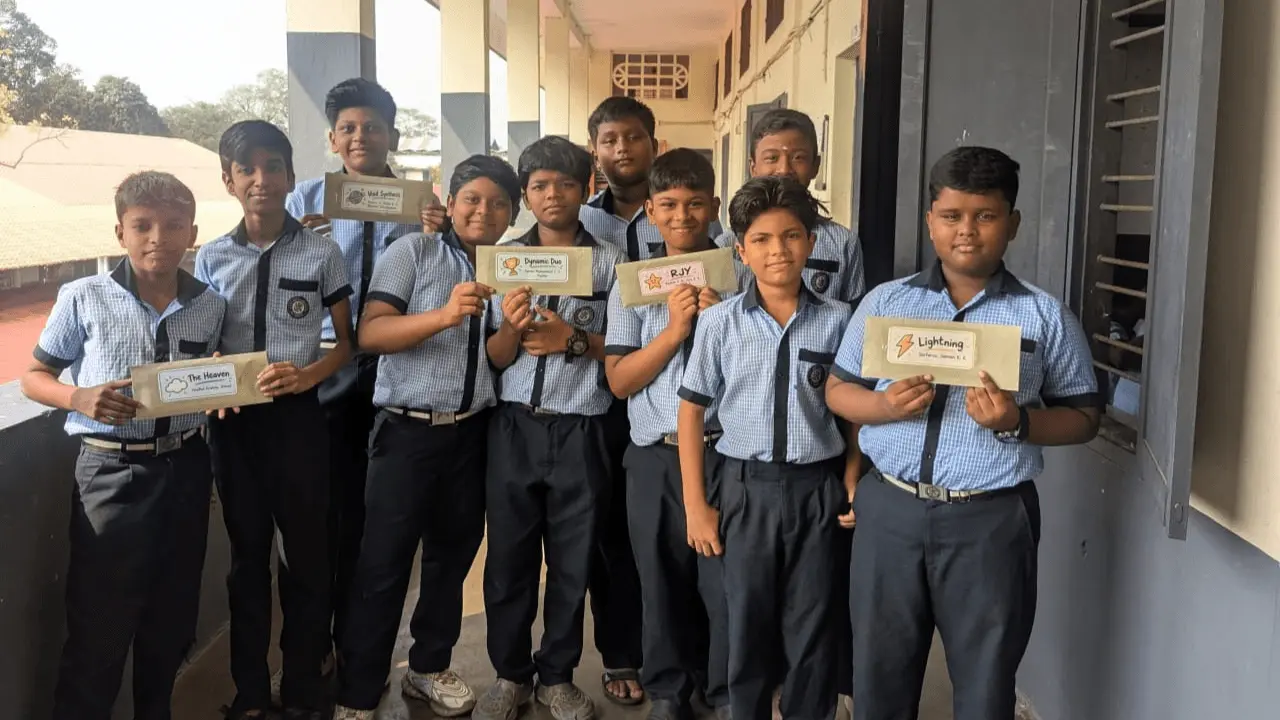
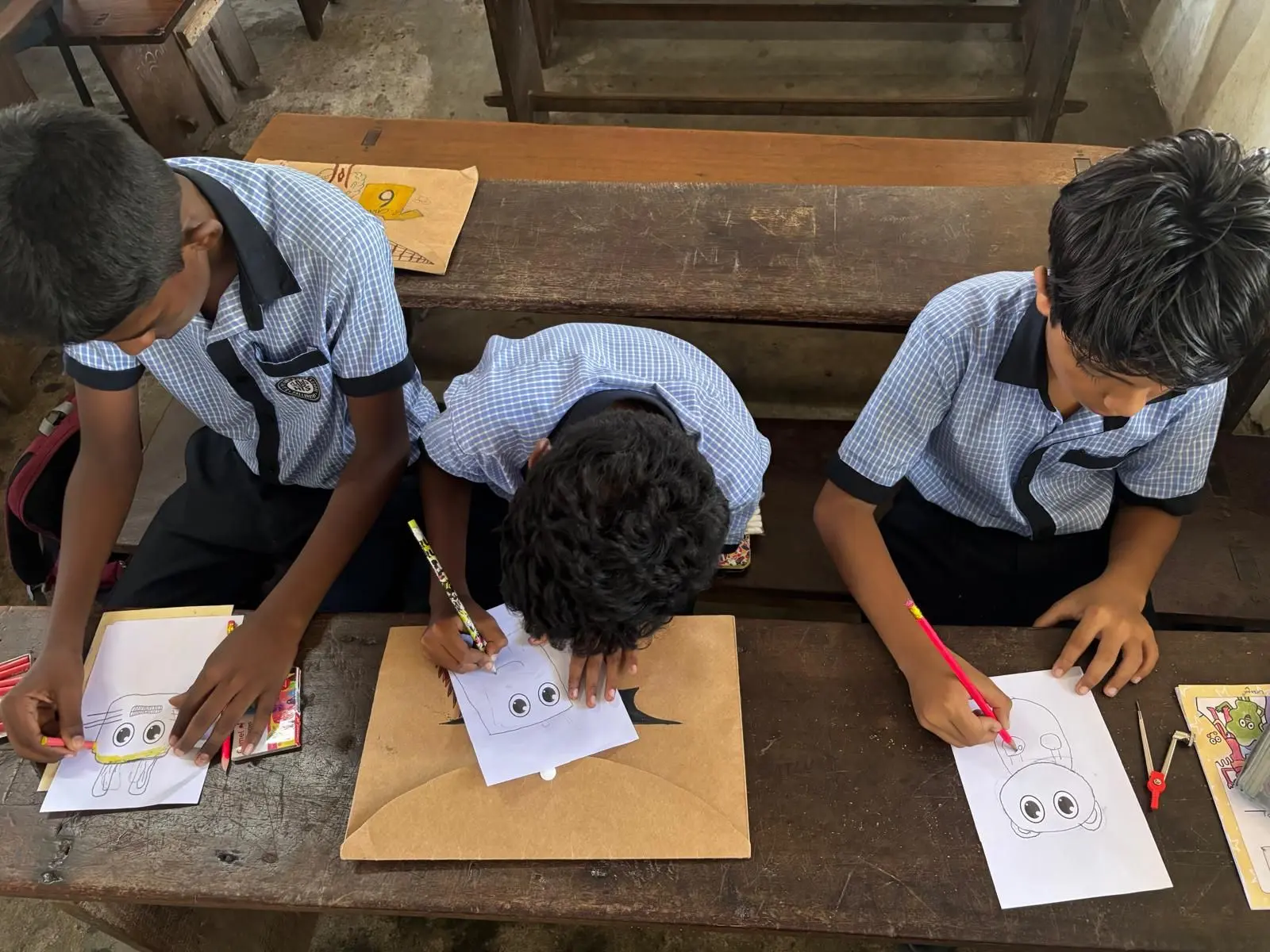
The boys turned the same pairs of eyes into different drawings. In pairs, they found new uses for everyday objects. They combined two objects into a new invention.
Finally, each pair got the same ice cream sticks and joiners. They were free to build anything. Every creation went in a different direction, showing how one starting point can lead to many possibilities.
In discussion, the students shared what helped when an idea ran out. They said to keep thinking and to listen to a partner. Combining ideas and trying something unusual also helped.
The students worked through the challenges. Some creations were still in progress. The students took them home to continue.
- 5 Ice cream stick builds
- 5 New uses and ideas list
- 12 "Who am Eye?" drawings
Students came up with different uses and inventions from familiar objects and made different creations from the same materials. In discussion, they named ways to move beyond their first idea.
They began to see how "What else could I try?" might help them find another way through everyday problems.
(We observed it)
Some students initially found it hard to imagine what the eyes could become. One example helped them begin.
Once building, pairs took their ideas in different directions. We noticed that talking ideas through helped them develop their ideas further.
Time was tight.
Run this activity yourself. You are free to copy, change and share this write-up, as long as you credit aikyam space. Photos are not included. (Creative Commons licence CC BY 4.0)